The Packaging Industry and How We Can Consume Differently, Part 6

Last updated June 20, 2021.

Another plastic product graphic
Image by Pete Linforth from Pixabay

If you’ve been following my series on the Packaging Industry, hopefully, you’ve found it informative! In my last article, I wrote about Extended Producer Responsibility (EPR). Today, I’ll tell you about one type of EPR, called Take-back programs.

Take-back programs are designed to ‘take back’ discarded items that are not accepted in regular recycling streams like curbside pickup. These programs are typically separate from municipal programs. They are often hosted by manufacturers or companies, for a variety of purposes.

Purposes of Take-Back Programs

Take-back programs exist for several reasons:

        • To reduce contamination of municipal recycling efforts
        • For recycling, at least parts of the items
        • To prevent toxic materials from entering landfilled
        • Simply to draw in customers

It is often a combination of one or two of those reasons. “Some collections, like the ones for e-waste and plastic bags, are often not so much a recycling effort as an attempt to reduce contamination of municipal solid waste streams and ensure proper disposal,” wrote Chris Daly in The Future of Packaging.

Earth friendly graphic
Image by Clker-Free-Vector-Images

‘Eco-friendly’ and ‘sustainability’ are good for business

Many people want to buy from companies that ‘take back’ or recycle items. So companies have had an influx of marketing campaigns in recent years for consumers to bring back their containers for recycling. However, not all companies are actually socially responsible and transparent in the process – and some are not recycling the things we bring back at all!

That is greenwashing! If a company cannot actually fulfill its promise of recycling or taking back items, then that is false advertising.

“In the face of increasing demand for more corporate social responsibility and environmental-friendliness, however, the authenticity of some of these recycling programs is questionable.” -Chris Daly

Types of Take-Back Programs

There are many types of take-back programs, so I am presenting the most common ones here.

Computer waste
Computer and other e-waste. Image by dokumol from Pixabay

Plastic Bags, Styrofoam, and Electronics Take-Back Programs

Many stores accept things that typically cannot be recycled, such as plastic grocery bags, styrofoam, and electronics. These programs are good for businesses because they generate foot traffic and brand affinity. This also prevents those items from going to a landfill. It also prevents them from going into your curbside bin, where they will contaminate recycling. Grocery stores, such as Publix, accept plastic bags, #4 plastic bags and Amazon Prime type shipping envelopes, toilet paper wrap, produce and bread bags, dry cleaning bags, styrofoam egg cartons, and styrofoam meat trays. Staples and Best Buy take back many electronic items for recycling. Many electronics companies, such as Samsung,1 have take-back programs of their own, through the mail or drop sites.

While it’s not clear what happens to any of those items, at least there’s a chance that some of those are actually recycled. Also, toxic materials will not leach into groundwater from landfills. In the meantime, these companies appear to be eco-friendly. They can also physically draw you into the stores. Might as well pick up some milk and eggs or printer paper, or maybe check out the new iPhones since you’re already there?

Plastic bag from Food City
Plastic bag from Food City. Photo by me
Publix

Publix states that “by inspiring customers to recycle these items, we ensure they are disposed of properly and keep them out of the environment and landfills.” It is unclear if these items are actually recycled as they do not specify what they do with the items. The corporation indicates that they are collected at their return centers and “then processed and sold to be made into other items.”2 That’s vague, but I still respected Publix for the effort.

Until I read that Publix actually claims that plastic bags are more sustainable than paper bags! In fact, the entire post is dedicated to promoting plastic over paper. I am appalled and extremely disappointed in Publix for making false claims such as “plastic bags use 71% less energy to produce than paper bags.” Among the many others, “using paper bags generates almost five times more solid waste than using plastic bags,” is similarly outrageous.3

Recycling bins at Publix. Photo by me
Amazon Prime envelopes
Amazon Prime plastic envelopes, accepted at some grocery stores for “recycling.” Note that Amazon does not take these back directly. Photo by me
A Microwave

A few years ago, I had a Hamilton Beach brand microwave that stopped working. I begrudgingly replaced it with a new microwave and immediately searched for a proper way to dispose of it but to no avail. I found out that Hamilton Beach will recycle and “properly dispose” of their products if you mail them to them at your cost.4 So I measured and weighed the microwave and looked up the shipping cost on USPS – and it would have been $41! So instead I put it in my shed and forgot about it for a while.

Last year, I called Staples to see if they accepted microwaves. They told me on the phone that yes, they do accept microwaves. So I loaded it in the car and took it to my local Staples. When I got to the service desk, I again asked if they’d recycle the microwave. They said yes. However, when I was researching for this post this week, I discovered that their site says they do not accept kitchen appliances. Now I wonder if that microwave was recycled, or if it was tossed in the trash after all. I guess I’ll never know, but I sure tried.

Brother brand printer ink cartridges.
Image by tookapic from Pixabay

Ink Cartridges, Light Bulbs, and Rechargeable Batteries Take-Back Programs

These programs are designed to keep contaminants out of landfills, as all three types of these items contain toxic materials. A few companies offer “rewards” in exchange for recycling. For example, Staples offers $2 back in rewards per recycled ink cartridge. This creates brand loyalty, as you are more likely to buy your ink there regularly if you are trying to use this rewards program. In fact, you have to – their rules state that you can earn the $2 per cartridge “if the member has spent at least $30 in ink and/or toner purchases at Staples over the previous 180 days.” This is only a good deal if you buy enough ink to keep up with that. At least these cartridges are likely recycled. Other companies, such as HP, have many ways for consumers and businesses to recycle their ink cartridges and electronics.5

Many hardware stores and home improvement centers, such as Lowe’s and The Home Depot, take back used compact fluorescent light bulbs and rechargeable batteries. Batteries Plus Bulbs will accept certain types of light bulbs and batteries, although not alkaline. For alkaline battery recycling, see my article from earlier this year.

Compact fluorescent light bulb
Compact fluorescent light bulb, image courtesy of Pixabay

Textile Recycling

The textile industry is notoriously wasteful, especially now that major retailers promote new fashion trends weekly rather than seasonally. But there are a few companies that have take-back programs. Patagonia may be the best example of this as they’ve had the program for a long time, don’t push new trends weekly, and stand by the quality of their products. Patagonia accepts all its products for recycling if the items can no longer be repaired or donated.6

Nike’s Reuse-A-Shoe product claims to take their old shoes grind them down to use in performance products and sports surfaces.7 The NorthFace and Levi’s are among others that take back some of their clothing for reuse or recycling. However, please know that clothing is so disposable in western society that second-hand clothing is overwhelming other parts of the world, creating waste problems in those areas. The solution for textiles is to buy less clothing, wear your clothing for a long time, and buy second-hand when possible.

Donated clothing stacks at a Goodwill outlet being prepared to be sent to various aftermarkets.
“A tour of the Goodwill Outlet warehouse and retail store in St. Paul, MN, in April 2019. Goodwill processes and recycles enormous amounts of material. Its outlets take in things that didn’t sell in Goodwill stores and separates them for various aftermarkets.” Photo by MPCA Photos on Flickr, Creative Commons license (CC BY-NC 2.0)

Solutions

Take-back programs offer a solution for some items that are hard to dispose of, such as computers, batteries, and light bulbs. It isn’t clear if these programs result in real recycling. Sometimes the companies are not transparent about their take-back program details. The real solution is for companies to invest in a system that can make these items reusable, in a circular economy or closed-loop system. We also need to consume less in general.

In my next post, I’ll examine two types of take-back programs that have high success rates. Thanks for reading, and please subscribe!

“If you want to eliminate waste in your life – and in the world – the answers will always come down to one simple thing: consume differently.” -Tom Szaky

Footnotes:

The Packaging Industry and How We Can Consume Differently, Part 5

Last updated February 3, 2024.

Calvin Klein Men's underwear plastic packaging.
Calvin Klein Men’s underwear in an unnumbered plastic box. Photo by Marie Cullis.

In Part 5 of my series about the packaging industry, I explain corporate responsibility. You can read my first article on packaging and follow the series from there.

There are many ways that companies can take responsibility for the waste they create. But it often becomes the consumers’ problem. What kind of impact could we make if we change that?

Calvin Klein: Not an Example of Company Responsibility in Packaging

A couple of years ago, we ordered some Calvin Klein Men’s underwear, which arrived in an unnumbered plastic box. Plastic without a number cannot be recycled, anywhere. So I wrote to the company to see if they’d take the packaging back to reuse. They responded, “I regret to inform you that our warehouse will not reuse the packages.” They did not provide a reason, nor did they express interest in more sustainable packaging. I asked if they would stop using plastic packaging, or if they would at least switch to numbered plastic so that I could recycle it. They responded that they’d pass my comments on to their Product Development Team.

This left me with no option but to throw the packaging in the trash or find a way to reuse it. I ended up using it a couple of times as a gift box, and now it is in my collection of “plastic that I must pay TerraCycle to recycle.” Hence, the onus is on me, the consumer. We stopped buying from Calvin Klein.8

This has got to stop.

“Currently, most product designers are under no obligation to consider how their products will be disposed of at the end of their useful life. This leads to the creation of unrecyclable products.”-The State of Recycling National Survey, U.S. PIRG Education Fund9

Image of my own trash audit from 2017, when I started trying to go plastic free. Notice that most of my trash is packaging waste.
Image of my own trash audit from 2017, when I started trying to go plastic-free. Notice that most of my trash was packaging waste. Photo by Marie Cullis.

There is a way to make companies responsible for their own packaging

It’s called Extended Producer Responsibility (EPR). It is a policy concept that makes it the manufacturer’s responsibility for reducing packaging waste and improving packaging. Companies would have to have to rethink packaging, recyclability, and end-of-life impacts. There are four ways that EPR can work:

      1. EPR extends the manufacturer’s responsibility from the design and marketing to the post-consumer stage (meaning when the consumer is finished with a product).
      2. Producers either physically take items back through take-back programs, or they pay a third party for those services.
      3. Individual governments set standards for the responsible party, defines what materials should be collected and avoided, and require data collection. This model sometimes involves taxation or fees.
      4. EPR can go beyond packaging and address the post-consumer stage of items beyond packaging, such as electronics, batteries, cars, tires, etc.

It can be a combination of those as well. Here’s a video that explains EPR from Washington State, as the idea can apply anywhere:

“You already probably use EPR in some part of your life: aluminum can redemption, or maybe battery, paint, and e-waste collection programs. EPR is essentially a program for end-of-life product take-back. It is a recognition on the part of the government that this material is potentially problematic, toxic, or dangerous if not disposed of properly, which means that the company producing it needs to participate (read: pay for) at the end of that product’s life.” -Eve O. Schaub, author of Year Of No Garbage10

The Costs of EPR

Extended Producer Responsibility would cost the manufacturers and companies a nominal amount of money, and they would likely shift that cost to the consumer. “But perhaps this cost is better incurred at checkout than in…greenhouse gas emissions, marine debris, resource scarcity, toxicity, and food and drinking-water pollution,” wrote Scott Cassel, founder and CEO of the Product Stewardship Institute, in The Future of Packaging.

In our current system, the true cost falls on taxpayers because we are paying for our municipalities to haul our waste, whether it goes to a landfill or a recycling center. And then we pay again when those systems fail, and the cost becomes an environmental issue.

There currently are no laws and no economic incentives in the United States to make companies responsible for the waste they sell or for the waste they create. However, when the same US companies conduct business internationally, they follow EPR regulations in countries with those laws, showing that EPR can be successful.

“Unlike in many other developed countries, in the United States manufacturers and brands are not responsible for their packaging once the consumer buys the product.” – Scott Cassel, founder & CEO of the Product Stewardship Institute

Beth Porter noted in Reduce, Reuse, Reimagine that one challenge with EPR is that if companies take control of the waste stream, it could take decision-making power about waste management away from communities and result in the incineration of many materials. “Good EPR would include strong recycling targets and a stated zero-incineration policy. It would result in shifting some responsibility of disposal back onto producers, urging them to rethink designs of their products to be better suited for recycling streams.”

Plastic sports drink bottles stuck in the pond.
Photo by Ben Baily on Flickr, Creative Commons license (CC BY-NC-ND 2.0).

EPR around the World

EPR prevails in many other countries. The United States, meanwhile, “is currently one of only three nations of the 35-member Organisation for Economic Cooperation and Development (OECD) that does not have an EPR system specifically for packaging in place or under development,” according to Cassel.

In 1991, Germany passed the “Ordinance on the Avoidance of Packaging Waste,” which was intended to shift the burden of packaging disposal from the public to the industries producing the packaging. This led to the creation of the Green Dot symbol, which indicates that a fee has been paid by the manufacturer to pay for the package’s end-of-life disposal. However, this symbol does not necessarily mean that a product or package is recyclable, a common misconception. For more information, watch this video:

The European Union passed the “Packaging and Packaging Waste Directive” in 1994 and thirty countries have implemented it. This aims at preventing the production of packaging waste through elimination, reuse, recycling, and/or recovery of packaging. “In Europe, global companies have accepted EPR as an appropriate cost of doing business and of being responsible corporate citizens,” wrote Matt Prindiville, Executive Director of UPSTREAM.11 Beth Porter noted that “Belgium boasts more than five thousand companies that follow [EPR]…the result of this is an impressive 95 percent recovery rate for packaging materials in the country.” Other countries that have adopted EPR legislation include Canada, Australia, Japan, New Zealand, South Korea, Taiwan, and Romania.

“Overall…EPR legislation has had the intended effect of moving up the waste stream into product and packaging design, logistics, and shipping departments of major manufacturers.” -Daniel Imhoff, Paper or Plastic

Dairy section of a supermarket, lots of plastic packaging.
Image by Squirrel_photos from Pixabay.

Opposition

There are some who oppose EPR legislation, arguing that it amounts to an additional fee or tax. Trade associations like the American Institute for Packaging and the Environment (AMERIPEN) and the Grocery Manufacturers Association oppose it. They argue that packaging disposal, recycling, and pollution cleanup costs should be the responsibility of the government. “In the U.S., these companies have determined it’s better to fight to keep EPR at bay than to partner with local and state governments to develop 21st-century systems for designing and managing packaging materials,” Prindiville wrote. Companies and manufacturers need to take responsibility.

Solutions

EPR legislation must be passed to make companies responsible for their packaging. Without laws, it is doubtful that companies will do the right thing on their own. Remember, many companies are already practicing EPR in other countries because it is mandated. But not in the US, because they aren’t required to by law. You can write your legislators and request that they propose and/or support EPR legislation. The Story of Plastic film offers a great explanation of this.12

While EPR is one strong solution, it is not the sole answer to our packaging waste problems. We should combine EPR with many other ideas as the current waste stream is too enormous. We need to create vastly less waste on a global scale. Buy less and be mindful of the things you do purchase.

In my next article, I’ll cover take-back programs, a form of EPR. Thanks for reading, and please subscribe!

“If you want to eliminate waste in your life – and in the world – the answers will always come down to one simple thing: consume differently.” -Tom Szaky

Additional Resources:

Article, “Sustainability and the Economy,” Packaging World, March 13th, 2020.

Post, “The Producer Pays,” Knowledge @ Wharton, University of Pennsylvania Wharton, April 4, 2017.

Article, “5 Reasons EPR Is the Answer for Plastics Recycling,” by Matt Prindiville, Sustainablebrands.com, accessed June 20, 2021.

Footnotes:

The Packaging Industry and How We Can Consume Differently, Part 4

Last updated May 21, 2023.

Plastic packaging waste from my household, February 2017. Bottles, fruit container, yogurt cup, plastic bags, etc.
Plastic packaging waste from my household, February 2017. I started doing trash audits, inspired by Beth Terry at myplasticfreelife.com and I realized how much plastic, mostly in the form of packaging, that I had to start eliminating. Photo by Marie Cullis.

In my first article about packaging, I told you about packaging history, current problems with packaging, and greenwashing. I wrote about the misconceptions surrounding the terms biodegradable and compostable in my second article. In my third article, we explored bioplastics. Today, we will look at some other practices companies sometimes use to reduce their carbon footprint.

Image of a footprint with "CO2" over a map of the world
Image by Gerd Altmann from Pixabay.

Lightweighting

The demand for consumer goods is on the rise, especially with the population exponentially increasing. One way companies save money is to practice lightweighting, and sometimes it can reduce their environmental impact. However, this practice can also be harmful to the environment.

What is lightweighting? “A packaging trend wherein conventional packaging is replaced with a lighter-weight alternative and/or the overall amount of material used in packaging is reduced,” as defined in The Future of Packaging.13

Lighter weight items are cheaper to ship, saving companies money on fuel which also creates fewer emissions. But creating lighter packaging means replacing conventional packaging, such as glass, with lighter weight alternatives, like plastic. This has made plastic the preferred material and unfortunately, much of that plastic is not recycled.

Another lightweighting method is making the materials thinner. PET bottles and aluminum cans use about 30% less material than they did in the 1980s. Lush Cosmetics worked with their bottling manufacturer to make their bottles 10% thinner, and this saved nearly 13,500 pounds of plastic in 2016.

“Although lightweighting gains have been made for all containers as a result of these technological efficiencies, these gains are overshadowed by huge increases in per capita consumption and total beverage sales (especially for bottled water…sports drinks and energy drinks) as well as stagnant or shrinking recycling rates. All of these factors lead to vastly more container material” not getting recycled. –Bottled Up: Beverage Container Recycling Stagnates14

Convenience Items

Lightweighting makes consumer goods cheaper and easier to access, especially in the form of convenience items. Think about coffee pods, applesauce pouches, and fresh vegetables ready to be steamed in plastic. But at what cost does this convenience come? This packaging is not recyclable in most municipalities and goes straight to landfills. Some can be sent to a specialty recycler, like Terracycle, but that is not a long-term practical solution.

Example of Coffee pod or “K-Cup”. I used these for several years before I realized the harm they were causing.
Example of an applesauce pouch, now also sold as smoothie blends and yogurt pouches. I purchased these for several years before I realized how plastic was damaging our environment.

“This is lightweighting’s biggest problem: no economic recycling model has yet emerged due to the technical challenges in processing and recovering the base materials,” -Chris Daly, Vice President of Environmental Sustainability, Europe and Sub-Saharan Africa, PepsiCo15

Water

Sales of bottled water, especially in plastic, now exceed those of other non-alcoholic bottled beverages in the US. Here is a graph that exhibits the rapid growth:

Graph of plastic bottle water sales
Graph from the Container Recycling Institute.

A few companies now sell bottled water in aluminum, including the brands Open Water16 and CanO Water.17 In summer 2019, PepsiCo announced that they would stop selling Bubly seltzer water in plastic bottles and switch to aluminum cans. They also planned to test switching Aquafina to aluminum cans.18

Replacing plastic with aluminum can be a positive packaging change. This is not a new idea, as brands like LaCroix water have been in aluminum for years. Aluminum is 100% recyclable, assuming they are free from plastic film lining, and almost 75% of all aluminum produced in the U.S. is still in use today, according to the Aluminum Association.19 Recycling aluminum uses significantly less energy because it is heated at a much lower temperature than using bauxite, the virgin raw material used to make aluminum.

However, the real solution is to drink tap water and carry your own reusable metal or glass water container.

Image of Open Water aluminum bottles

“Bottled water is healthy and convenient, but single-use plastic bottles are wreaking havoc on our environment, and especially our oceans.”20

Products in Cartons

Great Value Organic 2% milk in a blue, purple, and white carton
Milk carton

Cartons are another example of lightweighting, as the containers are lighter to transport. There are two types: cartons like those that contain milk or orange juice, are paperboard lined with a plastic film (polyethylene). Milk cartons haven’t been wax coated since the 1940s, as noted by Beth Terry.21 The other, called aseptic or shelf-stable containers, are multilayered with paperboard, plastic film (polyethylene), and aluminum. Most of the latter are made by the packaging company Tetra Pak. Common examples of products sold in cartons include shelf-stable milk, broth, coconut water, and juice boxes.

However, a carton’s end of life is usually highly problematic because they are multi-layered and it is expensive to separate the materials. In addition, some polyethylenes contain toxins linked to human health problems.

Diagrams of cartons and the layers of materials.
Diagrams from the Carton Council

Recyclability is Poor

Cartons are recyclable in theory, but it is not common, in large part because it is difficult to separate the layers. The recycler shreds the cartons, sanitizes them, and ties the shreds into bales. A pulp mill that has the appropriate machinery can buy the bales from the recycler, and the polyethylene coating must be separated from the paper and strained off. The plastics can be shipped to a plastics manufacturer for re-use, but usually, it is simply disposed of. The shredded cartons can then be reprocessed into pulp for paper.22 That’s a lot of work for a single type of waste, and most of the time these are landfilled or incinerated.

The Carton Council

The Carton Council advertises cartons as recyclable. However, as attorney and sustainability expert Jennie Romer noted, this is an unqualified claim. The Federal Trade Commission’s definition of recycling requires that an entire package be recyclable to be labeled as such. Cartons are not fully recyclable since the plastic film and aluminum foil layer are usually discarded. “A qualified claim of ‘only the paper layer is recyclable’ would be more accurate.”23

The Carton Council also asserts that if you cannot recycle them where you live, you can ship them at your own cost to certain facilities.24 However, I cleaned and saved cartons from non-dairy milk and broth for several months and found it cost-prohibitive to ship. I found this discouraging and impractical.

Author Eve O. Schaub also found the Carton Council’s recycling options problematic during her Year Of No Garbage. She wrote: “I didn’t love it, first because any additional level of complexity or cost is going to make it that much less likely for the average person to actually do it, and second because the environmental footprint of mailing boxes of cartons across the country to recycle them seemed to me to raise serious questions about the net environmental impact of the whole endeavor.”25

We should avoid buying all products in these containers for both environmental and health reasons. Remember, that even if your local recycler “accepts” these items for recycling, they are often landfilled. The paper in these cartons might break down in the environment but the microplastics and toxins in the plastic will infect the land and water for decades or longer.

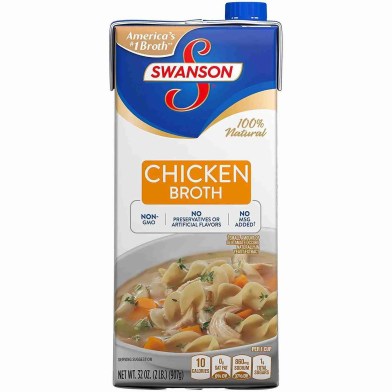
Swanson chicken broth in a shelf stable carton
Swanson chicken broth in a shelf-stable carton.

Solutions

We have power as consumers. Companies want to sell us their goods, presumably more than they want to sell us the packaging. So avoid purchasing products in packaging that you don’t like or support.

Instead, purchase items in bulk in your own containers, or buy goods in metal or glass instead of plastic or cartons. Buy a reusable beverage container to avoid buying drinks in plastic and avoid convenience packaging since it is rarely recyclable.

Thanks for reading, and please subscribe! In my next post, I’ll explain how the manufacturers should become part of the solution.


“If you want to eliminate waste in your life – and in the world – the answers will always come down to one simple thing: consume differently.” -Tom Szaky

Footnotes:

The Packaging Industry and How We Can Consume Differently, Part 3

Last updated on February 13, 2022.

Image of a green earth with green recycling arrows
Image by annca on Pixabay.

In my first article, I introduced the topic of packaging – its history, the current problems with packaging, and I introduced greenwashing. In my second article, I wrote about the terms biodegradable and compostable, and how those terms are often misused. Now we will explore bioplastics.

Bioplastics

Bioplastics are used in packaging which is then marketed as sustainable, and even as biodegradable. “Most biodegradable and compostable plastics are bioplastics, made from plants rather than fossil fuels.” Mike Manna of Organic Recycling Solutions explained just that in his appropriately titled essay, “The Myth of Biodegradability” in The Future of Packaging: From Linear to Circular.

But biodegradability hinges on two key factors. First, raw materials used in bioplastics are more sustainably sourced than petroleum-based plastic. “Many bioplastics are not 100 percent made of natural biomass. To be called a bioplastic, they generally have to be at least 20 percent derived from natural sources. What about the other 80 percent? Excellent question. Many bioplastics contain fossil fuel-based plastic resins and numerous synthetic additives – such as fillers, softeners and flame retardants – just like conventional plastics.”15

Green plastic bottle
Image by Foulon Richard from Pixabay.

The second key factor is there would be less concern about pollution since these items would naturally degrade. But that is not how it works. “The latter factor, however, has mobilized a torrent of misinformation, misplaced optimism, consumer confusion, and headaches for recyclers and composters alike,” Manna wrote. They must be sent to an industrial compost facility to break down. As you know from my previous article, these facilities are few and far between. So bioplastics that require industrial composters are far from guaranteed to make it to one. Biodegradable plastics that do make it to an industrial compost facility will not create usable soil. It lacks the macro and micronutrients of regular compost. “It just doesn’t make environmental sense to take a plant, turn that pant into a highly refined petrochemical, only to then use it once and have it turn into something effectively worse than soil,” wrote Manna.

Bioplastics are made of either polylactic acid (PLA) or polyhydroxyalkanoates (PHA), both of which are #7 plastics. These cannot be recycled and therefore contaminate single-stream recycling systems, making entire loads of recycling unrecyclable. In many ways, bioplastics are worse for single-use disposable items than traditional fossil fuel plastics. 

“Often omitted is the amount of energy that goes into, and the negative effects related to, the growing, harvesting, and transportation of bioplastics. Also, in a world full of hungry people, do we really want to be pushing agricultural lands into production of plastics rather than food?” -Michael SanClements, author of Plastic Purge25

Plastic bottles floating in water
Bioplastics will not break down in nature or water. Image by Foulon Richard from Pixabay.

“Sadly, bioplastics do not present a solution for plastic soup or for reducing plastic litter.” -Michiel Roscam Abbing26

Renewable Sources?

Bioplastics are plastics made from natural, renewable sources, such as corn, sugar cane, or potatoes. “The thought is that plastics made with plants, as opposed to fossil fuels, will sustain the unstoppable trajectory of the world’s consumption with a more sustainable material,” Manna wrote. But bioplastics only have to be composed of as little as 20 percent of renewable material to be marketed (or greenwashed) as such, and can still contain a majority of fossil fuel-based plastic.27

Most importantly, renewable sources have to be grown and produced, and agriculture requires a ton of energy. “The corn that is used to make the bio-plastics is not organic,” so there are a lot of pesticides used. “The end result is that valuable agricultural land was used to create something that just gets thrown away,” said CĂ©line Jennison, the founder of Plastic Tides.28

“As of now, turning plants into plastic remains more energy-intensive than recycling used plastic.”29

Corn is a crop used to supplement lots of resources such as gasoline (ethanol), agricultural feed, paper goods, and now plastics. While corn is not a fossil fuel, critics of it suggest that corn creates more problems by contributing to global warming, chemical pollution, and energy waste. It demands more nitrogen fertilizer and pesticides than other crops, and which are made from natural gas and oil. “Runoff from these chemicals finds its way into the groundwater and, in the Midwestern corn belt, into the Mississippi River, which carries it to the Gulf of Mexico, where it has already killed off marine life in a 12,000-square-mile area,” wrote author Michael Pollan.30

 “America’s corn crop might look like a sustainable, solar-powered system for producing food, but it is actually a huge, inefficient, polluting machine that guzzles fossil fuel—a half a gallon of it for every bushel.” -Michael Pollan

Cornfield
Photo by Jesse Gardner on Unsplash.

“Corn is hardly sustainable, not the way it’s grown in this country. Farmed at an industrial scale, corn requires vast amounts of herbicides and fertilizer. With heavy rain, these inputs run into waterways and pollute drinking water.” -Elizabeth Royte31

Example: Coca-Cola Plant Bottle

Coca-Cola plantbottle advertisement
Coca-Cola introduced the PlantBottle in 2009.

“We replaced up to 30% of the petroleum used to make PET plastic bottles with material from sugar canes and other plants. The result? You’d have to take nearly 1 million vehicles off the road to achieve the same reduction in CO2 emissions that PlantBottle™ has achieved since 2009.”32

These claims are questionable. Supposedly, this particular alternative to traditional PET (#1) plastic can be recycled with regular PET plastics. However, how much petroleum does it take to produce sugarcane? As for the CO2 reduction, how did they come up with this calculation?

Empty Coca-Cola bottle lying on the beach
Photo by Maria Mendiola on Unsplash.

The company has vowed to “use at least 50% recycled material in our packaging by 2030.”33 Why haven’t they been doing this all along? Coca-Cola released an advertisement about a “Coke Bottle Made With Plastic From The Sea,” which was made with plastics picked up by volunteers on beaches on the Mediterranean Sea.34 Volunteers who used their free time to pick up trash on beaches because it’s the right thing to do. Coca-Cola easily has enough money to pay employees to do the same thing. A true solution would be to stop pollution by eliminating this type of packaging.

What about other real solutions, like reverting back to glass bottles? We know that glass is 100% recyclable and does not leach toxins and chemicals. Glass can also be managed through a container deposit system, and can truly be a part of a circular economy.

Example: Procter & Gamble

Advertisement for Head and Shoulders bottle made from recycled beach plastic

Procter & Gamble designed a shampoo bottle using recycled beach plastic. They partnered with TerraCycle and SUEZ, a waste management firm. Again, it was using volunteer labor for the collection of plastic polluting beaches. “Sourced through partnerships with beach cleanup organizations already picking up litter on the shores of oceans and other waterways, ocean plastic originally headed for landfills was used to establish a new supply chain,” wrote Virginie Helias at Procter & Gamble. But ‘plastic originally headed for landfills’ is misleading. Much of this plastic had likely already been sent to the landfill or recycling center before and then ended up in the ocean anyway! “Ocean plastic products are seen by many as a distraction that takes attention and resources away from source reduction, while only cleaning up a tiny fraction of ocean plastic,” wrote Jennie Romer, lawyer and sustainability expert.35

Procter & Gamble’s goal is to make 100% of its packaging recyclable and reusable by 2030. While this is a respectable goal, it should focus on reusable packaging since recycling is not the answer. If we stop the disposable stream at the source, that would be far more impactful than all of the recycling systems combined. P&G can do better and have the resources to do much more.

Are there other solutions?

“The key takeaway about bioplastics: They are NOT the solution to plastic pollution and toxicity problems. They will likely play a role, but given their mixed character and the chemical additives most of them contain, relying on them is not a replacement for making a concerted effort to reduce all plastic use at the source.” –Chantal Plamondon and Jay Sinha36

Plastic substitutes are not the answer, just as synthetic biodegradable materials and recycling are not the answers. We also cannot possibly recycle all the plastic away at this point. We know that only 9% of plastic sent to recycling facilities is recycled.

But there are other packaging innovations out there. We’ll explore those in my next post, Part 4. Please subscribe and share, and thanks for reading!


“If you want to eliminate waste in your life – and in the world – the answers will always come down to one simple thing: consume differently.” -Tom Szaky

Additional Resources:

Article, “What you need to know about plant-based plastics,” by Sarah Gibbens, National Geographic, November 15, 2018.

Post, “The Truth & Consequences of Bioplastics,” EcoLunchbox.com, accessed July 5, 2021.

Article, “Why biodegradables won’t solve the plastic crisis,” by Kelly Oakes, BBC Future, November 5, 2019.

Footnotes:

The Packaging Industry and How We Can Consume Differently, Part 2

Last updated on May 21, 2023.

Plastic bottles and bags (trash) in a variety of clear, white, blue, yellow and greens together.
Photo by Magda Ehlers from Pexels.

In my last article, I introduced the topic of packaging and the environmental crisis it has created. I left off with an explanation of greenwashing (read here about how to avoid greenwashed products), and in this article, I’m going to describe two terms that are often misused in advertising.

Remember: the answer to packaging is to reduce our reliance on it; to stop using it.

Styrofoam cup floating in water with plantlife
Photo by Jesse Gardner on Unsplash.

“Biodegradable” and “Compostable”

If only these words were the solutions to our global packaging problem! Unfortunately, they are two of the most abused terms in greenwashed advertising. Biodegradable refers to any material that decomposes in the environment. Compostable means that the material is organic matter that will break down and turn into soil. These words do not always mean what we think when it comes to sustainable packaging. In fact, if biodegradable and compostable items go into the trash and then a landfill, they do not biodegrade. Nothing in a landfill breaks down. Worse, the contents of landfills release methane gas, a major contributor to global warming.

But misleading marketing makes us believe that biodegradable plastics are better. “According to the Federal Trade Commission’s Green Guides, it is deceptive to market a product as biodegradable if the item does not completely decompose within one year after customary disposal, so items that are customarily disposed of in landfills cannot be marketed as ‘biodegradable in landfills.'”1 Regardless, the term is often misused.

Biodegradable plastics will only break down under the right conditions, such as in an industrial composting facility, not in a backyard composting system. But commercial composting facilities don’t all accept even certified compostable plastic products because the chemicals in the plastic hurt the final value of the compost.

Industrial Composting Facilities

There are several types of composting systems. A home compost system is mainly food and yard waste that you can set up yourself. Commercial composting refers to a municipal or city composting facility that accepts food and/or yard waste. An industrial composting facility requires precise processing conditions under a controlled biotechnological process. In order to be effective, these conditions include a certain high temperature, moisture level, aeration, pH, and carbon/nitrogen ratio.

Industrial composting facilities are not available in many places. There are about 200 in the US, serving less than 5% of the population. If there is notince

If there is a facility in your area, it still does not guarantee the items will be composted. The reality is that many facilities cannot tell the difference between compostable plastics from regular plastics other than by carefully reading the label on each item. This is not practical with the number of disposables we currently discard, so many items go to the landfill.

“Industrially compostable (also known as commercially compostable) items are those that will likely not break down in your home compost, but will break down under specifically controlled temperatures and pressures designed to create compost at a large scale…If a plastic-resembling item is labeled ‘compostable,’ it is probably industrially compostable only.” -Eve O. Schaub, author of Year Of No Garbage2

Examples

Let’s look at four examples of greenwashed and problematic products.

Wincup polystyrene disposable cups

I saw this single-use disposable coffee cup that a colleague had purchased, and the images of green leaves and biodegradable claims drew my interest. The company, called WinCup and based out of Stone Mountain, Georgia, claims to be a leading manufacturer of disposable polystyrene products.

First, these cups will not biodegrade unless they are put into biologically active landfills, which are far and few between. On their website, they claim that their “cups biodegrade 92% over 4 years” and “under conditions that simulate a wetter, biologically active landfill.”36 What is this type of landfill? My understanding is that it is similar to an industrial composting facility, in the facility adds moisture to assist with breakdown.

Most people toss these cups into the regular trash, which then goes to landfills. These cups will not break down in a landfill. Additionally, if these cups end up in the ocean, they will likely not break down and will also leach toxins. When marine life ingests those toxins, they make their way up through the food chain to us.

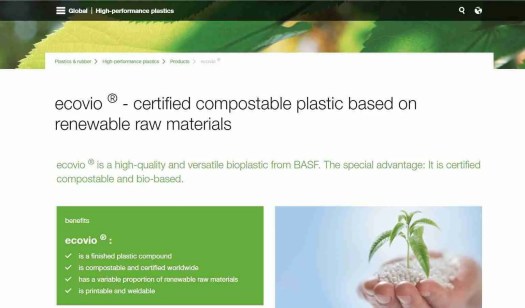
BASF ecovio line

BASF, a major chemical corporation, claims to “combine economic success with environmental protection and social responsibility.”37 I found some greenwashed marketing on their website about compostable plastic:

BASF website screenshot for "compostable" plastic

BASF used Ecovio film applications to make organic waste bags, fruit and vegetable bags, carrier bags, agricultural films, etc. Their claim is that the product is compostable, but the fine print indicates it is compostable “under the conditions of an industrial composting plant.”38

Screenshot from BASF's website about their compostable bags

This picture is misleading, as it shows a person putting a bag of compost into a compost bin. This gives the impression that these bags will break down in any compost collection when that is not the case. BASF’s compostable certification is the ASTM D6400, which is specifically for industrial composting facilities.39 Those are not available in most municipalities or states. If these products go into a landfill, it makes no environmental impact whatsoever. They also cause the same pollution problems as regular plastic.

A person holding 'compostable' plastic cups found at Jones Beach State Park, Long Island, New York.
‘Compostable’ plastic cups found at Jones Beach State Park, Long Island, New York. Don’t buy these! Photo by Brian Yurasits on Unsplash.

“So let me make sure I understand this. I’m supposed to get my one-use, takeaway cup, and as the name indicates, I take it away. And then when I’m done I . . . bring it to the nearest industrial composting facility? Oh sure, I think there’s one of those at the mall in between the Hallmark Store and the movie theater.” -Eve O. Schaub, author of Year Of No Garbage40

World Centric products

World Centric brand cups.
World Centric brand cups. Photo by Marie Cullis.
World Centric brand spoons in package.
World Centric brand spoons. Photo by Marie Cullis.

This seems like a great company: they are a Certified B company, they donate 25% of their profits, and they participate in carbon offsets. Their products, “Made from plants, not petroleum,” are made from renewable plants. Specifically, the spoons are made from 70% non-GMO corn and 30% talc. While this is technically better for the environment, these are still single-use disposable items that are only compostable in a “commercial composting facility.” The likelihood that these products will make it into a commercial composting facility after their single use is low. If they go to the landfill, they will likely not break down at all. At least this company isn’t using fossil fuels to make its products.

Molded fiber take-out packaging

molded fiber take out container

These “compostable” and “plastic alternative” molded fiber take-out containers seemed like a magnificent alternative to plastic until they were discovered to contain PFOAs (per- and poly-fluoroalkyl substances). These chemicals, protect the fibers from becoming wet and soggy. The same compounds are in most nonstick cookware. They cause cancer, thyroid disease, reproductive problems, and immunotoxicity in children.

Though marketed as compostable, these chemicals do not disappear. They get into the soil from the compost, and potentially into whatever is grown in that soil. Worse, these chemicals make it into the waterways and eventually into our drinking water.

My family ate out of these types of containers multiple times. Of course, I had no idea at the time that these contained PFOAs. Many major eateries have stopped using these.

Solution

In general, we must consume less. We must end the production and use of single-use disposable items. Most importantly, being aware of these problems is key because we can all make a difference.

In my next article about packaging, I’ll explain bioplastics, which are often advertised as biodegradable or compostable. Thank you for reading, and please subscribe to get the next post in your inbox!

“If you want to eliminate waste in your life – and in the world – the answers will always come down to one simple thing: consume differently.” -Tom Szaky

Additional Resources:

Article, “The bowls at Chipotle and Sweetgreen are supposed to be compostable. They contain cancer-linked ‘forever chemicals,'” by Joe Fassler, TheCounter.org, August 5, 2019. Read this excellent article for more information on molded fiber food containers.

Article, “The breakdown of biodegradable plastic, broken down,” by Sarah DeWeerdt, Anthropocene Magazine, May 7, 2019.

Article, “Will compostable packaging ever be able to solve our waste problem?” by Adele Peters, fastcompany.com, September 3, 2019.

Footnotes:

The Packaging Industry and How We Can Consume Differently, Part 1

Last updated on December 11, 2021.

Yellow excavator on mounds of waste, Indonesia
Waste pile in Indonesia. Photo by Tom Fisk from Pexels.

“Most types of plastic packaging are economically impossible to recycle now and will remain so in the foreseeable future.”40

Waste. We have so much of it that we require large machinery to move it around for us. There’s so much waste that our landfills are overfilling; the ocean is polluted with plastic and toxins; and in parts of the world, people have to spend their days living and working surrounded by large amounts of waste.  This article is the first in a series about the impact of packaging and the packaging industry.

Most packaging comes from items we buy regularly. I recently purchased a bottle of Zyrtec. Almost all medicines come in plastic bottles, but I had to buy a plastic bottle of Zyrtec inside of more plastic packaging! I emailed the company to ask why and if they would consider ending the practice of overpackaging. Unfortunately, Johnson & Johnson, the owner of Zyrtec, sent a generic response: “We appreciate you reaching out to us with your concern. We always value the views and opinions of our consumers…We will make certain your feedback is shared with the appropriate management of our company.” This is the typical response I receive from companies but I keep trying nonetheless.

Zyrtec packaging.
Zyrtec packaging surrounded the small plastic bottle of tablets. Photo by Marie Cullis.

“Recyclable labels on..consumer plastic products do not provide truthful advertising to American consumers and are a cause of contamination and inefficiency plaguing America’s municipal collection and plastics recycling/reprocessing systems.”41

Packaging is Everyone’s Responsibility

I am a recycler and I encourage you to recycle. But unfortunately, recycling isn’t the answer. Globally only about 9% – 13% of plastics are actually recycled. Since recycling doesn’t work in our current systems, we must find better solutions. Less packaging is one idea.

Corporations and companies are not doing enough to prevent plastic pollution, especially through the packaging industry. They have the power to stop producing packaging with disposable plastics and the resources to create more sustainable packaging. But we consumers have power too, to convince those companies to change.

“As consumers, we don’t give ourselves enough credit for how powerful we really are…View your purchases as having a direct impact on the goods and services companies choose to make.” -Tom Szaky, TerraCycle

I recently read The Future of Packaging: From Linear to Circular by Tom Szaky and 15 packaging industry leaders. The book exposed me to more information about packaging and the packaging industry than I knew existed. Then I read other books and several articles about the packaging industry. So I decided to share what I’ve learned with you, in several posts.

Single baking potato sold in plastic packaging for microwavable "convenience".
Single-baking potato sold in plastic packaging for microwavable “convenience”. Photo by Marie Cullis.

“And then there’s the ubiquitous plastic packaging, which envelops practically every product imaginable, from apples to eggs, foam bath to lipstick, toy cars to printer cartridges.”42

Packaging history

How did we get to today, where we have packaging for every single item? Packaging inside of packaging? So much packaging, often made from either mixed materials or unrecyclable materials, that we now have a waste crisis? How did we get here?

Packaging used to be sustainable and reusable with very little waste. Glass bottles held soft drinks, milk, medicine, etc. Consumers returned these and the companies sanitized and refilled them. During World War II citizens collected scrap metal, paper, rubber, and even cooking waste. Cities sometimes issue quotas for recycling.

Beginning in the post-war era, packaging increased to make life more “convenient” and “easier” for women running households. At the same time, the global population was growing at a higher rate than ever before – tripling between 1950 and 2010. Consumerism grew along with increased wealth and disposable income in the Western world. Plastic packaging in all forms became cheaper to create and ship while increasing convenience for consumers.

Life Magazine article of August 1, 1955 about "throwaway living".
Life Magazine article of August 1, 1955.

The False Notion that Plastic is More Sanitary

Plastic also became the “sanitary” way to serve and sell food, a somewhat false notion that persists even today. While plastic can prevent foods from cross-contamination and spoilage, it is not the only material that can do so. There are many options but sadly, plastic has become the standard.

DuPont advertising for cellophane wrapped produce
“Clean and fresh” advertising of DuPont cellophane to increase convenience.

“The spreading fear of a contaminated environment has spawned legions of buyers of bottled water, pasteurized egg and dairy products, and irradiated meats and seafood. Packaging can be highly misleading, however.” -Daniel Imhoff, Paper or Plastic

For a full history of plastic packaging and plastic in general, I recommend  Susan Freinkel’s Plastic: A Toxic Love Story.

Cover of Plastic: A Toxic Love Story

The Current Situation

“Packaging and containers are the largest segment of municipal solid by waste by product category.” -Beth Porter, author of Reduce, Reuse, Reimagine

Packaging today is out of control. Despite solutions, ideas, and innovations, there is far too much packaging in everything, made of all material types. “Today, the average American throws out at least three hundred pounds of packaging a year,” according to Susan Freinkel. In 2017, nearly 30% of U.S. municipal solid waste was from containers and packaging according to the Environmental Protection Agency (EPA).43 This amounted to 80.1 million tons. The EPA estimated that about 50% of that was recycled but only 13% of plastics were recycled (but the number is most likely under 10%).

“About half of all goods are now contained, cushioned, shrink-wrapped, blister-packed, clamshelled, or otherwise encased in some kind of plastic.” -Susan Freinkel, Plastic: A Toxic Love Story

Many types of packaging are not recyclable. Even the ones that are recyclable are often not recycled. One solution is to avoid purchasing as many products in packaging as possible, something I often write about. You can read my article on going plastic-free with food consumption.

The sad truth is that branding and marketing often drive packaging design, rather than environmental issues. This is beginning to change, but not at a fast enough pace to keep up with the rate of consumer packaging disposal.

“More often than not, the perceived value of being ‘green’ is trumped by bottom-line costs.” -Daniel Imhoff, Paper or Plastic

What is Greenwashing?

Greenwashing is advertising or promotions in which green marketing is deceptively used to persuade the public that an organization’s products, aims, and policies are environmentally friendly when they are not. Let’s call this what it is: this is false advertising. Here’s a video with excellent explanations:

I encourage you to read up on greenwashing because it’s everywhere!  Many companies participate in this practice. Remember the Volkswagen scandal? Volkswagen intentionally advertised low emissions vehicles but they actually equipped those vehicles with software that cheated emissions testing. Those vehicles emitted as much as 40 times the allowed amount of pollutants. While that’s an extreme example, this happens often and is so subtle that you aren’t aware of it.

Please see my page on how to identify and avoid greenwashing.

Consumers expect companies to dedicate themselves to making a positive social or environmental impact…they want to be able to trust them to prioritize ethics. – KoAnn Vikoren Skrzyniarz, founder and CEO of Sustainable Life Media, “Consumers Care,” The Future of Packaging

In my next article, I’ll detail some of these greenwashing terms, such as “biodegradable,” “compostable,” and “bioplastics”.

Thank you for reading! Please watch for future parts of this series by subscribing.

“If you want to eliminate waste in your life – and in the world – the answers will always come down to one simple thing: consume differently.” -Tom Szaky


Additional resource:

Article, “The cost of plastic packaging,” by Alexander H. Tullo, Chemical & Engineering News, October 17, 2016.

Footnotes: