You Don’t Need to Spend Money on Trash Bags

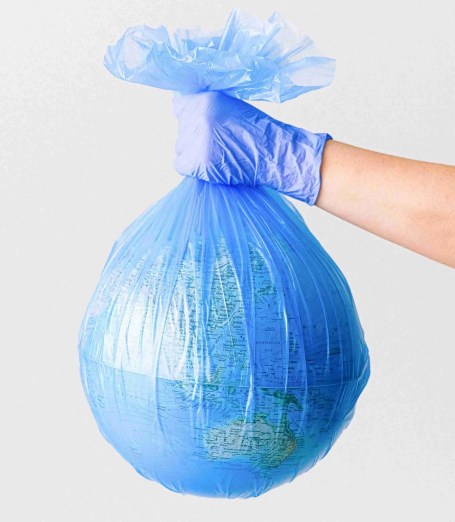
Earth globe in a blue plastic bag
Photo by Anna Shvets from Pexels

I haven’t bought trash bags in more than four years.

How on Earth is that possible? I can’t wait to tell you!

Paying for trash

Garbage bag, Image by cocoparisienne on Pixabay.
Image by cocoparisienne on Pixabay

We are intentionally paying for something we are going to throw away.

We all pay for garbage removal in some form, whether through municipal or property taxes or through a waste management service. On top of that, the traditionally accepted way of containing this trash is single-use plastic trash bags. We pay for new plastic bags, made from fossil fuels, to deposit and remove waste from our homes.

Every time consumers purchase plastic, we are supporting the plastics industry and fueling the effort to harvest more fossil fuels. Then we take those bags we paid for and put them in the ground. We are paying to throw stuff away.

“The first plastic garbage bag was produced in 1950. Globally, these bags collect 7.4 million tons of waste each day.”1

I’ve saved quite a bit of money by not buying trash bags. Trash bags range from $4 per box up to $12 per box depending on size, strength, flexibility, and even scent. Advertisers want you to believe that the most expensive trash bags will keep your home clean and sanitary. This is not a new trend, but one that has been accelerated by companies such as Glad Products (owned by Clorox) who conducted surveys and discovered that many Americans believe any bad smell means their home is dirty (or rather, fear that other people will think they’re house is dirty). Worse, scented trash bags likely contain phthalates (commonly referred to as “fragrances”) which are usually endocrine and hormone disruptors that can cause serious health problems over time. These scents may mask the odor of your garbage, but at what cost to your health?

This slideshow requires JavaScript.

Another marketing trend to be aware of is “biodegradable” or bioplastic trash bags. Don’t be fooled. Nothing, including these bags, breaks down in a landfill. They require an industrial composting facility to biodegrade. “There’s also no telling if harmful additives or chemicals were added during the manufacturing process, and not all bags labeled biodegradable or compostable will actually break down in a compost facility.”2 Recycled plastic trash bags are better than new or ‘virgin’ plastic bags, but I still do not buy these for my home. 

“Landfills are not meant to encourage decomposition. They are dry and anaerobic spaces that essentially ‘mummify’ anything contained in them, including plastic.”3 

But now you can stop buying them too.

Necessity

Three years ago, it occurred to me that I was wasting money buying bags just to put in a landfill. Then I read a blog article on myplasticfreelife.com and decided that there really is no need for store-bought plastic garbage bags. “Since we make almost zero trash, and the trash we do make is dry, we don’t have any need for bags to collect it,” the author wrote.[efn_note]Article, “Collecting Garbage Without Plastic Trash Bags?” myplasticfreelife.com, February 15, 2010.[/efn_note] I found that once I eliminated wet garbage, I no longer needed plastic garbage bags.

What is wet garbage?

This mostly refers to food scraps and food waste. If you are able to compost through a municipal service like the ones they have in California, please do so. However, many cities and states do not offer this service as part of their waste management plan, including where we live. My family decided to start our own compost bin, which you can read about here. If you start composting, you will not have wet trash and thus will not need a plastic liner. Best of all, except for the initial cost of implementing a compost bin, composting is free! If you are paying for waste removal directly, you can reduce the amount of trash and frequency of pick-ups (thus cost savings) simply by composting.

About 34% of our waste is food scraps, yard trimmings, and other biological waste.

Waste reduction

We’ve noticed that many neighbors fill their 96-gallon city-issued garbage bin almost every week. We’ve only filled ours once, and that was when we had a major bathroom remodel in our home. But every city household is allotted a 96-gallon garbage bin that is picked up weekly. I haven’t done the exact math, but I believe that that is between 8 and 12 million gallons of garbage per week that our just our city is potentially landfilling.

This must stop. Our globe cannot sustain this level of trash.

Full 96-gallon city issued garbage bin
City-issued 96-gallon garbage bin, full with a week’s worth of trash from a single household. Photo by me

My family reduced our waste by buying food and other items with as little packaging as possible. We eliminated single-use disposable items and recycled what we could. Striving to be plastic-free and live a minimalist lifestyle reduced our overall trash. With these efforts, combined with composting, our garbage volume went down to about one bag of trash per month!

One bag of trash per month is far from our zero-waste goal, but it’s much less compared to most households. And Chattanooga is not zero-waste friendly.

Black garbage bag with the phrase, "Where does the garbage go?"
“Where Does the Garbage Go?” by Colin Dunn on Flickr, Creative Commons license (CC BY 2.0)

Is Trash-Bag Free Possible?

It depends on how much trash you create, where you live, and how trash is transported. Some municipalities require garbage to be bagged. I wanted to stop using trash bags completely. But what I discovered with our city waste haulers is that unbagged garbage tends to either not make it into the trucks and falls on the ground in the neighborhood, or it blows out of the truck while they are driving down the road. In fact, I saw it happening so often that I tried to report the incidents to the city. But I could not obtain enough information about specific trucks while driving to provide good reporting, so nothing came of that. Pay attention to the waste hauling trucks in your area, or call your local municipality and find out if they have measures in place to help prevent these problems.

Back of garbage truck
This garbage truck lost several pieces of trash as I went down the same road, mainly lightweight plastic pieces. The Tennessee River flows through Chattanooga and any waste that gets into the river ends up in the ocean. Photo by me (at a stoplight).

Trash Bag Alternatives

I let our house run out of garbage bags three years ago and haven’t bought any since. However, since we have to use some kind of trash bag, just to keep our trash contained after it is picked up by the city, we use anything that resembles a garbage bag and staple them closed when it is full to prevent spillage. You can use anything! The most common of these includes:

      • Brown paper bags from the grocery store
      • Empty dog food bags
      • Large shopping bags that show up (even though we always use our own cloth bags at the store, these still manage to make their way into my home from shipping, other people, etc.)
      • Mulch and gravel bags (this is hard to buy in bulk where we live unless you own a truck, so we have to buy it in plastic )
      • Foil insulation bags (these are from Amazon/Whole Foods – during COVID-19 we had to get grocery store delivery for a while, and this was how they delivered our cold items. We have a couple of dozen of these now and they are not recyclable.)
      • Make your own DIY trash bags out of shipping envelopes

I also loved finding a use for these items. It felt wrong to buy a trash bag to throw away more bags or paying to bag the bags.

This slideshow requires JavaScript.

Looking Forward

I would like to further reduce my waste through less and better packaging, improved zero waste capabilities, striving for plastic-free living, and minimalism. Ideally, someday, I won’t have so many shipping envelopes around. It would be better if I could purchase items in person and locally, which will take not only getting past the pandemic but businesses increasing package-free/plastic-free/zero-waste options in our area as well.

So free yourself from this practice of buying new plastic to almost directly put in the ground. You can stop paying for trash bags today, and use whatever bags come into your home. Thank you for reading, and please subscribe!


Footnotes:

The Great Christmas Tree Debate

Miniature red car and Christmas tree
Photo by Kristina Paukshtite from Pexels.

Real, or artificial? The great Christmas tree debate, each side with pros and cons. I have never been able to pick a side in this annual conundrum. That is, until I found a great zero-waste solution.

Artificial Christmas tree with red and gold garlands and ornaments, and a gold star.
Photo by Lisa Fotios from Pexels.

Artificial Trees

I grew up with an artificial tree, and that is what we have now. We bought it after buying our home but before starting our plastic-free journey, and before I knew about the potential toxins in artificial Christmas trees. Also, I personally always believed that a fake tree was better since it is reusable. I thought that cutting down a tree was killing it. And I thought that killing a tree just to have it in my home for one holiday seemed selfish and anti-nature.

Most artificial Christmas trees are made of metals and polyvinyl chloride (PVC) plastics, which can be a potential source of hazardous lead. “The potential for lead poisoning is great enough that fake trees made in China are required by California Prop 65 to have a warning label,” according to the National Christmas Tree Association.1

Prop 65, or Proposition 65, provides warnings about significant exposures to chemicals that cause cancer, birth defects, or other reproductive harm.

PVC also releases gases known as volatile organic compounds (VOCs) and phthalates that can irritate the eyes, nose, and lungs. I’ve seen recommendations to shop for a PVC-free tree made from polyethylene, which is considered safer and not known to leach harmful chemicals. But this is not easy to find. I did discover that IKEA’s Christmas trees are PVC and BPA-free. Even if you find one,  it’s still a plastic tree.

From what I’ve read, it seems that most off-gassing may occur when the tree is new, so unpack it and leave it outside to off-gas for a while before bringing it into your home. According to the American Christmas Tree Association (ACTA), if you purchase an artificial tree, use it for at least six to nine years before replacing it.2

That Smell

Among the arguments I’ve heard for real trees, one of the most common is the smell. Those of us with an artificial tree are relegated to scented pine candles, air fresheners, or scented ornament sticks. However, all of those items that are artificially scented likely contain phthalates and other chemicals that are not safe to breathe. Don’t feel bad for not knowing that, I used to use them, too! But please safely dispose of them now. Look for a soy or beeswax candle, as they are usually much safer. If you have an artificial tree and really want to have that smell in your home, perhaps you can find a few sprigs of pine to put in a vase.

Pine tree
Photo by Loren Cutler on Unsplash.

Real Trees

According to the National Christmas Tree Association (NCTA), approximately 25-30 million trees sold in the U.S. every year. There are close to 350 million trees growing on Christmas Tree farms just in the U.S.3

Tree farms emit oxygen, absorb carbon dioxide, and filter toxins from our air. The NCTA indicates that for every real Christmas tree harvested, 1 to 3 seedlings are planted the following spring. “Christmas tree farms stabilize the soil, protect water supplies and support complex eco-systems.”4

Many Christmas tree farms across the world may be monoculture farms, meaning they only grow a single crop which does not encourage biodiversity and sometimes requires extra pesticides to protect the plants. However, “very few Christmas trees are removed from federal forests, and those that are, are strictly regulated by the U.S. Forest Service.”5

The Great Debate

According to a significant study conducted in 2010, the environmental friendliness of a real or artificial Christmas tree depends upon how a family uses it. “The study found that the environmental impacts of one artificial tree used for more than eight Christmases is environmentally friendlier than purchasing eight or more real cut trees over eight years.”6

ACTA encourages consumers to consider buying a locally grown tree if possible to reduce emissions from traveling to buy it.

Large pine tree in a forested area.
Photo by Loren Cutler on Unsplash.

Disposal of Either Type

Real Christmas trees biodegrade or can be recycled. “Real trees are more sustainable because they are biodegradable, unlike plastic trees which fill landfills and cause more harm than good to the environment.”7

The Arbor Day Foundation also offered multiple ways to recycle a real Christmas tree. “There are more than 4,000 local Christmas Tree recycling programs throughout the United States,” according to the NCTA.8

If you plan to replace an artificial tree, donate it before you dispose of it in a landfill. You can donate it to a thrift store, a neighbor, a church, or maybe a homeless shelter. Check with local non-profits, as even your local zoo or school may want one. You could also put it online for free through Freecycle, Nextdoor, or Facebook.

4 foot potted Christmas tree.
Image from www.rent-a-christmas.com/

The Best Solution: Zero Waste

This year I discovered Christmas Tree rental! This may be the best of both worlds and is a zero-waste option. Tree rental companies deliver the tree to your home or office in a pot and you can decorate it. When the holiday season is over, the rental company will pick it up. This means you can have a real tree annually without cutting one down, and there’s no storage of a plastic tree year-to-year. While this is not a new solution, it is one that is growing.

One Christmas Tree nursery in California notes that their renting program “focuses on zero waste and employs a minimal footprint operation through efficiency and conservation.”9

You’ll also get that smell of fresh pine, the tree will be replanted, the trees provide habitats for wildlife in between the holiday seasons, and they remove carbon dioxide and toxins both from your home and the atmosphere.

This option isn’t available everywhere yet, but be sure to check your state or region. The pricing that I found with various companies ranged from $35-$75, and I saw some as high as $155. But the cost of cutting down a tree is about the same – so why kill a tree?

Let me know if you’ve tried Christmas tree rental and how your experience went. Thanks for reading, and please subscribe. I wish you and your family a very Happy Holidays!

French bulldog with Christmas lights and letter to Santa, with milk and dog treats on a wooden tray, and stuffed Christmas plushes around it.
Photo by Karsten Winegeart on Unsplash.


Additional Resources:

Article, “Tiny House Family’s Christmas Tree Solution,” Tiny House Talk, December 23, 2018.

Article, “8 Sustainable Ways to Recycle Your Christmas Tree,” Arbor Day Foundation, December 26, 2019.

Guide, “How to recycle: Real Christmas Trees have a second life,” National Christmas Tree Association, accessed December 21, 2020.

Footnotes:

  1. Article, “What you might not know about fake trees,” National Christmas Tree Association, accessed December 21, 2020. ↩︎
  2. Article, “Are Real or Artificial Christmas Trees More Environmentally Friendly?” American Christmas Tree Association, December 7, 2010. ↩︎
  3. Article, “Quick Tree facts,” National Christmas Tree Association, accessed December 21, 2020. ↩︎
  4. Article, “What you might not know about fake trees,” National Christmas Tree Association, accessed December 21, 2020. ↩︎
  5. Article, “8 Sustainable Ways to Recycle your Christmas Tree,” Arbor Day Foundation, December 26, 2019. ↩︎
  6. Article, “Are Real or Artificial Christmas Trees More Environmentally Friendly?” American Christmas Tree Association, December 7, 2010. ↩︎
  7. Article, “8 Sustainable Ways to Recycle your Christmas Tree,” Arbor Day Foundation, December 26, 2019. ↩︎
  8. Article, “Quick Tree facts,” National Christmas Tree Association, accessed December 21, 2020. ↩︎
  9. Website, About Us page, Rent a Christmas Tree LLC, accessed December 22, 2020. ↩︎

Styrofoam and Polystyrene Containers are Poisoning Your Food, Part 3

Polystyrene food container from Popeye's, sitting on the bank of the Tennessee River.
Polystyrene food container from Popeyes, sitting on the bank of the Tennessee River. Photo by me

In Part 1 and Part 2 of this series, I told you about polystyrene (Styrofoam) food containers, how and what it they are made with, and how polystyrene is harmful and toxic to human health. Today I’ll explain its poor recyclability and its environmental impact.

“The irrefutable evidence and research has been mounting over decades from various federal agencies, city staff reports, state staff reports, environmental clubs, and nonprofits,” pertaining to the negative effects of Expanded Polystyrene (EPS). -Jeff Lewis, environmentalist writer4

Polystyrene container showing the #6 recycling symbol.
Polystyrene container showing the #6 recycling symbol. Photo by me

Recyclability

In practice, polystyrene food packaging is not recycled. Despite misconceptions, most municipalities do not accept it for recycling, even with the #6 recycling symbol. If it is collected, it often goes to the landfill instead of a recycling facility. Polystyrene is often contaminated with food residue which makes recycling impractical. Additionally, most establishments that use polystyrene food packaging do not provide separate recycling bins, so customers have no choice but to throw them in the regular trash. Nothing is recycled when it is thrown in the trash.

Overflowing trash receptacle at Dunkin Donuts
Photo by Chris Caravello on Flickr, Creative Commons license (CC BY 2.0)

Even when you do find a place that accepts polystyrene, there’s no guarantee that the meat trays and egg cartons that you wash, save, and cart back to the supermarket actually get recycled, if you’ll recall from Part 6 of my Packaging Series. Often, those collection sites are simply to draw you into the store and keep local recycling streams free from those materials.

“Styrofoam, despite the #6 plastic composition and the misleading recycling symbol it often carries, cannot be recycled easily or cost-effectively – less than 1% of Styrofoam is recycled in the USA.” -Green Dining Alliance of St. Louis

Cheaper to Produce New Polystyrene

Unfortunately, it is also easier and cheaper to produce new polystyrene than it is to collect, sort, and clean it for the recycling process. Thus, the market for recycled polystyrene is small and unlikely to grow. Companies such as BASF and Dart Container Corporation would have you believe otherwise. Both advocate for polystyrene recycling because they are producers of it as well. Many of the companies that do recycle polystyrene don’t accept food containers, they only accept polystyrene shipping materials. There are a few companies that do recycle used polystyrene food containers and have ways to clean them. But because food contamination makes food containers very costly to sort, clean, and recycle, those companies are rare.

New York City’s Department of Sanitation studied recycling polystyrene food containers and determined that recycling them is not economically feasible. “The report found that the majority of Styrofoam collected for recycling ended up in landfill anyway—but at a higher economic cost and carbon footprint compared to being directly landfilled.” This includes the cost of collection, recycling separation and contamination, and ultimately hauling it a second time to the landfill.5 The conclusion, as always, is to stop relying on recycling and focus on ending the use of single-use disposable items.

“The reason for the decline in price is that crude oil prices are so low that it is cheaper for companies to produce new Styrofoam products than to clean and reuse postconsumer products. This economic reality discourages other companies from getting into the market of recycling the polystyrene.” -Real Cost of Styrofoam6

The Volume of Polystyrene is Overwhelming

The sheer volume of discarded polystyrene is a problem as well. The world produces about 14 million tons of polystyrene annually. As with any type of plastic, we cannot recycle away the problem of single-use disposable items. We must stop it at the source; refusing to use them whenever possible.

Polystyrene cup left in the woods.
Image by Nik Stanbridge on Flickr, Creative Commons license (CC BY-NC-ND 2.0)

“25 billion Styrofoam coffee cups are used for just a few minutes and thrown away every year.” -Green Dining Alliance of St. Louis

Environmental Impacts

Since polystyrene is not recyclable, most of it goes to landfills and some inevitably makes its way into the environment. According to the Environmental Protection Agency (EPA), Styrofoam production is the fifth largest creator of toxic waste in the United States. Polystyrene products break down into smaller and smaller pieces and eventually become microplastics. Birds and marine life ingest small pieces because they mistake the pieces for food. Additionally, after the ingested polystyrene kills an animal, it can go on to kill again after that animal decomposes and the pieces reenter the environment.

“80% of Styrofoam ends up in landfills, and much of the remaining 20% in waterways.” -Green Dining Alliance of St. Louis

Polystyrene does not biodegrade, even the alleged biodegradable and compostable polystyrene, as I wrote about in Part 2 of my Packaging Series. Again, most take-out packaging is thrown away. Polystyrene foam litter is common as it is lightweight and breaks apart easily, making smaller pieces that become windswept. The Clean Water Action organization noted important facts about polystyrene’s environmental harm:7

      • Expanded polystyrene (EPS) products and their associated chemicals (such as styrenes) are widespread in the marine environment.
      • Polystyrene is in the digestive tracts of marine invertebrate and vertebrate wildlife.
      • Polystyrene is one of the most common types of debris on shorelines and beaches worldwide.

A large piece of a polystyrene container, found near the bank of the Tennessee River.
A large piece of a polystyrene container found near the bank of the Tennessee River. Photo by me

“Why is such a toxic material in use? Polystyrene is cheaper than some alternatives. However, the environmental expense of polystyrene far exceeds the cost restaurants and grocery stores are currently paying to provide them.” -Massachuesetts Sierra Club8

Solution

After considering the costs to human health, wildlife, and the environment, the solution is to end the use of polystyrene food packaging. Many reports have a similar conclusion and call for banning polystyrene or finding alternatives (see Additional Resources below). We must call for businesses to stop using these products and for local governments to ban their use. Moreover, we need to greatly reduce the amounts of all single-use disposable products we use. In my next article, I’ll explore alternatives to polystyrene food containers, the role of companies in their use of it, and municipal bans on polystyrene. Thank you for reading, and please subscribe!


Additional resources:

Video, “Plastic Recycling, Inc. recycles foam #6 from a MRF,” Plastic Recycling, Inc., March 25, 2016. This video shows the process for one of the rare companies that actually recycles polystyrene food packaging.

Article, “Now and forever: The Styrofoam dilemma,” by Catherine Solyom, Canwest News Service, Accessed October 20, 2020.

Report from cleanwateraction.org, “Greenhouse Gas Impacts
of Disposable vs Reusable Foodservice Products,” January 2017.


Footnotes:

Styrofoam and Polystyrene Containers are Poisoning Your Food, Part 2

Last updated on May 2, 2023.

Yellow warning sign with skull and crossbones
Image by OpenIcons from Pixabay.

In Part 1 of this series, I introduced polystyrene, which we commonly refer to as Styrofoam, food packaging. This type of plastic is terrible for the environment and human health. Today, we’ll look at the toxicity of polystyrene in depth.

After watching friends and coworkers repeatedly reheat their take-out and leftovers in polystyrene, I decided to write an article about it. I had known polystyrene was potentially toxic for a long time, but I had no idea just how toxic it is.

Chemicals Leach from Containers into Food

Polystyrene leaches styrene and benzene, chemicals that have known toxic properties, into food. In testing, one scientific journal independently tested and found that polystyrene leaches more toxins when in contact with high-temperature contents and into foods with higher fat content.9 That means that if you buy hot food, fatty food, soup, or coffee and it is packaged in polystyrene, some of the chemicals from the container leach into your food. Over time, these chemicals can cause severe health problems.

“Styrene is likely to leach when it comes in contact with fatty foods, hot beverages, and especially alcohol. When thinking about the kinds of foods that typically end up in Styrofoam containers (fatty foods) and cups (hot coffee), it seems as though the exact kinds of items Styrofoam contains are exactly the kind of items it should never touch.” -The Green Dining Alliance10

Melted polystyrene spots from hot food in a polystyrene container.
I recently went to a BBQ restaurant in Dayton, TN. They serve most of their food in polystyrene containers. My fried okra melted the polystyrene and those chemicals certainly leached into my food. I didn’t eat the okra, I dumped it out so that I could photograph the container. I likely will never dine at that place again. It really concerns me that people eat food out of these types of containers every day! Photo by Marie Cullis.

Melted polystyrene spots from hot food in a polystyrene container.
Photo by Marie Cullis.

Known Toxicity

When I searched “polystyrene human health” I got more than 13 million results. After reading many articles, I realized that all organizations and even the U.S. government, including the Environmental Protection Agency (EPA), know that polystyrene is harmful to human health as well as land and marine environments. Furthermore, the Food and Drug Administration (FDA) permits the migration of styrene from packaging into food!

Study after study shows that chemicals from polystyrene leach into foods and beverages, especially with higher temperatures and food with higher fat content. And study after study shows that styrene is dangerous to human health. In fact, most agencies caution against the use of polystyrene because of the known health hazards, including these:

        • The Environmental Protection Agency (EPA)
        • The World Health Organization (WHO)
        • The International Agency for Research on Cancer
        • National Institute for Environmental Health Sciences
        • U.S. Department of Health and Human Services (DHHS)
        • National Research Council (NRC)
        • Occupational Safety and Health Administration (OSHA)
        • National Institute for Occupational Safety and Health
        • The Agency for Toxic Substances & Disease Registry (ATSDR), Center for Disease Control and Prevention (CDC)

Take-out in polystyrene containers
Image by albedo20 on Flickr, Creative Commons license (CC BY-NC-ND 2.0).

A Known Carcinogen

Styrene exposure increases the risk of leukemia and lymphoma and is a neurotoxin. This alone is enough reason to avoid polystyrene containers. In 2018, the World Health Organization (WHO) reclassified styrene as a probable carcinogen.11 While the EPA does not classify it as a carcinogen, it noted that animal cancer studies provided evidence for carcinogenicity.12 Several of the organizations mentioned above, including the International Agency for Research on Cancer and the Department of Health and Human Services, consider it to be carcinogenic.

Hormone Disruption

There are countless studies that show certain types of plastics contain known hormone disruptors. Those chemicals often mimic estrogen and they seep into food and beverages (including breastmilk). In 2014, Environmental Health tested 11 samples of polystyrene and consistently found estrogen seepage after exposure to intense steam or ultraviolet rays.13 Since polystyrene is a type of plastic, this is just one more reason to avoid polystyrene containers.

It is terrifying that many schools use foam trays for cafeteria food. Hormone disruption in young children prevents them from developing normally, can affect their ability to reproduce as adults, and can set them up to be prone to other diseases.

Polystyrene food tray
Image by Laura Taylor on Flickr, Creative Commons license (CC BY-NC-ND 2.0).

Other Health Hazards

Styrene exposure can come from other sources, such as photocopier toner, automobile exhaust, and plastics manufacturing. Exposure can cause irritation of the skin, eyes, mucous membranes, the upper respiratory tract, and gastrointestinal irritation. Chronic exposure can cause neurological problems such as depression, headaches, fatigue, weakness, hearing loss, and disrupted kidney function.14

Additional Unknown Chemicals

There are many chemicals and ingredients that are not tested for and not regulated by the EPA and FDA. While this may seem surprising, the standard operating procedure in the United States is to allow a chemical to be used until a known hazard is not only discovered, but proven. Essentially, chemicals are innocent until proven guilty.

Hefty polystyrene container
Hefty polystyrene container, photo by Marie Cullis.

Exposure through Manufacturing

Anyone who lives near or works in polystyrene manufacturing sites is at risk of even greater health problems due to respiratory exposure. The Clean Water Action organization noted that “occupational exposure to Styrene increases [the] risk of lymphoma, leukemia, lung tumors, pancreatic cancer, urinary bladder cancer, prostate cancer, and colorectal cancer. High rates of neurotoxicological effects have been reported in workers,” as well as decreased sperm counts.15 These plants also emit a toxic and volatile gas called pentane, often used as a blowing agent in the production of polystyrene. 

“Over fifty chemical byproducts are released during the manufacturing of polystyrene, contaminating the air, water and communities that live near these facilities.” Children’s Environmental Health Network16

What You Can Do

Polystyrene is toxic to human health. When ordering take-out, ask the restaurant if they use “Styrofoam” or polystyrene containers. If they do, you can ask if they have an alternative type of container or you can decide to order from somewhere else. When bringing leftovers home from a restaurant, keep a glass or metal container in your car specifically for such occasions. Bring your own reusable coffee mug to coffee shops. As I mentioned at the beginning of my article, try to avoid eating food in polystyrene, and definitely stop reheating your food in polystyrene containers in the microwave. 

Last, polystyrene is the most common type of #6 plastic and is largely not recyclable because of food contamination. In Part 3, I will cover the problems with recycling and the environmental damage polystyrene causes. Thank you for reading, and please share and subscribe!


Additional Resources:

“Styrene,” Report on Carcinogens, 14th Edition, National Toxicology Program, Department of Health and Human Services.

Report, “What’s the Package? Unveiling the Toxic Secrets of Food and Beverage Packaging,” Clean Water Action and Clean Water Fund, August 2016.

Article, “Leaching of styrene and other aromatic compounds in drinking water from PS bottles,” by Maqbool Ahmad and Ahmad S. Bajahlan, Journal of Environmental Sciences, 19 (2007), p. 421–426, accessed September 12, 2021.

Footnotes:

Styrofoam and Polystyrene Containers are Poisoning Your Food, Part 1

Last updated June 20, 2021.

Black Styrofoam take out container with chicken tenders and french fries, mapkin on table next to container.
Photo from www.webstaurantstore.com.

Take-out has definitely increased in popularity since the onset of COVID-19 and often take-out and leftovers are transported and served in what we colloquially refer to as Styrofoam containers. These containers present several problems because they largely cannot be recycled or composted. These items clutter up landfills, litter rivers, and pollute oceans. They are extremely dangerous to marine life because the containers break down into small pieces that many species ingest. Worst of all, these containers leach toxins into our food, and those toxins are poisonous to humans.

This is the first of a five-part series to explain the dangers of putting food into said containers. I want to acknowledge that I am neither a physician nor a scientist. I am, however, a concerned environmentalist, mother, and friend, and as such I must inform you that I feel it is imperative to stop eating and reheating food in Styrofoam/polystyrene containers immediately.

Styrofoam vs. Polystyrene

Foam take-out containers are actually made of polystyrene, which is how I’ll refer to them in this post. Though it has become a genericization, Styrofoam is a trademarked brand of closed-cell extruded polystyrene foam (XPS), commonly called “Blue Board” and used in building materials and insulation. This material is light blue and is owned and manufactured by The Dow Chemical Company. The kind used for take-out and food packaging is actually Expanded Polystyrene, or EPS. Both types have insulating and cushioning properties.

“Polystyrene is the name for a whole family of plastics … but the foam forms have [a] disproportional environmental impact.” -Joseph A. Davis, Society of Environmental Journalists

Styrofoam food container, white.
Styrofoam food container. Image by Aislan Máximo “Max” on Pixabay.

What is Polystyrene?

Polystyrene is a chemically produced plastic that can be hard or foam. The foam is created by expanding the styrene (plastic), a petroleum by-product, accomplished by blowing various gases into it. Polystyrene is made from ethylene and benzene, both hydrocarbons derived from petroleum and natural gas, also known as petrochemicals. So those fast-food containers are made from fossils fuels and mixed with chemicals. That doesn’t sound too appetizing, does it?

The American Chemistry Council (ACC), promoters of all plastic despite the human health and environmental problems it causes, infers that polystyrene is natural when it is far from it: “Polystyrene is made by stringing together, or polymerizing, styrene, a building-block chemical used in the manufacture of many products. Styrene also occurs naturally in foods such as strawberries, cinnamon, coffee and beef.”17 They are referring to the minuscule amounts in those natural items, which are not mixed with additional additives and chemicals that are potentially dangerous. I find it appalling that the ACC makes such a comparison.

Added Chemicals

Many sources indicate that polystyrene is made up of mostly air, but that’s not completely accurate. The plastic is expanded into foam by creating air pockets between the polymers, but a gas or a chemical is used in expanding it. The industry formerly used chlorofluorocarbons (CFCs) as a blowing agent, and as you may know, CFCs deplete the planet’s protective ozone layer. Most CFCs have been removed worldwide following bans in the late 1980s.18

Today, there are two principal methods of production for polystyrene in the United States, according to the CDC’s Agency for Toxic Substances and Disease Registry. The primary method uses ethylbenzene; the second is created through a series of chemical reactions using ethylbenzene, propylene, propylene oxide, and α-methyl phenyl carbinol.19

Chicken, rice, and vegetables in a white polystyrene container.
Image by Vitalis Arnoldus from Pixabay.

Use of Polystyrene Containers

Polystyrene is used for packaging materials, insulation, fiberglass, automobile parts, plastic pipes, carpet backing, boat hulls, and food packaging and containers. There are two types of EPS food containers. The rigid form is used for clear food containers, plates, bowls, beverage cups, lids, utensils, and straws. The foam form is used to make plates, insulated beverage cups, soup bowls, ice cream cups, clamshell food containers, meat trays, and cafeteria trays. These containers are everywhere: restaurants, fast-food restaurants, cafeterias, buffets, coffee shops, ice cream shops, movie theaters, grocery stores, supermarkets, etc.

Keebler ice cream cones, packed in #6 polystyrene packaging.
Keebler ice cream cones, packed in #6 polystyrene packaging. Photos by Marie Cullis.

Keebler ice cream cones, packed in #6 polystyrene packaging.

Inexpensive but Harmful

This material is inexpensive to manufacture. It is also cheap to ship because polystyrene is so light, but it also makes it easy for the pieces to take to flight, littering our roads, rivers, and oceans. The ACC really promotes the use of material despite environmental and human health hazards: “Polystyrene foodservice packaging typically insulates better, keeps food fresher longer and costs less than alternatives.”20 But the true cost is devastating when considering the pollution, human health effects, and harm to wildlife.

“When considering the cleanup costs, carbon emissions, environmental costs, and potential health effects, the hidden cost of Styrofoam comes out to $7 billion, annually.” -Green Dining Alliance of St. Louis

Looking Forward

The world produces more than 14 million US tons of polystyrene each year according to earthday.org and the Green Dining Alliance. Most of that ends up in the trash or worse, our land, rivers, and ocean. Polystyrene is the most common type of #6 plastic and is largely not recyclable because of food contamination. I will explore these topics more in Part 3 of this series. For now, please know this, these containers leach harmful chemicals into your food, especially when heated. The best thing you can do is not to use them.

When ordering take-out, you can always ask the restaurant if they use “Styrofoam” or polystyrene containers. If they do, you can either ask if they have an alternative or decide to order from somewhere else. When bringing leftovers home from a restaurant, keep a glass or metal container in your car specifically for such occasions. It’s also a good idea to bring your own reusable coffee mug to coffee shops. As I mentioned at the beginning of my post, please try to avoid eating food in polystyrene, and definitely stop reheating your food in polystyrene containers in the microwave. Polystyrene is toxic to human health. I will cover this in more detail in my next post, Part 2.

Thank you for reading, and please share and subscribe to keep up with this short series and others to come!


Additional Resource:

Article, “Is the 30-Year-Long Styrofoam War Nearing Its End?” by Katherine Martinelli, JSTOR Daily, 

Footnotes:

Update: Death of a Plastic Shower Curtain, Part 3

Last updated on March 27, 2023.

A couple of years ago, I wrote about the death of my vinyl plastic shower curtain liner, and my decision to never buy plastic liners again. Plastic liners off-gas toxic chemicals in your home and the curtains can end up in the ocean after disposal. I tried using the fabric curtain without a liner, but it quickly grew mildew and mold and after washing it several times, it started to fall apart. So in my second article, I repaired it and then coated the bottom half of the curtain (where the most moisture accumulates) with Otter Wax.

This, however, was a complete failure.

The cloth curtain grew mildew and mold even quicker, and to the point that I could no longer clean it. I don’t know if I spread the Otter Wax unevenly or just didn’t apply enough onto the fabric. It seemed that the nooks and crannies of the fabric weave held in moisture easier. Perhaps Otter Wax was not meant to prevent mold growth in fabric that is constantly in a warm, moist environment.

Cloth shower curtain with mildew growth

Cloth shower curtain with mildew growth

No More Plastic

I refuse to give up and go back to vinyl/plastic shower curtain liners. Since first writing about my shower curtain pursuit in 2018, I have learned a lot about the chemical compositions of plastics and how they adversely affect human health. Captain Charles Moore wrote about this subject in his book, Plastic Ocean:

“Who doesn’t know that potent ‘plasticky’ smell that somehow we’ve come to associate with ‘new’ and ‘clean’?”

He cited a 2008 study that quantified fumes off-gassing from PVC shower curtains, in which they logged 108 chemicals, mostly volatile organic compounds (VOCs) and phthalates. “Prolonged exposure to these chemicals is associated with respiratory irritation, headaches, nausea, and potential harm to the liver, the kidneys, and the central nervous system. They can also cause cancer.” There are now many studies about off-gassing plastics and they all indicate the same health problems.

Failing Forward

If you’ll recall from my second post, the gray cloth shower curtain was intended to be used with a plastic liner and not meant to withstand daily use without one. So I learned to invest in a better cloth shower curtain, one intended to be used solely. The lower cost of plastic shower curtains is not worth the environmental consequences nor the risks to my family’s health. I decided to purchase a hemp canvas shower curtain. Hemp fabrics inhibit mold and mildew growth which makes them a great option for shower curtains. It was expensive but it was the best option for our home. I’ve had it for just over one year now, and I will share my trials and errors with you.

Hemp shower curtain in package

Cloth shower curtains require special care

Overall, I like this shower curtain, but it is not perfect. We adjusted the curtain rod because this curtain was much longer than our old shower curtain. But then the first time I washed and dried it, the curtain shrunk by about 7 inches! So again, we had to adjust the shower curtain rod, which again marked up the walls. I learned that it is best to simply wash it in the machine and rehang it to dry.

The hemp shower curtain came with specific care instructions, and although they appeared unprofessional, I tried to follow them. We draw the curtain outside of the shower to let it dry out after every shower. But I do not launder it weekly. I have had some mold growth so I have boiled it in hot water to kill it per the instructions and that seemed to work.

Hemp shower curtain instructions

However, upon writing this post, I discovered that the instructions have been updated on the website and are different from the ones I received in the package. They now recommend washing it every few weeks instead of weekly. If mold appears, they suggest washing the shower curtain with half a cup of Borax and/or oxygen bleach in the machine on the delicate cycle. Last, they indicate to hang dry it – I wish I’d known that before drying it in the dryer and thus shrinking it that first time!

Hemp shower curtain in bathroom
This is the hemp curtain as of this writing. You can see slight discoloration at the bottom but I don’t find it all that noticeable.

Shopping for Shower Curtains

Obviously, stay away from plastic shower curtains, including plastic-derived fabrics such as polyester, nylon, and microfiber. These synthetics can cause as much environmental damage as vinyl, especially when laundered. Some of these “fabric” polyester curtains even contain chemicals to make the plastic fabric water-repellent. Ingredients such as perfluorooctane sulfonate, a chemical known to cause cancer and has a Proposition 65 warning, are just one example I found on Kohls’ website. If you do happen to find a cotton and “chemical-free” shower curtain at a department store, these almost always recommend using a liner with the curtain, defeating the purpose of switching to a fabric shower curtain. I’ve found examples of those on Target’s website.

Look for hemp or a hemp cotton blend. If you can’t find a hemp curtain in your price range, get a cotton curtain so that you can wash it regularly. Read the fine print so you know exactly what type of fabric it is. Check the details as some fabric curtains have a disclaimer such as, “recommend using with a shower curtain liner.” This often indicates that the curtain cannot withstand constant water exposure and will not last very long. Also, read the reviews to help determine durability and quality.

Another option is reclaimed sailcloth, which I mentioned in a previous post. This is what I’d like to purchase someday as long as I can find one made of authentic, reclaimed sailcloth. These generally run in the $200-$300 range and I frankly cannot afford one right now.

Reclaimed sailcloth shower curtain
Reclaimed sailcloth shower curtain, from Etsy. Photo by seller.

Conclusion

Other than having glass doors professionally installed, I’m not sure there is a perfect replacement for a plastic shower curtain. Although a better option than plastic by far, the mold-resistant hemp canvas shower curtain is not perfect. This curtain does not round or cover the ends of the shower the way a plastic curtain does, so some water gets out and we have to clean up small amounts of water on the walls and floors after each shower.

Unfortunately, the curtain has begun to deteriorate the fabric on the bottom section where it gets the wettest and where mold grows. I think I’m going to hem it where the holes are rather than trying to patch it. It might be my fault for not laundering it often enough. But I guess I was hoping for more durability for the amount I paid for it. Still, this is the best solution I have at this time, so I will continue with this curtain. If I have to do something different, I’ll be sure to update this post with a Part 4!

Corner of curtain, falling apart
One corner of the curtain is starting to fall apart. It is also not very noticeable.

I hope that this short series has been helpful and saved you some time and effort. Thanks for reading and please subscribe. I’d love to hear about your experience so please leave me a comment below!

All photos by Marie Cullis unless otherwise noted.

The Packaging Industry and How We Can Consume Differently, Epilogue

Last updated on December 11, 2021.

Sea turtle under water
Photo by Jong Marshes on Unsplash

“We cannot recycle or compost our way out of the growing plastic pollution problem. Instead of pretending that the trillions of throwaway plastic items produced each year will be recycled or composted, we must stop producing so many of them in the first place.”20

My thirteen-part packaging series was first inspired by a book.

This book.

The Future of Packaging book cover

I began this series over Christmas break 2019. My original goal was to write a well-researched pair of articles about the packaging industry, packaging waste, and what we can do as consumers to improve packaging. I had about 10 days off from work and I got up before my son every morning to research and write. I did not finish it over the break and kept working on it over the next couple of months. Finally, in March 2020 I published my first article in the series. Even at that point, it was only meant to be three parts. Then it became four articles, five articles, and so forth, with COVID-19 landing in the middle of all of that. There was so much to learn and explore that it just kept growing.

“Plastic packaging has become increasingly complex, with colors, additives, and multilayer, mixed compositions making it ever more difficult to recycle.”21

The Growth of a Series

The Future of Packaging introduced me to the complexities of the packaging industry. Upon further research, I began to wonder how I could make this much information accessible to as many people as possible. After it became thirteen parts, I put together the Quick Guide, a table of contents for easy reference.

I never intended this to be a thirteen-part series, but I kept finding topics that required depth and careful consideration. Packaging is something we encounter every single day, so I felt an urgency to stay focused on this subject. After I finished Part 13, the one about food packaging, I felt like I’d written a thorough and elaborate series. Still, I did not cover every aspect of packaging. I did not include the extreme packaging waste from take-out food, which has certainly increased since the onset of COVID-19. I declined to research cosmetics packaging and refillable cosmetics options. Last, I decided to not research pre-consumer waste, meaning waste materials created during the manufacturing process and before the product is ready for consumer use.

Receipt surrounded by supermarket products
Image by stevepb on Pixabay

My Goals

Of course, my goal is always that I want people to be eco-conscious. But what if we could normalize this consciousness? What if most of our daily decisions were environmentally conscious as the default? Maybe then we could call this mode of consumerism environmentally sub-conscious.  How tremendous would that be?

“If we accept sustainability as a core value within ourselves rather than something we should do to be considered a good person, then we are more likely to succeed in adjusting our habits.” -Beth Porter, author of Reduce, Reuse, and Reimagine

If my Packaging Industry series has helped even just a few people rethink their roles as consumers, changed how they judge packaging, and informed how they think about waste in general, then I feel like I’ve made a difference. That alone makes it worth the 8 months this took me to research, digest, and write this series. I certainly learned a great deal and changed some of my own behaviors.

Painted rock, "You make the world a better place"
Photo by Oakville News on Unsplash

But I’m not really done, there will always be more to write about. Packaging will continue because it’s necessary, but we need to create less packaging waste and better packaging that has a second life. We all have the power to consume differently, and we all vote with our spending. Just by reading this series, dear reader, you are making a difference. The information is in your mind and simply thinking about your own behaviors will have positive effects. You make the world a better place.

Thanks for taking this journey with me, and please subscribe. I’ll see you next time.

“If you want to eliminate waste in your life – and in the world – the answers will always come down to one simple thing: consume differently.” -Tom Szaky


Additional resources:

Website, Sustainable Packaging Coalition, accessed March 28, 2021.

Article, “Eat your food, and the package too,” by Elizabeth Royte, National Geographic Magazine, August 2019.

Article, “The cost of plastic packaging,” by Alexander H. Tullo, Chemical & Engineering News, October 17, 2016.

Website, Packaging of the World, accessed March 28, 2021.

Website, Packaging Digest, accessed March 28, 2021.


Footnote: