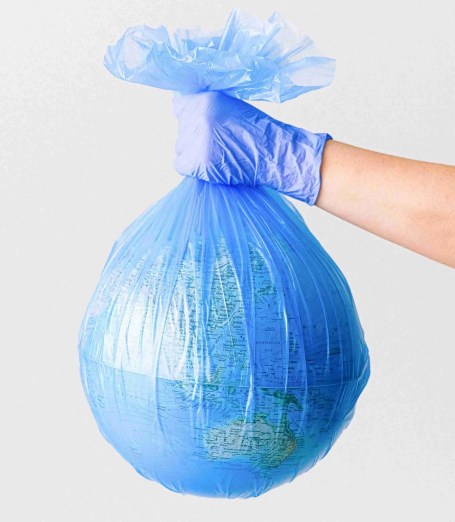
Most of us drop our recycling into a blue bin, believing we are doing the right thing, and move on. This ‘out of sight, out of mind’ point of view is because most of us are so busy that we don’t have time to think about it. But where does our recycling actually go?
If you’ll recall from my article “How Our Recycling Systems Work,” just because recycling is accepted or collected does not automatically mean that it is recycled. If you read my article on why recycling is not the answer, then you also know that our volume of waste, even when recyclable, is out of control. We send most of our recycling away, out of our country, and into the landscapes and lives of people in other countries. Those countries pay workers very low wages to sort recycling and it exposes them to toxic conditions in the process.
“While recycling and the circular economy have been touted as potential solutions, upward of half of the plastic waste intended for recycling has been exported to hundreds of countries around the world.”1
Plastic Waste Trade Watch Newsletter. Graphic of the Month – September 2021. Image from baselactionnetwork on Flickr, Creative Commons license (CC BY-NC-ND 2.0)
How Recycling Grew
While municipal recycling in the U.S. began in the 1970s as a response to quickly filling landfills, it really took off in the 1990s. Back then, recycling services were inexpensive because recyclers could easily profit from the materials. The U.S. sought to increase the recycling of municipal solid waste to avoid landfilling and incineration. Often referred to as landfill diversion, it has become increasingly important as our volumes of waste exponentially increased over the last two decades. The types of plastics accepted in municipal systems grew from just PET #1 and HDPE #2 bottles and jugs to include other types of plastics as cities and states emphasized landfill diversion.
In addition, companies and corporations used ‘recycling’ as a way to increase their sales. Recycling makes it ok to use disposables. Companies branded more of their products as environmentally redeemable, which made consumers feel better about their purchases.2 In effect, this normalized buying increased amounts of packaging, plastic, and disposables.
Marketing campaigns for plastic started with organizations like the American Chemistry Council working to protect the interests of wealthy stockholders. They launched campaigns touting the recyclability of all plastics, and “many local governments took the bait, or were pressured to fall in line.”3 Further, since plastics are made from petroleum and chemicals, the petroleum industry strongly backs organizations like the American Chemistry Council. There is a lot of money behind all the plastics in our daily lives.
“The planet’s load of nearly indestructible plastics — more than 8 billion tons have been produced worldwide over the past six decades — continues to grow.”4
Image by zibik from Pixabay
U.S. Exportation of Recycling
As the volumes of recycling increased, the U.S. began reducing domestic recycling. We began exporting our waste to China because of cheaper labor and equipment costs. At the time, China’s economic growth and its demand for our materials were strong.5 “Shipping recyclables from the U.S. to China made economic sense due in large part to the trade deficit,” wrote attorney and sustainability expert, Jennie Romer. The U.S. buys more from China than China does from the U.S. Instead of returning empty shipping containers, the U.S. began shipping recyclables at a discount.
“Due to low cost shipping and labor, the U.S. became reliant on China to accept plastic materials collected by U.S. municipal systems.“6
Family working in a landfill in China, sifting through garbage in search of recyclables, 2007. Photo by Sheila on Flickr, Creative Commons license (CC BY-NC-ND 2.0)
China Becomes the World’s Dumping Ground
China handled almost half of the world’s recyclables for about 25 years. They have imported about half of the world’s plastic waste since 1992.7 Recyclables were one of the largest categories of exported materials to China between 2007 and 2016. By 2016, the U.S. transported about 1,500 shipping containers full of recyclables across the ocean to China every day.8
Their plastic scrap import business grew from a grassroots effort among poor villagers seeking to make livelihoods. “According to one estimate, roughly sixty thousand small family farms were converted into family-run plastics-recycling facilities.”9 This recycling economy grew correspondingly as our volumes of waste increased exponentially.
The U.S. was exporting 77.9% of its plastic waste by 2016. Japan exported 87.6%. Seven European countries (Germany, the U.K. Belgium, Spain, Italy, France, and the Netherlands) exported 57.5%.10 Up to 70% of Australia’s plastic waste was going to China. Can you imagine how much plastic that is?
“For other countries, China represented a convenient dumping ground for mixed waste. For China, accepting the world’s castoffs became too big a burden.” -Randy Miller, Miller Recycling Corporation11
Family working in a Jiangsu landfill, sifting through garbage in search of any valuable recyclables, 2007. Photo by Sheila on Flickr, Creative Commons license (CC BY-NC-ND 2.0)
Operation Green Fence
In addition to the insane volumes, the recycling China received was severely contaminated. Contamination refers to recyclables that are mixed with trash, food waste, and other non-recyclables. The quality of the recyclables started to decrease. Chinese manufacturers incurred large expenses to sort out and dispose of the non-recyclables in Chinese landfills.12 Contamination rates more than doubled between 2007 and 2013.13
The Chinese government passed the Green Fence policy (aka Operation Green Fence) in 2011 and implemented it in 2013. It was a direct response to the volume and contamination problems. It authorized an aggressive inspection effort and the goal was to limit the number of contaminated recyclables and waste that was flowing into China.14 Another goal was reducing illegal foreign smuggling.15
The policy lowered the contamination rate to 1.5%. That means that 98.5% of the contents of recycling bales had to be free of food waste, trash, non-recyclables, and other debris. This was a strict rate and difficult for Materials Recovery Facilities (MRFs) to manage through single-stream recycling systems.
In the policy’s first year, “almost 70 percent of all incoming containers loaded with recyclables were subjected to thorough inspections.” Recyclers and shippers both faced risks if caught shipping substandard materials. Shippers could have their licenses revoked; recyclers could face the costs of paying for the return of containers full of non-recyclable materials. Almost 22,000 large containers were unqualified and rejected.16 Rightfully so, China did not want to receive garbage from other countries. Though the Green Fence policy was temporary, it began to set off changes in the global trade of recycling waste, especially plastic.
Operation Green Fence “highlighted the fragility of global dependence on a single importer.”17
Too Much Plastic…And Trash
Despite the effects of the Green Fence policy, exports to China continued. While the policy reduced the contamination rate to 1.5%, plastic production, and thus plastic waste, steadily increased. “In 2016 alone, about half of all plastic waste intended for recycling (14.1 million [metric tons]) was exported by 123 countries, with China taking most of it (7.35 million [metric tons]) from 43 different countries.”18 The map below illustrates the countries with the largest exports of plastics to China, showing the U.S. as one of the highest.
“Sources of plastic waste imports into China in 2016 and cumulative plastic waste export tonnage (in million MT[Metric Ton]) in 1988–2016. Countries with no reported exported plastic waste values are white…Quantities for sources of Chinese imports include PE, PS, PVC, PP, and PET.” Source: “The Chinese import ban and its impact on global plastic waste trade,” by Amy L. Brooks, Shunli Wang, and Jenna R. Jambeck, Science Advances, June 20, 2018.
“There’s simply too much plastic for us to recycle away the problem.” -Greenpeace19
The National Sword Policy
Enacted in 2018, this policy banned “24 kinds of solid wastes, including plastics waste from living sources, vanadium slag, unsorted waste paper and waste textile materials.”20 China passed this even stricter policy in order to reduce pollution from low-value recycling, protect its people, and also reduce the smuggling of illegal goods.21 The ban included certain low-value plastics and mandated a 0.5% contamination rate, which is so strict that it almost functions as a ban on most recycling and almost all plastics.
“Before the policy was implemented, China would import huge quantities of waste from other countries, including the U.S.The country had fairly low standards for what it would accept, so recyclable waste would often be mixed with trash and contaminated items such as plastic containers with food debris.China’s processing facilities would then have to manage all that unusable waste.“22
The Human Cost
At the plastic scrap businesses, farmers and low-wage workers picked through low-value bales of scrap plastic for the best materials. They processed the best plastics, #1 and #2’s, into recycled plastic nurdles.23 China used to accept most of the #3, 4, 5, and 7 plastics. But most of these plastics were burned for fuel in people’s backyards or dumped in nearby waterways.24 The workers often even lived among the plastic scrap.
Plastics are made of chemicals and petroleum. Plastic in water breaks down into small particles and releases toxins. When humans drink or bathe with that water, they are ingesting or exposing their skin to those chemicals. Plastic releases those chemicals into the air when heated or burned. Using China as a dumping ground affected the lives and health of thousands of people, who were simply trying to earn enough to support their families.
Two workers on a burning and smoking garbage pile in Huaibei, Anhui, China, 2009. Photo by Philip McMaster on Flickr, Creative Commons license (CC BY-NC 2.0)
The Film, Plastic China
One impetus for the National Sword policy likely came from the 2014 documentary Plastic China.25 The film exposed the environmental and social harms caused by imported plastic waste. It showed the families living and working around toxic plastic materials, even a child washing her face in the wastewater. “Some waste experts believe that the documentary was a motivation for China’s strict National Sword regulations to end China’s unofficial role as the world’s ‘dumping ground’ for waste.”26. Here’s the trailer, which will give an idea of how bad things were:
It is a powerful exposé. As an article from 99% Invisible noted: “Plastic China made the film festival circuit and was even seen in China for a while before the government pulled it from Chinese Internet. Coincidence or causation, National Sword came shortly thereafter. China moved to crack down on informal recycling plants and build newer, better, safer and more efficient recycling systems. Beyond that, the country also shifted focus to recycling internally rather than taking on recyclables from the rest of the world.”27
But China still had to deal with the waste it had already accumulated. Unfortunately, a lot of it wasn’t recycled. “Since the documentary ‘Plastic China’ debuted in China in 2014, more than 60 investigations and articles have shown that millions of tons of exported plastic wastes have been dumped or burned rather than recycled.”28
National Sword Exposed a Broken System
The waste management system in the U.S. was broken before the policy was passed, but it wasn’t apparent. “The National Sword has exposed the fallacy and flaws of the international flow of plastic waste exports as a responsible method of recycling plastic and creating a so-called ‘circular economy’ of plastics.”29
Unfortunately, a circular economy for plastics was never a real thing. Secondary markets for recycled plastic were limited, at best.30 Since virgin plastic often costs less than recycled plastic, there has always been little market demand for it. Worse, plastic can only be recycled once or twice before it is no longer usable. It was never endlessly recyclable.
Negative Value
After National Sword, the recycling market for low-value plastics disappeared almost overnight. With no one to buy the recycling bales, some U.S. recycling facilities began paying for incineration or landfill costs. As Sandra Ann Harris wrote, “The world is unequipped to handle the onslaught of waste that would normally have been shipped to China for recycling. Private and municipal recycling programs that depended on [the] sale of discarded plastics to China have resorted to burying and burning the waste, with serious carbon emissions consequences. Others have gone out of business.”31
China strictly enforced the 0.5% contamination rate through regular inspections and by limiting the number of U.S. companies authorized to transport recycling to China. “Bales that do not meet inspection are either redirected to different end-markets in Southeast Asia or sent back to U.S. ports and placed in landfills, both of which are extremely expensive and consume considerable amounts of fossil fuels.”32
The types of recyclables that Materials Recovery Facilities (MRFs) in the U.S. accepted drastically changed. In some cases, MRFs have to pay to get rid of recycling rather than earn from it. So the demand for plastics is almost non-existent and the value is now negative. These markets are not likely to ever come back unless we make huge, sweeping changes to our entire system. It will become economically challenging to keep recycling facilities operational. Recycling can be part of the solution only if it is economical. Most major companies aren’t going to alter their bottom line just because it’s the right thing to do.
“Spawning the Recycling Crisis”
Some say that the National Sword policy ‘spawned the recycling crisis.’ While it’s true that we suddenly did not have anywhere to send our millions of tons of waste, the problems stemmed from our own creation. We have been producing millions of tons of waste for decades with exponential increases each year. Our corporations had the power to turn off the tap of single-use disposable items and we had the buying power to demand change. So China’s new policy didn’t ‘spawn the recycling crisis,’ it just exposed it. We had been using China as our dumping ground for years, and China became polluted from collecting the western world’s trash.
“While many commentators have blamed East Asian import restrictions for our current struggles, the U.S. is at fault for becoming dependent on exporting its recyclables. The United States failed to curb the rise of plastic, failed to build domestic demand for recycled material, and failed to ensure that product designers considered the end life of their products.” -The State of Recycling National Survey, U.S. PIRG Education Fund33
“Women sorting Plastics for melting. Outskirts of Guangzhou, China. Smashed cathode ray tubes ‘stored’ in back of processing shop, Dali, China,” 2013. Photo by baselactionnetwork on Flickr, Creative Commons license (CC BY-ND 2.0)
What Happens to Recyclable Items Now?
The long-term effects of National Sword will continue to be studied, likely for years. Scientists estimated that “111 million metric tons of plastic waste will be displaced with the new Chinese policy by 2030.”34 But where does will it all go?
In the U.S., we have had to landfill or incinerate a lot of recycling. Some recycling programs have shut down altogether. Others are burning recyclables in an incinerator or sending all of them to landfills.35 Worse, we have also started sending it to other countries, places that don’t necessarily have waste management infrastructure. Instead of China, are we now putting human health at risk in those other countries?
In Part 2, I’ll explore how our waste and recycling are affecting people in other parts of the world. Thank you for reading, please share and subscribe!
Additional Resources:
Article, “Why U.S. Cities Are Ending Single-Stream Recycling,” by Ryan Deer, Roadrunner Recycling, Inc., July 8, 2021.
“We get out of recycling systems what we put into them.” -Beth Porter1
Recycling is not the answer to all of our waste problems. Simply put, we’ve produced more plastic at this point than we could ever recycle away.
However, recycling can still be a part of the solution to protect ourselves and the planet, because we have to try. Ultimately we are responsible for the items and packaging from items we consume. Recycling, though far from a perfect solution, reduces the number of trees cut down for paper and the number of natural resources we harvest. Additionally, it curbs the production of new plastics and thus the fossil fuels we extract.
Photo by the Brisbane City Council on Flickr, Creative Commons license(CC BY 2.0)
Single-Stream Recycling
“Ultimately, for recycling to become a way of life for consumers and end-users, recycling had to be easy, and it had to save money.”-Ryan Deer, Roadrunner Recycling, Inc.6
Single-stream simply means mixed materials in one group – one stream of materials. If your recycling goes in one bin and is picked up curbside, then you have single-stream recycling in your area.
The idea for single-stream came about in the 1990s because of two beliefs. First, that the convenience of putting everything in one bin would encourage more residents to participate in recycling. Using EPA statistics, one recycling company noted that single-stream recycling “overhauled the underperforming process, taking our national recycling rate from 10.1% in 1985 to 25.7% in 1995 to nearly 32% in 2005.”7 Single-stream recycling does encourage recycling. But I wonder if single-stream has been the impetus for the egregious increases in single-use disposable plastics and other containers? We have seen a steep and constant increase in waste and disposables since the 1990s.
“Curbside recycling grew by 250 percent from 1988 to 1991…People were making the decision to incorporate sorting recyclable goods into their daily routine, reminiscent of war-era conservation efforts.” -Beth Porter8
The second belief is that single-stream recycling systems reduce collection costs. A single truck can collect more volume with mixed materials which reduces transportation costs. However, while collections costs are lower, the processing costs are much higher because of the sorting and separation, tasks which are performed by a combination of humans and expensive sorting machinery.
About 80% of U.S. communities use a single-stream recycling system. “Unfortunately, few could have predicted how low the ceilings really were, or how one move in global policy could send it all crashing down,” referring to China’s 2018 ban on many types of recycling imports.9 Single-stream is clearly riddled with problems and we must find a better way to handle recycling.
“More than 20 million tons of curbside recyclable materials are disposed [of] annually. Curbside recycling in the U.S. currently recovers only 32% of available recyclables in single-family homes, leaving enormous and immediate opportunity for growth to support the economy, address climate change, and keep recyclable commodities out of landfills.”14
A bird’s eye view of the interior of a Material Recovery Facility (MRF). Photo by Urban Greendom on Flickr, Creative Commons license, (CC BY-NC-ND 2.0).
Material Recovery Facility (MRF)
Recycling collected through single-stream is taken to a Material Recovery Facility, or MRF (pronounced”murf”), and sorted by type of material for them to sell. That is the entire purpose of a MRF: the recycling trucks deposit the collected materials, and the MRF sorts, separates, removes waste from, and bales the recycling together. MRFs are businesses seeking profit; they are not municipally owned and operated.
The physical processing at MRFs varies. But a series of expensive, interconnected machines largely sorts the materials. We produce so much waste that there is no other way to separate it. In 2018, the U.S. produced 292.4 million tons of waste, and we recycled approximately 69 million tons.15 That’s not enough.
Generally, at the MRF, trucks dump the mixed materials onto a large floor, called the tipping floor. A front-end loader drops it into a large bin, called a drum feeder, at the start of the processing line. The materials move through a series of conveyor belts with fans, magnets, and wheels to separate the types of items. Humans remove debris and non-recyclable items at various points to prevent tangling or damage to the machinery. Small items, such as caps and utensils, are not likely to make it through these systems because of their size. In addition, they are difficult to bale because they do not have much surface area. For a video of how MRFs work, see Additional Resources below.
At the end of this process, the MRF bales the recyclables to sell to recyclers and manufacturers. The markets change constantly so one of the biggest challenges is recouping money from the materials. Remember, the MRF is looking to profit just like any other business. Recycling does not happen unless it is profitable.
“Acceptance by a MRF is Not Proof of Recycling.”16
Photo by Vivianne Lemay on Unsplash
Increased Contamination
Contamination is simply the mixing of recyclables with dirty items and non-recyclables. The average resident may not want to spend time cleaning their recyclables, or they may not know it is necessary. They may not understand what is and is not accepted in their local recycling. They may also be “wish-cycling,” which is when someone attempts to recycle something they think should be recycled, like a plastic bag, but which is not recyclable. That plastic bag can get tangled in the machinery at the MRF, and it contaminates the end product of recyclables the MRF needs to sell. If the recyclables have too many contaminates, or non-recyclable items, those bales are likely to be landfilled or incinerated rather than sold to a company that will reuse them.
“When consumers put non-recyclable items into their recycling bins, those materials take a long and circuitous (and expensive) route to the landfill.” -Jennie Romer17
Contamination rates more than doubled between 2007 and 2013.18 “Because of how the system works, the ‘magic bin’ is actually a disgusting, contaminated soup pot. Shaken, stirred, and dumped into a compactor truck with your neighbors’ random mix, contamination keeps 25% of what we put in our recycling bin from ever being processed at a MRF,” wrote Ryan Deer.19 Reducing contamination is key, but it is difficult within a single-stream recycling system.
“For nearly 30 years, Americans have been honeymooning with a recycling system that seems too good to be true.” -Ryan Deer, Roadrunner Recycling, Inc.20
Paper recycling bale, contaminated with a plastic shampoo bottle. Photo by Vivianne Lemay on Unsplash
Dual-Stream Recycling
In a dual-stream system, each material type is kept in a separate bag or bin, and trucks have three or more compartments. The materials are already sorted upon arrival at the MRF. This was the common recycling collection system until single-stream became the dominant system by the mid-1990s. It costs more and requires trucks with separate sections. But the higher costs “of having residents sort could very well be offset by the higher-quality materials they’re recovering and able to sell.” Single-stream loses about 25% of collected materials from contaminants versus less than 12% in dual-stream.21 “Overall, single-stream costs about $3 more per ton than dual-stream,” according to the Container Recycling Institute.22
Essentially, most recycling centers serve as a dual-stream system because residents separate the recycling into different dumpsters, which the recycling company collects directly. This results in lower contamination and higher recovery rates, meaning less of that recycling is landfilled.
“There is significant evidence that the resulting scrap material quality (and hence the revenue) is lower under single-stream collection than it is under a dual stream system or under systems like container deposits, where materials are kept separate.” -The Container Recycling Institute23
Photo by tanvi sharma on Unsplash
System-Wide Problems
Although consumers need to do their part, the problems with recycling in the U.S. do not fall solely on the public. In fact, the systems in place are themselves faulty. Packaging and single-use disposable production are out of control, and the market demand is low. The market needs improvement, as the cost for new materials is sometimes lower than recycled materials. Additionally, only between 50-74% of Americans have access to curbside recycling. There are multiple problems. But that doesn’t mean it can’t change. As The Recycling Partnership noted:
“The ultimate fate of recyclable materials rests in the hands of a broad set of stakeholders who must all do something new and different to support a transition to a circular economy. Strong, coordinated action is needed in areas ranging from package design, capital investments, scaled adoption of best management practices, policy interventions, and consumer engagement.“24
How We Can Improve Recycling
While recycling systems must be improved and we must find or create demand for recycled materials, we can help improve our own practices. Remember, that just because a product is made with recycled materials, does not necessarily mean it is recyclable. “A 2016 survey showed that 59 percent of the public thinks that ‘most types of items’ are recyclable in their town, perhaps without knowing the local rules,” wrote Beth Porter.25 You can find a list of what is acceptable in your area by going to your municipal website.
The bottom line is, if we purchase something, we need to take responsibility for disposing of it. If we stop buying so many products in single-use disposable containers, especially plastics, the companies and manufacturers will stop producing them as demand goes down. At the same time, companies must take real initiative and stop producing waste that is not recyclable.
Image by 政徳 吉田 from Pixabay
Going Forward
“If all of the 37.4 million tons of single-family recyclables were put back to productive use instead of lost to disposal, it would reduce U.S. greenhouse gas emissions by 96 million metric tons of carbon dioxide equivalent, conserve an annual energy equivalent of 154 million barrels of oil, and achieve the equivalent of taking more than 20 million cars off U.S. highways.”26
We have the opportunity to make a real difference by better handling our waste. While recycling is not the answer to our waste problems, it is still very important. We need a coordinated effort to reduce waste, to increase demand and markets for recycling, and to be better stewards of the waste we do create. The Recycling Partnership lists these strategies in order to overhaul and improve our recycling systems:
“Substantially greater support of community recycling programs with capital funding, technical assistance, and efforts to strengthen and grow local political commitment to recycling services.
Development of new and enhanced state and federal recycling policies.
Continued and expanded investment in domestic material processing and end markets.
Citizen and consumer engagement to create and sustain robust and appropriate recycling behavior.
Continued innovation in the collection, sorting and general recyclability of materials, including the building of flexibility and resiliency to add new materials into the system.
Broader stakeholder engagement in achieving all elements of true circularity, in which the fate of all materials is not just intended to be recycled, but that they are designed, collected, and actually turned into something new.”27
In the end, we need to focus on reducing waste, including “recyclables,” in order to turn the tide of excessive waste. We must stop wishing for easy and convenient solutions and instead take responsibility for our waste.
Will we do it? What are your ideas? Feel free to leave me a comment below. Thank you for reading, please share and subscribe!
Additional Resources:
Video, “How Recycling Works,” SciShow, June 11, 2015. I love how succinctly this video breaks down how recycling works at the MRF. You’ll learn a lot in just 8 minutes!
Article, “What is a Materials Recovery Facility (MRF)?,” by Shelby Bell, Roadrunner Recycling, Inc., October 15, 2019.
Video, “Single Stream Recycling – Tour a Material Recovery Facility (MRF),” Van Dyk Recycling Solutions, October 13, 2016.
Video, “Ever Wonder Where Your Recyclables Go? Get an Inside Look at Where the Magic Happens,” about the Sims Municipal Recycling facility in New York City, featured by Mashable Deals on youtube, May 29, 2018.
Article, “These Items Don’t Belong in Your Recycling,” by Ryan Deer, Roadrunner Recycling, Inc., April 14, 2021.
Article, “The Violent Afterlife of a Recycled Plastic Bottle: What happens after you toss it into the bin?” by Debra Winter, The Atlantic, December 4, 2015.
Article, “Recycling in the U.S. Is Broken. How Do We Fix It?” by Renee Cho, Columbia Climate School, March 13, 2020.
City of Chattanooga 96 gallon blue bin. Photo by me
Chattanooga has suspended curbside recycling.
Just like that, with one day’s notice. It was announced in a news release on July 29 and took effect on July 30. I worry that this will not be a temporary suspension and that the “non-essential” city service will end long-term. The City removed glass recycling from curbside pick-up in 2018 and never brought it back.
The mayor seems determined to bring it back. According to their news release, “Residents should keep their recycling containers. Curbside recycling will be reinstated. However, residents may also call 311 to have their containers picked up.”16 Don’t return your bin just yet, though.
Why?
The City of Chattanooga has suspended curbside recycling pick-up because of a shortage of truck drivers. There are simply not enough people to run the trucks to collect the recycling with over 30 open CDL driver positions. The City must focus on garbage pick up because that is an essential service required by law. Officials indicated that even garbage services could see disruptions if they are not able to hire a sufficient number of employees.
While this is certainly pandemic related, the other major factor is a lower than average salary for city employees. The mayor’s Chief of Staff said, “The impact to recycling due to our driver shortage illustrates one of Chattanooga’s most acute problems: pay for city employees is far below the market rate, a problem our budget will address when we present it to City Council in August.”17 These positions require a CDL and three years of experience, but the base pay offer is only $31,548. The mayor announced that he’d like to raise the pay to $45,000 with City Council approval, and resume recycling services within 60 days.18 But it seems that even if they increase pay rates, it could take months to fill that many open positions.
“This was a difficult decision. An increasing shortage of drivers, low employee retention and hiring challenges are just a few of the issues that made continued curbside recycling untenable.” -City of Chattanooga press release19
Recycling containers at the Access Road recycling center. Photo by me
How to Recycle Now
Going forward, we will have to take our recycling to the closest recycling center. The City’s news release told residents to go to one of the five city-run recycling centers. However, there are a total of 10 recycling centers in Chattanooga and Hamilton County, and you can use any of them. I’ve created a map showing the 5 city centers in green, and the 5 county centers in orange:
Generally, all the centers take #1 and #2 plastics, aluminum and steel cans, newspaper, mixed paper, cardboard, glass, and some offer computer equipment and oil collection. I’ve listed links to both the City and County’s websites under Additional Resources.
Note that none of the recycling centers collect #3-#7 plastics. The only reason they were allowed in the curbside bins is that the Chattanooga Code of Ordinances states that they will collect it.21So even though they include that they will pick up all plastics #1-#7, only #1 and #2 are actually sent for recycling. There is little or no market for #3-#7 and those are landfilled.
My son tossing a glass jar into the recycling container at a Chattanooga recycling center. Photo by me
Impact
For residents who are either unable or unwilling to cart their recyclables to the centers, this will be the end of recycling for them. That recycling will now go to the landfill. These are typically 96-gallon bins. Our household routinely filled the blue recycling bin long before the garbage bin, and we only put our garbage out every few weeks. But I regularly see other households’ garbage bins overflowing week after week, and I can only expect to see an increase with no recycling curbside service.
Update:The City apparently did not account for the increase in recycling that would be dropped off at the recycling centers. With the exception of glass, the bins have been full and so overflowing it was hard to fit my stuff into them. This has been frustrating and extremely disappointing.
The standard-issue City of Chattanooga blue recycling bin and green garbage bin side by side, showing their almost equal size. Photo by me
Time For Change?
I argue that now is the time for a change. Single-stream recycling systems are wrought with problems regarding sorting, separation, and contamination (meaning residents mix in unrecyclable items). So do we want our imperfect single-stream recycling system back? Does it increase recycling participation even though it lowers the quality of the recovered materials? Or do we need to look at other options such as lowering our use of single-use disposable plastics? Perhaps we could shift our focus to reducing waste in general?
Perhaps now is not a time to demand bringing the old system back, but a time to overhaul the City of Chattanooga’s waste management systems in general. We could pass city-wide bans on single-use plastics such as straws, plastic bags, and take-out containers. We could implement city-wide composting to reduce methane emissions. This would also allow the city to have great soil for landscape projects, urban gardens, and free or low-cost soil for residents. The opportunities are out there, but are we ready here?
Let me know your thoughts by leaving me a comment below. Thank you for reading, and please share and subscribe!
Update: The City of Chattanooga announced that they would do a one-time emergency curbside pick-up of the blue recycling bins. The announcement’s wording was that the city wanted to “empty” the bins before the plan to hopefully resume full service in October. Residents were informed to put recycling bins out on the same day as regular garbage pick-up. Many were excited that they could again recycle, even if it was just this once. Others were skeptical, myself included. I asked if they would be picking up both bins with one truck, as that would mean all of the materials would be landfilled.
Evidently, many called and emailed the city to ask the same question, which prompted the city to respond and be transparent. The materials from the one-time emergency recycling pick-up will go to the landfill. The city wants to empty the recycling bins, since it was ended so abruptly, to have a fresh start. “Many residents’ bins have..been sitting outside in the weather for several weeks now—rendering the material inside too poor a quality for a second life in the recycling aftermarket,” wrote a city spokesperson.23 The City should have been upfront about this. I know that at least half of the city residents have not followed this story and will put their stuff out, unknowingly sending it to the landfill.
Chattanooga, we can do better than this.
Additional Resources:
Page, “Recycling,” City of Chattanooga government website, accessed July 31, 2021.
Page, “Where/When to Recycle, Hamilton County,” Tennessee government website, accessed July 31, 2021.
Fireworks on a beach in Cape Cod, Massachusetts. Photo by A n v e s h on Unsplash
I love fireworks. My son loves fireworks. So much so that we drag my (grumbling) husband to watch them every July 4th. However, I do like to leave the annual tradition of blowing up sparkly gunpowder to the professionals. I have never taken much to buying and setting off my own fireworks, especially with a young child around. Since I don’t purchase consumer fireworks, I honestly have never given much thought to the waste they create. But then my best friend, who lives on the coast of North Carolina, sent me this photo the day after July 4th last year:
Fireworks debris collected on a North Carolina beach, July 5, 2020. Photo by Taylor Notion
She collected that much plastic and cardboard firework waste on a walk where she lives, all left behind by people the night before. That’s the amount she found that hadn’t already washed into the ocean during high tide. That’s from just one section of one beach, in one town. I imagine fireworks at the beach are fun and beautiful, but at what cost to the environment?
Waste
After reading multiple news articles from coastal states, particularly Florida, I discovered that the Independence Day firework waste collected is measured in tons. Tons! Even on beaches where fireworks are illegal, such as on Hilton Head Island, beach patrol collected seven trailers’ worth of fireworks debris in 2019.24
“Any regular beach walker will tell you about encountering little ribbons of plastic along the tide line in the days and weeks after the Fourth of July. All waiting for the high tide that will be their ride to join that vast swirl of ocean-borne plastics.” -Mark Lane, The Daytona Beach News-Journal28
Since these are set off in the dark, it’s difficult to find all of the scattered pieces once exploded. “Fireworks launchers are big and easy to spot and haul away, but each rocket launched and bomb exploded rains tiny shards of plastics and cardboard along with a smattering of metals like lead and copper.”29 This does not include the bottles, cans, cigarette butts, snack bags/containers, and other single-use disposable items that July 4th partiers leave behind.
Plastics
The plastic bits break down into smaller pieces called microplastics, which are then ingested by fish and marine animals. The toxins from those plastics make their way through the food chain, all the way into our bodies.
This 25 shot Saturn Missile costs under $2.00 but will leave microplastics for hundreds of years.
Here is just one example. The Saturn Missile Battery (SMB), which I’ve seen debris from in a lot of Fifth of July clean-up images, is a common type of aerial firework. It consists of a cardboard base packed with between 25 to 1,000 shots. These shots are small plastic tubes filled with explosive powder. “When an SMB is detonated, each of those tubes shoots into the air with a shrill whistle, shatters apart and falls back to earth, creating a shower of litter that’s hard for even the best-intentioned reveler to clean up. Unlike colorful caps and wings, the dull gray or green SMB litter blends into sand and soil.”32 These bits of plastics and microplastics will last for hundreds of years.
Fifth of July Clean-ups
For all celebrations at the beach, the National Oceanic and Atmospheric Administration (NOAA) recommends cleaning up after ourselves, participating in coastal clean-ups, and educating others. “By celebrating the Fourth of July and enjoying fireworks responsibly, we can honor our country through protecting our beloved coastal environments, and the marine animals who rely on these habitats.”34 There are “Fifth of July” clean-ups nationwide, volunteers who clean-up after the partiers the night before. It’s always a good thing to participate in a trash clean-up. But what if we could end this tradition altogether and avoid a 4th of July pollution hangover?
Photo by Alexander Kagan on Unsplash
Wildlife Disturbance
Left on the beaches, fireworks debris harms marine life. They block the paths of sea turtles and crabs. Not to mention birds and marine animals ingest these small pieces of debris. Additionally, there are dangers to all wildlife from injury and entanglement from the plastic garbage. Unfortunately, July 4th is during prime sea turtle nesting season.
The noise from fireworks disturbs animals everywhere, from eagles and other birds to our domesticated love ones. The loud explosions cause panic and despair in many animals.35 Just think of how your dog or your neighbor’s dog reacts every 4th of July.
“Environmentalists from Clearwater Marine Aquarium and Audubon Bird Stewards reported that the noise, debris, and lights from fireworks were negatively impacting both sea turtles and beach nesting birds. Fireworks cause aborted nesting attempts, ingestion of plastic residue, and disturbed and disoriented hatchlings, all of which significantly reduces the number of successful births.”36
Any litter you leave on the beach can potentially harm another species. Image by Noutch from Pixabay
Other Problems from Fireworks
Consumer fireworks cause thousands of injuries annually in the United States. According to the U.S. Consumer Product Safety Commission, in 2019 there were approximately 10,000 injuries from fireworks treated in emergency departments, with about 73% of those during just a one-month interval surrounding July 4th.37
In addition, fireworks, both consumer and professional types, are potentially toxic to the air and water, hence to us, wildlife, and the water we drink.38&39&40
Fireworks from gender reveal parties have caused massive wildfires.41&42
Did you know that Americans spend close to $1 billion annually on consumer fireworks? This number astonished me for many reasons. Do you know how many problems we could solve for ourselves, wildlife, and the planet with $1 billion? Make a list, pick one, and I bet it’s money better spent than just blowing it up.
Photo by Karen Montgomery on Flickr, Creative Commons license (CC BY-NC-ND 2.0)
Environmentally Friendly Fireworks
There have been some developments with making more environmentally friendly fireworks, but these changes have not been significant enough to make large-scale differences. These include fireworks released with compressed air as an alternate propellant and changing the chemical make-up to reduce pollutants, but the studies on the latter are still new and the impact is not clear. In consumer fireworks, some companies are trying to switch to recycled paper and cardboard components over plastics, but testing new products takes time and money.
Photo by Murray Adamson on Flickr, Creative Commons license (CC BY-ND 2.0)
New Traditions
July 4th is no celebration for the environment and wildlife. We can do better. Especially with something that is so non-essential to our lives.
I argue that we don’t need to set off consumer fireworks or sparklers on the beach or anywhere else in nature, at all. In fact, I began this article as a person who loved to drag her family to professional fireworks every summer, but after researching the problems even they create, I’m starting to think differently. Are there new traditions we can create? What about laser light shows?
If you do set off fireworks on the beach or in a natural area, please take safety precautions and clean up the debris. It really matters! We can all make a difference and encourage others to do the right thing. Thank you for reading, please share and subscribe.
Additional Resources:
Article, “Let Freedom Ring and Fireworks Fly, but Keep Debris off the Beaches and Out of the Sky!” National Oceanic and Atmospheric Administration Marine Debris Program, July 1, 2019.
Article, “Fireworks: Can they ever be eco-friendly?” Deutsche Welle, accessed June 19, 2021.
Article, “Are Fireworks Bad for the Environment?” by Russell McLendon, Treehugger.com, updated February 23, 2021.
I haven’t bought trash bags in more than four years.
How on Earth is that possible? I can’t wait to tell you!
Paying for trash
Image by cocoparisienne on Pixabay
We are intentionally paying for something we are going to throw away.
We all pay for garbage removal in some form, whether through municipal or property taxes or through a waste management service. On top of that, the traditionally accepted way of containing this trash is single-use plastic trash bags. We pay for new plastic bags, made from fossil fuels, to deposit and remove waste from our homes.
Every time consumers purchase plastic, we are supporting the plastics industry and fueling the effort to harvest more fossil fuels. Then we take those bags we paid for and put them in the ground. We are paying to throw stuff away.
“The first plastic garbage bag was produced in 1950. Globally, these bags collect 7.4 million tons of waste each day.”29
I’ve saved quite a bit of money by not buying trash bags. Trash bags range from $4 per box up to $12 per box depending on size, strength, flexibility, and even scent. Advertisers want you to believe that the most expensive trash bags will keep your home clean and sanitary. This is not a new trend, but one that has been accelerated by companies such as Glad Products (owned by Clorox) who conducted surveys and discovered that many Americans believe any bad smell means their home is dirty (or rather, fear that other people will think they’re house is dirty). Worse, scented trash bags likely contain phthalates (commonly referred to as “fragrances”) which are usually endocrine and hormone disruptors that can cause serious health problems over time. These scents may mask the odor of your garbage, but at what cost to your health?
This slideshow requires JavaScript.
Another marketing trend to be aware of is “biodegradable” or bioplastic trash bags. Don’t be fooled. Nothing, including these bags, breaks down in a landfill. They require an industrial composting facility to biodegrade. “There’s also no telling if harmful additives or chemicals were added during the manufacturing process, and not all bags labeled biodegradable or compostable will actually break down in a compost facility.”43 Recycled plastic trash bags are better than new or ‘virgin’ plastic bags, but I still do not buy these for my home.
“Landfills are not meant to encourage decomposition. They are dry and anaerobic spaces that essentially ‘mummify’ anything contained in them, including plastic.”44
But now you can stop buying them too.
Necessity
Three years ago, it occurred to me that I was wasting money buying bags just to put in a landfill. Then I read a blog article on myplasticfreelife.com and decided that there really is no need for store-bought plastic garbage bags. “Since we make almost zero trash, and the trash we do make is dry, we don’t have any need for bags to collect it,” the author wrote.[efn_note]Article, “Collecting Garbage Without Plastic Trash Bags?” myplasticfreelife.com, February 15, 2010.[/efn_note] I found that once I eliminated wet garbage, I no longer needed plastic garbage bags.
What is wet garbage?
This mostly refers to food scraps and food waste. If you are able to compost through a municipal service like the ones they have in California, please do so. However, many cities and states do not offer this service as part of their waste management plan, including where we live. My family decided to start our own compost bin, which you can read about here. If you start composting, you will not have wet trash and thus will not need a plastic liner. Best of all, except for the initial cost of implementing a compost bin, composting is free! If you are paying for waste removal directly, you can reduce the amount of trash and frequency of pick-ups (thus cost savings) simply by composting.
About 34% of our waste is food scraps, yard trimmings, and other biological waste.
Waste reduction
We’ve noticed that many neighbors fill their 96-gallon city-issued garbage bin almost every week. We’ve only filled ours once, and that was when we had a major bathroom remodel in our home. But every city household is allotted a 96-gallon garbage bin that is picked up weekly. I haven’t done the exact math, but I believe that that is between 8 and 12 million gallons of garbage per week that our just our city is potentially landfilling.
This must stop. Our globe cannot sustain this level of trash.
City-issued 96-gallon garbage bin, full with a week’s worth of trash from a single household. Photo by me
My family reduced our waste by buying food and other items with as little packaging as possible. We eliminated single-use disposable items and recycled what we could. Striving to be plastic-free and live a minimalist lifestyle reduced our overall trash. With these efforts, combined with composting, our garbage volume went down to about one bag of trash per month!
One bag of trash per month is far from our zero-waste goal, but it’s much less compared to most households. And Chattanooga is not zero-waste friendly.
“Where Does the Garbage Go?” by Colin Dunn on Flickr, Creative Commons license (CC BY 2.0)
Is Trash-Bag Free Possible?
It depends on how much trash you create, where you live, and how trash is transported. Some municipalities require garbage to be bagged. I wanted to stop using trash bags completely. But what I discovered with our city waste haulers is that unbagged garbage tends to either not make it into the trucks and falls on the ground in the neighborhood, or it blows out of the truck while they are driving down the road. In fact, I saw it happening so often that I tried to report the incidents to the city. But I could not obtain enough information about specific trucks while driving to provide good reporting, so nothing came of that. Pay attention to the waste hauling trucks in your area, or call your local municipality and find out if they have measures in place to help prevent these problems.
This garbage truck lost several pieces of trash as I went down the same road, mainly lightweight plastic pieces. The Tennessee River flows through Chattanooga and any waste that gets into the river ends up in the ocean. Photo by me (at a stoplight).
Trash Bag Alternatives
I let our house run out of garbage bags three years ago and haven’t bought any since. However, since we have to use some kind of trash bag, just to keep our trash contained after it is picked up by the city, we use anything that resembles a garbage bag and staple them closed when it is full to prevent spillage. You can use anything! The most common of these includes:
Brown paper bags from the grocery store
Empty dog food bags
Large shopping bags that show up (even though we always use our own cloth bags at the store, these still manage to make their way into my home from shipping, other people, etc.)
Mulch and gravel bags (this is hard to buy in bulk where we live unless you own a truck, so we have to buy it in plastic )
Foil insulation bags (these are from Amazon/Whole Foods – during COVID-19 we had to get grocery store delivery for a while, and this was how they delivered our cold items. We have a couple of dozen of these now and they are not recyclable.)
I also loved finding a use for these items. It felt wrong to buy a trash bag to throw away more bags or paying to bag the bags.
This slideshow requires JavaScript.
Looking Forward
I would like to further reduce my waste through less and better packaging, improved zero waste capabilities, striving for plastic-free living, and minimalism. Ideally, someday, I won’t have so many shipping envelopes around. It would be better if I could purchase items in person and locally, which will take not only getting past the pandemic but businesses increasing package-free/plastic-free/zero-waste options in our area as well.
So free yourself from this practice of buying new plastic to almost directly put in the ground. You can stop paying for trash bags today, and use whatever bags come into your home. Thank you for reading, and please subscribe!
Mixed compost in my own bin. Photo by Marie Cullis.
Composting should be part of everyday life for most of us. It’s one of the best things you can do for the environment. You don’t have to be a gardener or live rurally to compost your own food and yard waste. It can seem difficult, but I want to tell you how easy it actually is!
In some parts of the world, including parts of the U.S., composting is part of regular municipal waste management. For example, San Francisco implemented a citywide residential and commercial curbside collection program that includes the separate collection of recyclables, compostable materials, and trash. This means every resident and business has three separate collection bins.45 The compost is collected and cared for at a facility that is then used by local farmers and wineries in Napa and Sonoma counties.
But many of us don’t live in a city or even a state that prioritizes waste management, much less composting. I’m going to explain how you can easily compost on your own, regardless of where you live. Let me begin by explaining why we should all be composting in the first place.
Landfill Reduction
Composting reduces how much we are putting in landfills. Between twenty and forty percent of our landfill contents are organic waste, depending on which study you read. So even the lower 20% number represents one-fifth of our waste which could be eliminated by composting!
Consider the amount of food waste and yard waste (including leaves) we dispose of in the United States. According to the Environmental Protection Agency (EPA), whom I consider to have a more conservative appraisal, the U.S. disposed of an estimated 35.4 million tons of yard waste, leaves, and brush in 2018, which is 12.1% of total municipal solid waste.46 They also estimated that the U.S. generated 63.1 million tons of food waste in 2018, or 21.6% of total municipal solid waste.47 If we calculate these numbers together, 34.2% of 98.5 million tons, that’s more than 3.3 million tons of waste we could avoid putting in landfills…without too much effort.
Greenhouse Gas Reduction
“Landfills are not meant to encourage decomposition.”48
We know that food and yard waste don’t break down in landfills. See infographic:
Infographic by Marie Cullis.
“By reducing the amount of food scraps sent to a landfill, you are helping to reduce methane gas emissions. Food waste in landfills is packed in with nonorganic waste and lacks the proper space, temperature, and moisture to degrade. The waste will never break down.”49
Worse, oxygen-deprived organic matter releases methane into the atmosphere, which is a harmful greenhouse gas that contributes to global warming and climate change. This process is called anaerobic decomposition. Methane is 28 to 36 times more effective than carbon dioxide at trapping heat in the atmosphere over a century. “Although most modern landfills have methane capture systems, these do not capture all of the gas.”50
“Landfills are the third-largest source of human-generated methane emissions in the United States.”51
How to Compost
My compost container with eggshells, apple cores, paper packaging, coffee grounds, and one home compostable plastic toothbrush package. Photos by Marie Cullis.
My kitchen compost, holding vegetable and fruit scraps, rice, and coffee grounds.
Collect waste!
This includes food scraps and food waste, yard trimmings, leaves, and tea and coffee grounds. It can include paper and cardboard if it is not plastic coated or full of toxic inks. You can include sawdust, hair from hairbrushes, dryer lint if your clothes are made from natural fabrics, used silk dental floss, wooden toothpicks, and cut flowers that have wilted. Remove produce stickers (they are made of plastic) and do not include bioplastics because most of those are only made for industrial composting, not home composting (and if they are home compostable, the package will say exactly that).
Generally, you’ll want to exclude animal products such as scraps and bones, but you should compost eggshells. We freeze our meat bones to make soup broth. We used to save them for my mother’s pigs (bones after boiling off for broth and such) who can eat anything. Bea Johnson of Zero Waste Home says you can also compost fingernail clippings, hair, fur, dryer lint (if there were no synthetic clothes dried), dust bunnies, and feathers from pillows.52 There are exhaustive lists of types of waste you can and should not compost, as well as comprehensive articles on advanced composting. I’ve listed a few of these under Additional Resources below.
I keep an old plastic container (one I stopped using several years ago after learning about the hazards of storing food in plastic) on my kitchen counter next to the sink. You can use a metal pail or buy a prettier compost container if you so desire (sometimes called compost pails or crocks). Or you may want a covered one if you are not able to make regular trips to the outdoor compost bin. But even a large jar or bowl will work. You do not need “compostable” scrap bags, they are a waste of money and are made of plastic. Just wash out your container regularly.
Update: I bought a stainless steel compost container from the Package Free Shop, which has an aerated lid and cotton and activated charcoal filter (that is also 100% compostable). I’m very happy with it, as it looks much cleaner in my kitchen.
Compost container from the Package Free Shop.
Deposit Waste into an Outdoor Compost Bin
If you have an outdoor area, you can build or buy a simple compost bin. There are many DIY instructions on videos on how to do this, and there are also many options for purchasing. I suggest reading up on the various types of bins and their reviews to find the right one for you. Our compost bin is a plastic Rubbermaid compost bin that my mother-in-law handed down to us. Though not the type we’d buy today, it’s very functional and does the job. We had to add some “security” around it to keep out critters. At the beginning of every spring, we use the side hatch to remove the bottom layer of rich compost to incorporate into the garden boxes.
Our Rubbermaid compost bin with small fencing around it. Photos by Marie Cullis.
Composting Indoors/Apartment Options
Ask permission (if you live on a managed property): Request to place a small compost tumbler on your patio or outdoor area.
Electric composters: These machines “grind and heat your organic refuse into a dark, dry fertilizer.”53 I personally have not tried this option, so I suggest researching them and reading reviews.
Worm composting: This practice uses earthworms that eat food scraps and digest the waste, breaking it down into a nutrient-rich compost called vermicompost. There are lots of resources online for worm composting and I’ve included a couple below under Additional Resources.
“Compost does not smell bad. The reason your trash stinks is because organic and non-organic materials are mixed. Just like in the landfill, the organic matter can’t break down, so it lets off really stinky odors.” -Kathryn Kellogg54
Compost Services
Last, there are private collection services. If you are able and willing to include this in your budget, you’ll have the easiest and most convenient method of compost while doing a good thing for the Earth. A quick internet search can locate the compost services in your area. Litterless.com also offers a state-by-state listing of where you can compost.55
Example of an outdoor open compost bin. Photo by Ben Kerckx from Pixabay.
Compost care
Compost needs three main components: oxygen, heat, and moisture. These allow for biological activity, meaning worms and insects, which is what breaks everything down. I suggest covering the compost bin (if it didn’t come with a cover) but allowing it to stay moist. Most compost bins have air holes. Between moisture from rain and food scraps, this is usually not an issue. You can add water if needed, but only a little. Stir or turn your compost every few weeks to allow for aeration between the layers.
It’s really that simple unless you want to get super scientific about it and try to achieve a certain compost quality, which is cool! But it can just be an easy way to lovingly dispose of food scraps and other organic waste.
Compost is Great for Gardening
Compost is the ultimate and most natural fertilizer for a home or urban garden. I have several garden boxes like the one pictured below, using a mixture of compost, vermiculite, and peat moss.56 Growing your own food reduces reliance on large agricultural farms that use heavy pesticides, fertilizers, and genetic modification.
My garden box, using compost as soil. Photos by Marie Cullis.Resulting lettuce crops from the same garden box. This was the freshest lettuce I’ve ever had and of course, it was plastic-free.
If you have no desire to garden, you can give your compost away to a friend who does.
Image by Ben Kerckx from Pixabay.
Or Do Nothing with It
You can also compost and do absolutely nothing with it! The important part is reducing what is going in the landfill where nothing decomposes, which in turn reduces greenhouse gases. Compost makes the world a better place! Thanks for reading, and please subscribe.
Additional Resources:
Article, “A more potent greenhouse gas than carbon dioxide, methane emissions will leap as Earth warms,” Princeton University, ScienceDaily, March 27, 2014.
Guide, “Composting,” Earth Easy, accessed March 14, 2021.
Article, “10 Pro Composting Tips from Expert Gardeners,” Earth Easy, August 6, 2019.
Guide, “Composting At Home,” Environmental Protection Agency, accessed March 18, 2021.
Article, “How to Make Compost at Home?” The University of Maryland Extension, accessed March 18, 2021.
Guide, “How to Create and Maintain an Indoor Worm Composting Bin,” Environmental Protection Agency, accessed March 18, 2021.
Article, “Slimy pets to eat your garbage and entertain your kids,” by Colin Beavan,
Guide, “How to Compost in an Apartment,” Earth Easy, March 8, 2019.[
Article, “You Should Be Composting in Your Apartment. Here’s How,” Mother Jones, December 31, 2019. Features how-to’s on worm composting.
“Life starts all over again when it gets crisp in the fall.” -F. Scott Fitzgerald
Fall is my favorite season! I love the drop in temperature, the changing hues, the sight of leaves floating down, and the sound of leaves crunching under my feet. We have a big backyard with a wooded area and many trees. We rarely rake our leaves because I like the sight of them and my son and I can look for pretty ones.
But by the end of the season, many people feel the need to remove leaves. You can simply leave the leaves! But if you must do something about your fall leaves, here are some eco-friendly tips about how to manage them in your yard.
“Autumn leaves are falling, filling up the streets; golden colors on the lawn, nature’s trick or treat!”–Rusty Fischer
Photo by Marie Cullis.
To remove, or not to remove
I am a proponent of letting nature go through its natural processes. We leave our leaves in the fall and by spring we either mow them and let the bits settle into the ground, or we rake them and put them in our compost bin. Leave your leaves if you can! Let your kids or dogs play in them. This is the most natural and Earth-friendly option.
But leaves can sometimes cause problems and in those situations must be removed. Leaves left on some types of grass will smother grass growth come spring. Leaves left in your yard can also allow a certain type of outdoor mold to grow on your lawn. Leaf dander can affect people with allergies (I’m one of them, so no argument there). Also, leaves cannot be left on roofs and in gutters for obvious reasons.
Ways NOT to Dispose of Leaves
Whether you rake, blow, shovel, or mow your leaves, there are several natural and healthy ways to dispose of them. But whatever you do, please don’t bag them in plastic! Placing 100% biodegradable contents into a sealed plastic bag that goes to a landfill where they will never biodegrade is the worst practice for the environment.
Leaves bagged in large plastic garbage bags. Photo by Marie Cullis.Leaves bagged in large plastic garbage bags. Photo by Marie Cullis.
When I took this photo in my neighborhood, I was trying to figure out why people bag their leaves in plastic (multiple neighbors have bagged leaves right now). But then I discovered that the city’s website indicates that residents may bag up leaves and yard waste and request separate pick up from the regular garbage pick up. The website says you can also put them loose on your curb for Loose Leaf collection (where they use the giant vacuum truck). But what the website does not say is what happens to those leaves after they are picked up. I’m sure many don’t give it a second thought – out of sight, out of mind – so the homeowner probably believes they were doing the right thing.
I emailed the City of Chattanooga to find out what happens to the bagged leaves, but it took 4 email exchanges to obtain a thorough answer. It turns out that paper or plastic bagged leaves are picked up by the city’s waste contractor (WestRock) and taken to the landfill. Only the unbagged loose leaves that are left on the curb are picked up by the city and taken to the city’s wood composting facility. I don’t think many residents know this because if they did, I think people would change their practice or request the city change its protocol. There is a lack of clarity on the website and through their email service, and maybe people don’t think or have time to ask for additional information.
Unfortunately, I doubt we are the only city that handles leaves this way. So please, always check with your municipality before bagging your leaves!
Another neighbor takes his yard debris, including leaves, and puts them unbagged into his city garbage can. He may believe that they will decompose and not know that nothing decomposes in a standard landfill. So it is very important to refrain from this practice as well.
Photo by Marie Cullis.
Ways to Dispose of Leaves
If you must have your leaves removed, you’ll need to check with your local municipality about leaf collection and how they dispose of the leaves. Do they send them to a compost facility? Are they sent to the incinerator? Or are they landfilled? Try to find an option that allows the leaves to decompose, such as the option to put them on the curb and have them vacuumed up by city services. Keep asking questions if you don’t get a thorough response the first time.
The best option is to put leaves in your compost. Compost thrives from having a variety of materials, especially dead leaf matter mixed with food waste. So rake them and put them in your compost. And if you don’t have a compost bin, maybe this is a good time to start one!
If you have woods around your yard, you can easily find a place to dump your leaves. The home above, as you can see, has a wooded area adjacent to their land where they could’ve dumped these leaves and let nature take its course. You will want to avoid dumping them in ditches or waterways to prevent flooding.
Photo by Marie Cullis.
A third option is to save them to use as a mulch cover. If your mower has a bagged mulch option, you could use the mulch in the spring for your garden.
Last, some like to burn leaves. Besides the obvious safety and fire hazards, it turns out that the practice can have health hazards too. According to Purdue University, the smoke from burning leaves contains tiny particles and gases that can accumulate in the lungs over time. Additionally, the smoke from moist leaves gives off hydrocarbons, an irritant to the eyes, nose, throat, and lungs and are sometimes carcinogenic.47
Image by utroja0 from Pixabay.
Avoid Leaf Blowers
I do not like leaf blowers because they blow all the leaf dander and mold and mildew spores into the air. Since I am allergic to all of those, it really irritates my sinuses. In fact, at work in the Fall, maintenance blows leaves every morning and I have to walk through the dust and blown air. Needless to say, I start feeling bad during the workday likely because of that.
I thought it was just me who had these issues. But then I read that leaf blowers can cause legitimate problems. Leaf blowers, made to replace raking or sweeping, add “more pollution to the air than a car or truck. The gas emitted is harmful to human health and to the person operating the blower. Along with the noise pollution and CO2 emissions, leaf blowers also lift hazardous substances (dirt, mold, pollen, pesticides) into the air we breathe.”48 Further, an organization called leaveleavesalone.org calls leaf blowing “a wasteful and outdated practice.”51
Enjoy Fall!
If you can, leave the leaves! The Xerces Society, the National Wildlife Federation, and even the U.S. Department of Agriculture say to leave the leaves.57
Regardless of how you deal with your leaves, enjoy fall! It’s a beautiful season that’s the beginning of a renewal. It features a few of the most fun holidays, the weather is cooler for outdoor activities, and it’s gorgeous. Maybe don’t clear the leaves and just enjoy the season? Thanks for reading, and please share and subscribe!
“Aprils have never meant much to me, autumns seem that season of beginning, spring.”– Truman Capote