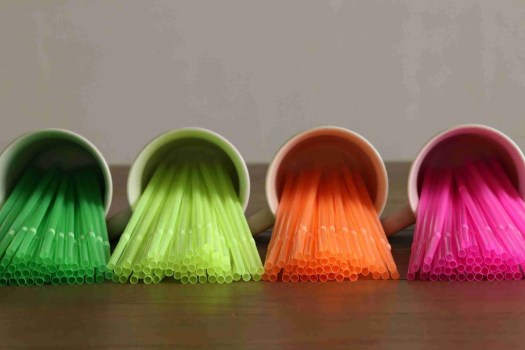
There are so many choices for fabric softeners and dryer sheets. But many contain toxic chemicals. Photo by Marie Cullis.
I was an avid user of dryer sheets for most of my adult life until around 2015. I liked that they removed static electricity, I thought my clothes felt soft, and I loved the way they smelled!
But then I found out how dangerous they are to our health. My mother mentioned it to me several times, so I began reading about the ingredients. I discovered that dryer sheets and fabric softeners contain hormone-disrupting phthalates, chemicals that damage the reproductive system, and compounds that trigger asthma. I just wanted clean-smelling laundry!
“Seriously, how harmful can a flimsy little slip of fabric be? Especially when you consider how soft and sweet smelling it leaves your clothes. Think again, my friend. There’s a lot of badness contained in that tiny bit of laundry magic.” -Darin Olien, Fatal Conveniences1
Toxic chemicals and ingredients
According to the Environmental Working Group (EWG), “fabric softeners and heat-activated dryer sheets pack a powerful combination of chemicals that can harm your health, damage the environment and pollute the air, both inside and outside your home.”2 Fabric softeners are designed to stay in your clothes for a long time, so chemicals can seep out gradually and be inhaled or absorbed directly through the skin.3 Notice how the scent lingers on your clothing?
I learned that “fragrance,” a common ingredient in products ranging from shampoo to laundry detergent to baby products, is a term that refers to a range of chemicals. The EWG explains what this term means:
“The word “fragrance” or “parfum” on the product label represents an undisclosed mixture of various scent chemicals and ingredients used as fragrance dispersants such as diethyl phthalate. Fragrance mixes have been associated with allergies, dermatitis, respiratory distress and potential effects on the reproductive system.”4
Bounce dryer sheets were my household’s choice for dryer sheets for many years.
I used Bounce dryer sheets for more than 15 years. EWG rated these dryer sheets with a D, almost the lowest rating they use.5 The top-scoring factors were poor disclosure of ingredients; the product may contain ingredients with the potential for respiratory effects; the product can cause acute aquatic toxicity; and possible nervous system effects. EWG noted that “fragrance” was their biggest ingredient problem. Again, note that these problems are not only from scented products. Bounce’s Free & Gentle (free of dyes and perfumes) only scored a C on EWG’s Healthy Cleaning Guide.6
“[Dryer sheets] are usually loaded with perfume and can contain the carcinogens benzene and acetaldehyde.” -Heather White, Eco-Anxiety7
Photo by Marie Cullis.
Dryer sheets create extra waste
Additionally, fabric dryer sheets are harmful to the environment because they are designed to be single-use disposable items. They are not made of anything remotely biodegradable, and as litter, they remain in the environment indefinitely. There are many ways to re-purpose them, in fact, I used to reuse them for dusting. Unfortunately, I was exposing myself and my home to the chemicals a second time, and they still had to be thrown away. Like many other types of waste, they end up in rivers and oceans. I’ve certainly picked them up myself during litter clean-ups. I even found a dryer sheet woven into a bird’s nest in my own yard.
Used dryer sheet woven into a bird’s nest. Photo by Marie Cullis.Dryer sheet pieces (and other plastics) woven into a bird’s nest. Photo by Marie Cullis.
“These sheets…made from plastic polyester material, are coated with synthetic fragrances, contain estrogen-mimicking chemicals, as well as fatty acids that coat the clothing and reduce static.” -Sandra Ann Harris, Say Goodbye To Plastic: A Survival Guide For Plastic-Free Living
Image by Willi Heidelbach from Pixabay.
So what’s the solution?
If you are worried about toxic chemicals harming yourself or your family, stop using them immediately. The EWG recommends skipping fabric softeners altogether.8 There are many alternatives – and they are usually zero waste!
Your clothes don’t need to smell perfumed. They will smell clean just from being washed.
Distilled white vinegar
Add a half cup of distilled white vinegar to your washing machine during the rinse cycle (or put it in the machine’s rinse dispenser ahead of time). The smell does not linger on clothes. This works especially well if you are line-drying your clothes. (I’ve read that you should not mix vinegar with bleach, so always be aware of what you are mixing.)
Line or Air drying
Line drying is the most eco-friendly solution. I have several drying racks and a short clothesline outside that I use weekly for some items. You can install a longer clothesline or umbrella-style dryer outside. This makes doing laundry weather-dependent, but there would also be a reduction in your electric bill. Additionally, the sun can remove bad smells from items because ultraviolet rays kill bacteria that cause the smell.
Sophie Benson, author of Sustainable Wardrobe, wrote that drying your clothes in the dryer eventually ruins the fabric. “Just 20 cycles of tumble drying can reduce the strength of fabric by 50%, compromising the durability and longevity of your clothes.” Avoiding the dryer is also best for the environment. “Air drying is also the best choice for the environment; by choosing air drying over tumble drying, you can save 36 kilograms (80 pounds) of carbon each month. Academic researchers have also found that tumble drying can release as many microfibres into the air as washing releases into waterways.”9
“Air-drying clothes reduces the average household’s carbon footprint by 2,400 pounds per year.” -National Geographic10
Line drying is an eco-friendly and healthy option for drying your laundry. Photo by Wolfgang Eckert on Pixabay.
You can also invest in drying racks that you can use indoors and outdoors. I personally own three!
Wool dryer balls
I use wool dryer balls for everything that I put in the dryer. These are either solid balls of felted wool or felted wool wrapped around a fiber core. They naturally soften laundry and reduce static. The balls also lift and separate clothes in the dryer, shortening drying time and saving energy. You can find them online or at some stores, just be sure you buy quality ones that are 100% wool and have good reviews.
Don’t over-dry
Static is caused by over-drying, plain and simple. Static especially happens when drying synthetic clothing, such as polyester, because they dry faster than cotton. If you don’t over-dry your clothes in the dryer, you shouldn’t have static.
The European Union has passed landmark legislation that will ban single-use plastics like straws, forks, and plates beginning in 2021. This is going to have a major impact worldwide!
According to a Forbes article, “The aim of the directive, which is part of the European Plastics Strategy, is to protect the environment and reduce marine litter by avoiding the emission of 3.4 million tonnes of CO2.” But it will also avoid an estimated $24.9 billion in environmental damages by 2030.11
Plastic is harmful to all life forms
Globally, plastics make up 85% of marine litter, according to the European Commission.12 The World Wide Fund reported that plastics account for 95% in the Mediterranean Sea. “And plastics are even reaching people’s lungs and dinner tables, with micro-plastics in the air, water and food having an unknown impact on their health.”13 It’s going through the entire food chain.
Photo by Wild0ne on Pixabay,
Plastic production has increased exponentially since 1960, with the current global production of 322 million tons. That is expected to double or even triple in the next 20 years! Perhaps actions and legislation like this will reverse this growth and waste.
If you read my article about plastic straws, then you know that they are causing environmental problems along with many other single-use disposable plastics. Besides the sheer amount of waste, plastics are harming marine life and posing risks to human health.
Plastic waste and fishing waste are affecting our birds and marine life. Photo by A_Different_Perspective on Pixabay.
Here are some facts from the WWF report on how marine life is harmed by human use of plastics:14
Animals mistake plastics for food.
Plastic releases up to 30 times more contaminants when it is present in body tissue like the intestines. Those contaminants can cause liver damage or hormone disruption.
Today 90% of seabirds have plastic fragments in their stomachs.
Over 90% of the damage caused to marine wildlife by human waste is due to plastics.
Globally, there are about 700 marine species threatened by plastics, some of which are endangered species.
Worldwide, 344 species have been found trapped in plastics! This can be fatal either from drowning or from becoming easy prey.
Plastics can cause injuries and deformities.
In general, all the fishing gear that is abandoned, lost, or discarded at sea (lines, nets, traps) causes damage to wildlife, trapping and killing fish and other marine animals – a phenomenon known as “ghost fishing”.
Plastics have also infiltrated the world of the microscopic. Zooplankton (the small organisms at the base of the marine food chain) involuntarily feed on plastic fragments smaller than 1mm. These fragments can contain toxic substances: by ingesting them the zooplankton transmit them up the food chain, all the way to humans.
The Blue Planet
If you love the Earth’s oceans, you’ll enjoy The Blue Planet series. In 2017, Blue Planet II was released and features the hazards of plastics on marine life. In the video below, David Attenborough, the writer and narrator of many BBC natural history documentaries, said he hoped that Blue Planet II would “open people’s eyes to the damage we are doing to our oceans.” I’m sure their contributions have helped!
Leading the Way
“Single-use plastics are not a smart economic or environmental choice,” said Vice-President Jyrki Katainen of the European Commission. “This is an opportunity for Europe to lead the way, creating products that the world will demand for decades to come, and extracting more economic value from our precious and limited resources.”15 It’s so refreshing to see leaders in the world making plastic waste reduction a priority!
Plastic waste on a beach. We can stop this from happening! Photo by hhach on Pixabay.
Companies will listen to you
Here in the United States, know that you can take action too. Companies follow supply and demand. So if many people are demanding a company to use less plastic or provide reusable containers, the company will listen! Write, call, or email the companies you purchase from and ask that they use less disposable plastic packaging.
Recently, a few large companies including Procter & Gamble, Unilever, Pepsi, and Nestlé have introduced reusable packaging for certain products in an attempt to phase out single-use plastics. This is also for public relations because they don’t want to be viewed as giant contributors to the pollution problem. Better late than never, I guess. But this shows that they’re listening to us (or at least watching their sales)!
Refuse single-use disposable plastic! Photo by Elijah O’Donnell on Unsplash.
What You Can Do!
The best thing you can always do is this: REFUSE plastic containers. I have stopped buying 90% of the items I used to because they only come in plastic containers. And my life is pretty much the same. Once in a while, I have to search hard for a product in glass or metal, but it’s just become the norm for me. You can do this too!
There’s got to be more change – we can do it! What are you currently doing to reduce or refuse plastic? Leave me a comment below!
Rubber duckies are actually made of plastic. Photo by JOSHUA COLEMAN on Unsplash.
Update 4/23/2023:This film was released in April 2020 and premiered on the Discovery Channel on April 22, 2020, the 50th anniversary of Earth Day. This is an informative and well-presented film on plastics – I highly recommend it!
Have you ever heard of The Story of Stuff? It’s a 20-minute film (linked below) that is “a fast-paced, fact-filled explanation of the consumerist economy.” It began with the writer and the founder of The Story of Stuff Project, Annie Leonard. She’s an amazing person and a leader in environmental and social issues. It is 100% worth your time to watch!
The Story of Story Project has since come out with more than a dozen high-quality short documentary films that explain the relationship between consumer products and environmental problems. But their newest one is really exciting!!! It’s called…
The Story of Plastic
“These days, more and more of our Stuff is being made from one very problematic material: plastic.”
They want to tell the hidden stories surrounding plastic. The production, the pollution, and the health hazards. Here’s the trailer:
Do we need another film about plastic?
Yes, we do. There aren’t enough of them. The ones that do exist are really good and the message is getting out, but we need even more people to hear and see and understand the message: Plastic is ruining our environment, poisoning us (cancer, endocrine and thyroid diseases, etc.), and littering our landscapes. The Earth is so beautiful – don’t we want it to stay that way?
And recycling is not the answer. Only 9% of our plastic is actually getting recycled! That means 91% is ending up in landfills, the ocean, rivers and lakes, beaches, parks, and our neighborhoods. It even ends up in the food we eat and the water we drink.
Photo by John Cameron on Unsplash.
The Story of Stuff Project is fundraising to complete this project. Please help me support this worthy cause. They are asking people to become “a Plastic Insider by starting a recurring monthly donation supporting The Story of Plastic production fund today.” There are insider perks: your name will be in the credits of the film and you gain access to behind-the-scenes videos. Here’s a video of supporters who spend their lives on a sailboat:
I signed up as a monthly, recurring donor today. Can you help too? You can also make a one-time donation in any amount you’d like. And if you’re really ambitious, you can create your own Facebook fundraiser!
“The Story of Plastic isn’t just a movie. It’s a call to action.”
Are you as excited about this film as I am? Leave a comment below! Thank you for reading.
There is a coalition of aquariums across the United States striving to reduce the use of plastic straws. The coalition, called the Aquarium Conservation Partnership (ACP), is a collaboration of 22 public aquariums in 17 states, including the Tennessee Aquarium. They help advance conservation policies, educate and inspire audiences, and commit to sustainable business practices.1
Aquariums are awesome and full of wonder and thousands of children go through them daily. So they are poised to be leaders in positive change, and this is a great example of that! One of the things they’re doing is asking restaurants and others in the hospitality industry to reduce the use of straws by only giving them out upon request, instead of automatically. They’re asking individuals to sign a pledge to stop using plastic straws.
My son at the Tennessee Aquarium when he was just 2 and a half. Photo by Marie Cullis.
What’s wrong with plastic straws?
First, the sheer amount of them! Just like with all single-use disposable plastic products, it’s the over-consumption of them. Think 500 million plastic straws per day. That’s more than one straw per person per day in the United States. Our consumption has gone way overboard and has created a waste stream that is too large for us to keep up with! Second, they are not recyclable at all.
Don’t feel guilty about having used plastic straws. Just please refuse plastic straws – START TODAY. Politely refuse those plastic straws – if everyone refuses just one straw per day, we’ll more than cut our usage in half!
Image by Marjon Besteman-Horn from Pixabay.
I threw my disposables into the trash/recycling receptacle like I’m supposed to, how are they ending up in the rivers and ocean?
One of the critical issues with all the media about single-use disposable plastics is that the biggest question is often not answered: How does the plastic end up in the ocean in the first place?
Most people assume that once they’ve placed their disposables into a receptacle, those disposables go to the proper facility. What people don’t know is that many items don’t make it to the recycling facility or landfill. Since that’s out of our control, it seems impossible to do anything about it. But it’s not impossible by any means. The best way to guarantee that your single-use disposable plastics don’t end up in the ocean is…
To just not use them! Refuse them. Find an alternative. Then you do have control. We have the power to be the change.
So back to the question – how are plastics ending up in the rivers and ocean?
There are so many causes! Spillage from recycling that has been transported across the ocean for years to Asia; plastic products shipped across the ocean to the U.S. have spilled from ships; the fishing industry regularly dumps their trash into the ocean; trash and litter get blown or washed into storm drains and rivers that then feed into the ocean; illegal dumping; beach trash; river pollution; microbeads washing down drains; and debris from natural disasters and floods. Plastic bags are picked up by the wind and blown into waterways that flow into the ocean.
Starbucks is one company that is striving to end the use of plastic straws by 2020. Photo by Nadine Shaabana on Unsplash.
Ok, so what steps can I take?
First, let’s support the Aquarium Conservation Partnership. You can do this by signing the pledge (linked under Additional Resources below).
Second, refuse. Just say no thank you. To all single-use disposable plastics. Because recycling is not the answer. Only about 9% of our plastics get recycled. That means 91% is not recycled!
Third, if you must have something commonly produced as a single-use disposable plastic, like a straw, please buy a reusable one. Paper disposables and supposedly biodegradable straws are a better option, but it’s still going to be thrown away after one use. Try a stainless steel straw, glass straw, or bamboo straw.
Fourth, tell others! Tell your friends, your co-workers, your favorite restaurant, the local coffee shop, and your local school. So many to tell!
Fifth, participate in trash clean-up efforts. Join the Litterati. Maybe you’ll prevent some of the trash you pick up from entering the ocean.
Single-use disposable plastic straw found buried in the sand, Hilton Head Island, October 2018. Photo by Marie Cullis.
Last, but not least: Stop supporting businesses that resist change. Consumers hold power: if businesses refuse to meet demands like eliminating single-use plastics, choose not to patronize them. Your spending decisions can push businesses to adapt or risk losing profitability.
Poster advertising that The Trading Post, a popular restaurant in Emerald Isle, North Carolina, is recognized as an “Ocean Friendly Establishment” by the Plastic Ocean Project and Surfride Foundation. “We Only Serve Straws Upon Request.” I love it and will eat there to support businesses like this! Photo by Marie Cullis.
Final Thoughts
Collectively, have the power to create change just by modeling the best behavior. Refuse that straw. Be polite, of course. But just say no. You might influence someone else to refuse straws too. If everyone starts refusing straws, businesses won’t need to order as many. Then the plastic straw manufacturers will have to produce less. And then less will end up in landfills, in nature, and in the oceans. Carry a reusable stainless steel straw with you. Be the change! And as always, thanks for reading.