Most of us drop our recycling into a blue bin, believing we are doing the right thing, and move on. This ‘out of sight, out of mind’ point of view is because most of us are so busy that we don’t have time to think about it. But where does our recycling actually go?
If you’ll recall from my article “How Our Recycling Systems Work,” just because recycling is accepted or collected does not automatically mean that it is recycled. If you read my article on why recycling is not the answer, then you also know that our volume of waste, even when recyclable, is out of control. We send most of our recycling away, out of our country, and into the landscapes and lives of people in other countries. Those countries pay workers very low wages to sort recycling and it exposes them to toxic conditions in the process.
“While recycling and the circular economy have been touted as potential solutions, upward of half of the plastic waste intended for recycling has been exported to hundreds of countries around the world.”1
Plastic Waste Trade Watch Newsletter. Graphic of the Month – September 2021. Image from baselactionnetwork on Flickr, Creative Commons license (CC BY-NC-ND 2.0)
How Recycling Grew
While municipal recycling in the U.S. began in the 1970s as a response to quickly filling landfills, it really took off in the 1990s. Back then, recycling services were inexpensive because recyclers could easily profit from the materials. The U.S. sought to increase the recycling of municipal solid waste to avoid landfilling and incineration. Often referred to as landfill diversion, it has become increasingly important as our volumes of waste exponentially increased over the last two decades. The types of plastics accepted in municipal systems grew from just PET #1 and HDPE #2 bottles and jugs to include other types of plastics as cities and states emphasized landfill diversion.
In addition, companies and corporations used ‘recycling’ as a way to increase their sales. Recycling makes it ok to use disposables. Companies branded more of their products as environmentally redeemable, which made consumers feel better about their purchases.2 In effect, this normalized buying increased amounts of packaging, plastic, and disposables.
Marketing campaigns for plastic started with organizations like the American Chemistry Council working to protect the interests of wealthy stockholders. They launched campaigns touting the recyclability of all plastics, and “many local governments took the bait, or were pressured to fall in line.”3 Further, since plastics are made from petroleum and chemicals, the petroleum industry strongly backs organizations like the American Chemistry Council. There is a lot of money behind all the plastics in our daily lives.
“The planet’s load of nearly indestructible plastics — more than 8 billion tons have been produced worldwide over the past six decades — continues to grow.”4
Image by zibik from Pixabay
U.S. Exportation of Recycling
As the volumes of recycling increased, the U.S. began reducing domestic recycling. We began exporting our waste to China because of cheaper labor and equipment costs. At the time, China’s economic growth and its demand for our materials were strong.5 “Shipping recyclables from the U.S. to China made economic sense due in large part to the trade deficit,” wrote attorney and sustainability expert, Jennie Romer. The U.S. buys more from China than China does from the U.S. Instead of returning empty shipping containers, the U.S. began shipping recyclables at a discount.
“Due to low cost shipping and labor, the U.S. became reliant on China to accept plastic materials collected by U.S. municipal systems.“6
Family working in a landfill in China, sifting through garbage in search of recyclables, 2007. Photo by Sheila on Flickr, Creative Commons license (CC BY-NC-ND 2.0)
China Becomes the World’s Dumping Ground
China handled almost half of the world’s recyclables for about 25 years. They have imported about half of the world’s plastic waste since 1992.7 Recyclables were one of the largest categories of exported materials to China between 2007 and 2016. By 2016, the U.S. transported about 1,500 shipping containers full of recyclables across the ocean to China every day.8
Their plastic scrap import business grew from a grassroots effort among poor villagers seeking to make livelihoods. “According to one estimate, roughly sixty thousand small family farms were converted into family-run plastics-recycling facilities.”9 This recycling economy grew correspondingly as our volumes of waste increased exponentially.
The U.S. was exporting 77.9% of its plastic waste by 2016. Japan exported 87.6%. Seven European countries (Germany, the U.K. Belgium, Spain, Italy, France, and the Netherlands) exported 57.5%.10 Up to 70% of Australia’s plastic waste was going to China. Can you imagine how much plastic that is?
“For other countries, China represented a convenient dumping ground for mixed waste. For China, accepting the world’s castoffs became too big a burden.” -Randy Miller, Miller Recycling Corporation11
Family working in a Jiangsu landfill, sifting through garbage in search of any valuable recyclables, 2007. Photo by Sheila on Flickr, Creative Commons license (CC BY-NC-ND 2.0)
Operation Green Fence
In addition to the insane volumes, the recycling China received was severely contaminated. Contamination refers to recyclables that are mixed with trash, food waste, and other non-recyclables. The quality of the recyclables started to decrease. Chinese manufacturers incurred large expenses to sort out and dispose of the non-recyclables in Chinese landfills.12 Contamination rates more than doubled between 2007 and 2013.13
The Chinese government passed the Green Fence policy (aka Operation Green Fence) in 2011 and implemented it in 2013. It was a direct response to the volume and contamination problems. It authorized an aggressive inspection effort and the goal was to limit the number of contaminated recyclables and waste that was flowing into China.14 Another goal was reducing illegal foreign smuggling.15
The policy lowered the contamination rate to 1.5%. That means that 98.5% of the contents of recycling bales had to be free of food waste, trash, non-recyclables, and other debris. This was a strict rate and difficult for Materials Recovery Facilities (MRFs) to manage through single-stream recycling systems.
In the policy’s first year, “almost 70 percent of all incoming containers loaded with recyclables were subjected to thorough inspections.” Recyclers and shippers both faced risks if caught shipping substandard materials. Shippers could have their licenses revoked; recyclers could face the costs of paying for the return of containers full of non-recyclable materials. Almost 22,000 large containers were unqualified and rejected.16 Rightfully so, China did not want to receive garbage from other countries. Though the Green Fence policy was temporary, it began to set off changes in the global trade of recycling waste, especially plastic.
Operation Green Fence “highlighted the fragility of global dependence on a single importer.”17
Too Much Plastic…And Trash
Despite the effects of the Green Fence policy, exports to China continued. While the policy reduced the contamination rate to 1.5%, plastic production, and thus plastic waste, steadily increased. “In 2016 alone, about half of all plastic waste intended for recycling (14.1 million [metric tons]) was exported by 123 countries, with China taking most of it (7.35 million [metric tons]) from 43 different countries.”18 The map below illustrates the countries with the largest exports of plastics to China, showing the U.S. as one of the highest.
“Sources of plastic waste imports into China in 2016 and cumulative plastic waste export tonnage (in million MT[Metric Ton]) in 1988–2016. Countries with no reported exported plastic waste values are white…Quantities for sources of Chinese imports include PE, PS, PVC, PP, and PET.” Source: “The Chinese import ban and its impact on global plastic waste trade,” by Amy L. Brooks, Shunli Wang, and Jenna R. Jambeck, Science Advances, June 20, 2018.
“There’s simply too much plastic for us to recycle away the problem.” -Greenpeace19
The National Sword Policy
Enacted in 2018, this policy banned “24 kinds of solid wastes, including plastics waste from living sources, vanadium slag, unsorted waste paper and waste textile materials.”20 China passed this even stricter policy in order to reduce pollution from low-value recycling, protect its people, and also reduce the smuggling of illegal goods.21 The ban included certain low-value plastics and mandated a 0.5% contamination rate, which is so strict that it almost functions as a ban on most recycling and almost all plastics.
“Before the policy was implemented, China would import huge quantities of waste from other countries, including the U.S.The country had fairly low standards for what it would accept, so recyclable waste would often be mixed with trash and contaminated items such as plastic containers with food debris.China’s processing facilities would then have to manage all that unusable waste.“22
The Human Cost
At the plastic scrap businesses, farmers and low-wage workers picked through low-value bales of scrap plastic for the best materials. They processed the best plastics, #1 and #2’s, into recycled plastic nurdles.23 China used to accept most of the #3, 4, 5, and 7 plastics. But most of these plastics were burned for fuel in people’s backyards or dumped in nearby waterways.24 The workers often even lived among the plastic scrap.
Plastics are made of chemicals and petroleum. Plastic in water breaks down into small particles and releases toxins. When humans drink or bathe with that water, they are ingesting or exposing their skin to those chemicals. Plastic releases those chemicals into the air when heated or burned. Using China as a dumping ground affected the lives and health of thousands of people, who were simply trying to earn enough to support their families.
Two workers on a burning and smoking garbage pile in Huaibei, Anhui, China, 2009. Photo by Philip McMaster on Flickr, Creative Commons license (CC BY-NC 2.0)
The Film, Plastic China
One impetus for the National Sword policy likely came from the 2014 documentary Plastic China.25 The film exposed the environmental and social harms caused by imported plastic waste. It showed the families living and working around toxic plastic materials, even a child washing her face in the wastewater. “Some waste experts believe that the documentary was a motivation for China’s strict National Sword regulations to end China’s unofficial role as the world’s ‘dumping ground’ for waste.”26. Here’s the trailer, which will give an idea of how bad things were:
It is a powerful exposé. As an article from 99% Invisible noted: “Plastic China made the film festival circuit and was even seen in China for a while before the government pulled it from Chinese Internet. Coincidence or causation, National Sword came shortly thereafter. China moved to crack down on informal recycling plants and build newer, better, safer and more efficient recycling systems. Beyond that, the country also shifted focus to recycling internally rather than taking on recyclables from the rest of the world.”27
But China still had to deal with the waste it had already accumulated. Unfortunately, a lot of it wasn’t recycled. “Since the documentary ‘Plastic China’ debuted in China in 2014, more than 60 investigations and articles have shown that millions of tons of exported plastic wastes have been dumped or burned rather than recycled.”28
National Sword Exposed a Broken System
The waste management system in the U.S. was broken before the policy was passed, but it wasn’t apparent. “The National Sword has exposed the fallacy and flaws of the international flow of plastic waste exports as a responsible method of recycling plastic and creating a so-called ‘circular economy’ of plastics.”29
Unfortunately, a circular economy for plastics was never a real thing. Secondary markets for recycled plastic were limited, at best.30 Since virgin plastic often costs less than recycled plastic, there has always been little market demand for it. Worse, plastic can only be recycled once or twice before it is no longer usable. It was never endlessly recyclable.
Negative Value
After National Sword, the recycling market for low-value plastics disappeared almost overnight. With no one to buy the recycling bales, some U.S. recycling facilities began paying for incineration or landfill costs. As Sandra Ann Harris wrote, “The world is unequipped to handle the onslaught of waste that would normally have been shipped to China for recycling. Private and municipal recycling programs that depended on [the] sale of discarded plastics to China have resorted to burying and burning the waste, with serious carbon emissions consequences. Others have gone out of business.”31
China strictly enforced the 0.5% contamination rate through regular inspections and by limiting the number of U.S. companies authorized to transport recycling to China. “Bales that do not meet inspection are either redirected to different end-markets in Southeast Asia or sent back to U.S. ports and placed in landfills, both of which are extremely expensive and consume considerable amounts of fossil fuels.”32
The types of recyclables that Materials Recovery Facilities (MRFs) in the U.S. accepted drastically changed. In some cases, MRFs have to pay to get rid of recycling rather than earn from it. So the demand for plastics is almost non-existent and the value is now negative. These markets are not likely to ever come back unless we make huge, sweeping changes to our entire system. It will become economically challenging to keep recycling facilities operational. Recycling can be part of the solution only if it is economical. Most major companies aren’t going to alter their bottom line just because it’s the right thing to do.
“Spawning the Recycling Crisis”
Some say that the National Sword policy ‘spawned the recycling crisis.’ While it’s true that we suddenly did not have anywhere to send our millions of tons of waste, the problems stemmed from our own creation. We have been producing millions of tons of waste for decades with exponential increases each year. Our corporations had the power to turn off the tap of single-use disposable items and we had the buying power to demand change. So China’s new policy didn’t ‘spawn the recycling crisis,’ it just exposed it. We had been using China as our dumping ground for years, and China became polluted from collecting the western world’s trash.
“While many commentators have blamed East Asian import restrictions for our current struggles, the U.S. is at fault for becoming dependent on exporting its recyclables. The United States failed to curb the rise of plastic, failed to build domestic demand for recycled material, and failed to ensure that product designers considered the end life of their products.” -The State of Recycling National Survey, U.S. PIRG Education Fund33
“Women sorting Plastics for melting. Outskirts of Guangzhou, China. Smashed cathode ray tubes ‘stored’ in back of processing shop, Dali, China,” 2013. Photo by baselactionnetwork on Flickr, Creative Commons license (CC BY-ND 2.0)
What Happens to Recyclable Items Now?
The long-term effects of National Sword will continue to be studied, likely for years. Scientists estimated that “111 million metric tons of plastic waste will be displaced with the new Chinese policy by 2030.”34 But where does will it all go?
In the U.S., we have had to landfill or incinerate a lot of recycling. Some recycling programs have shut down altogether. Others are burning recyclables in an incinerator or sending all of them to landfills.35 Worse, we have also started sending it to other countries, places that don’t necessarily have waste management infrastructure. Instead of China, are we now putting human health at risk in those other countries?
In Part 2, I’ll explore how our waste and recycling are affecting people in other parts of the world. Thank you for reading, please share and subscribe!
Additional Resources:
Article, “Why U.S. Cities Are Ending Single-Stream Recycling,” by Ryan Deer, Roadrunner Recycling, Inc., July 8, 2021.
I used to be an avid believer in recycling. When I was 11, my family began collecting and taking our recycling to the local center. Soon after, the county we lived in passed a recycling ordinance. I was hooked. I even wrote a paper in 9th grade about landfills and recycling, citing a study about mining landfills for recycling and resources that I’d found inspiring.6
Since then I’ve dutifully washed, separated, and toted my recycling, no matter where I’ve resided. If there was no recycling service, I tracked down the recycling centers. At parties or on vacations where recycling wasn’t available, I carted my recyclables all the way home so that I could recycle them. I have spent a great deal of time over my life teaching and educating others on the how’s and why’s of recycling.
Imagine my disappointment just a few years ago when I discovered that only 9% of plastics are recycled.
“Recycling is great, but unfortunately it is not enough. There’s simply too much recycling to process, and we’re still consuming way too many resources.” -Kathryn Kellogg, 101 Ways To Go Zero Waste
Compacted steel and aluminum recycling bales. Photo by Steven Penton on Flickr, Creative Commons license (CC BY 2.0)
The Notion of Recycling is Misleading
The reason that recycling is NOT the sole solution to our waste problem is the misconception that it IS the sole solution to our waste problem.
Many well-meaning people toss their once-used plastic bottle or container into a blue bin somewhere and think that they’ve done their part. But most do not know the real impact of what they are doing. This is because we’ve been fed the myth of recycling for decades. Plastic manufacturers carefully curated the message that we can use all of the plastic we want to because we can just recycle it. That’s a very convenient notion but not at all how it works.
Recycling actually increases consumption, because it gives consumers a false sense of taking care of the environment and doing the right thing. The fact that we think we can recycle something often drives our purchases. It is acceptable to us to buy single-serve plastic yogurt cups and plastic single drink bottles because we can justify the waste those things create with recycling. We pass these notions on to our children as well.
Additionally, companies push these falsehoods through marketing. They want us to think their products are recyclable or sustainable in some way, in order to drive up sales. Some will go as far as ‘greenwashing‘ their products.
“If the public thinks that recycling is working, then they’re not going to be as concerned about the environment.” -Larry Thomas, former head of Society of the Plastics Industry7
Photo by recycleharmony on Flickr, Creative Commons license (CC BY-NC-ND 2.0)
Recycling Myths
There are many recycling myths! Here are just a few of them.
An Endless Loop
First, recycling is not a clean, closed, endless loop where everything that goes in is remade and reused. Materials, especially plastics, degrade in quality. Many plastics are not recycled at all. Since plastics are polymers mixed with chemical additives, plastic products are typically downcycled. Downcycling means made into a lower-quality plastic. Therefore, new plastic from petroleum is often preferred by manufacturers in order to keep making equivalent-quality plastic products. Further, new plastic is often cheaper than recycled. “The current cost of virgin plastic nurdles is much cheaper than the cost of recycled plastic nurdles, so it doesn’t make economic sense to purchase recycled plastic – and much of our carefully sorted plastic ends up stuck in a landfill, incinerated, or shipped abroad.”8
So a plastic water bottle is not remade into another plastic water bottle. It may be downcycled into carpeting or synthetic fabric. After an item outlives its use as a lesser type of plastic container, carpet, or plastic lumber, it is still landfilled. So while technically recycled (downcycled) one time, it is not an endless loop of the same materials being used over and over again.
Recycled content
Further on the myth of reusing materials, have you ever noticed on something you purchased has a label that reads “made from 45% post-consumer” waste/content/plastics? This simply means that 45% of the product or packaging is made from recycled materials. While 100% post-consumer exists, most often, virgin materials must be mixed in with recycled materials to maintain a product’s durability. This is especially true with plastics, paper, and cardboard.
Recycling diverts waste from landfills
Another myth is that recycling automatically diverts waste from landfills. This is just not true. Many recyclables end up in landfills if recycling is contaminated. Contamination is simply the mixing of recyclables with dirty items and non-recyclables. The average resident may not want to spend time cleaning their recyclables or may not know it is necessary. They may not understand what is and is not accepted in their local recycling. They may also be “wish-cycling,” which is when someone attempts to recycle something they think should be recycled, like plastic bags, which are not recyclable. Plastic bags can get tangled in the machinery, and it contaminates the end product of recyclables. If recyclables have too many contaminates, or non-recyclable items, those bales are likely to be landfilled (or even incinerated) rather than sold to a company that will reuse them.
If it is collected, then it is recycled
Just because you put it in a blue bin that “accepts” something does not automatically mean those materials are recycled.
Plastics #3-#7 are often collected in municipalities across the country but they are sent to landfills or are incinerated. Some still export their mixed plastics to other countries. But collecting mixed plastics through single-stream recycling is a big part of the problem. “Acceptance of such a plastic item at a [Materials Recovery Facility (MRF)] alone is not sufficient and reasonable assurance to a customer that it will be manufactured into another item, as required by the FTC…Companies cannot legitimately place recycle symbols or “Check Locally” text on products made from plastics #3-7 because MRFs nationwide cannot assure consumers that valueless plastics #3-7 bales will actually be bought and recycled into a new product.”9
“Acceptance by a [Materials Recovery Facility] is Not Proof of Recycling.”10
Aerial view of paper bales at a recycling center. Image by WFranz from Pixabay.
Volume
The amount of waste and “recycling” humans create is ridiculous, and most people really don’t have any idea about the total volume. Waste and recycling go into a bin and we don’t think about it again. This further creates misconceptions surrounding recycling simply because we don’t understand the volumes of waste we create. If you combined the waste from just you and your neighbors, how much waste is that? Now imagine the amount from your entire neighborhood, city, state, and then nation.
The EPA estimates that of the 292.4 million tons of municipal solid waste (aka trash) generated in the U.S., approximately 69 million tons were recycled.14
Of this, 35,680,000 tons were plastic. Thus, an 800-pound bale of PET would be roughly 18,400 of the 16-ounce PET Bottles.15 Other estimates vary slightly, depending on the size and actual weight of each individual plastic bottle. Now I am not a mathematician. But if all plastics from the 35 million tons were plastic PET bottles, and one ton weighs 2,000 pounds, that would mean there are about 46,000 plastic bottles per ton. Then multiply 35,680,000 by 46,000, and that equals 1,641,280,000,000 individual plastic bottles. And that’s just plastics from one year!
A woman scavenges for survival in a mountain of plastic waste, Pakistan. Photo by baselactionnetwork on Flickr, Creative Commons license (CC BY-NC-ND 2.0)
Recycling is Important
Extracting natural resources is terrible for the environment, human health, wildlife, and directly affects climate change. Preventing the extraction of virgin materials is important, especially when it comes to fossil fuels. Both extracting and burning fossil fuels greatly contribute to global warming.
“Recycling consistently requires less resources and produces fewer greenhouse gases (GHGs) than production of new materials,” wrote Beth Porter.16 For example, recycling aluminum uses 95% less energy than extraction. Almost 75% of all aluminum that has ever been produced is still in use. Paper has a recycling rate of approximately 68.2% (in 2018), the highest compared to other materials in municipal solid waste.17
Bales of plastic ready for shipping. Photo by Larry Koester on Flickr, Creative Commons license (CC BY 2.0)
The Plastics Market
“Recycling depends on the idea that the cost of collecting and sorting certain materials is rational because somebody will want to buy them to make something else. In reality, many plastics have no such market.”-The State of Recycling National Survey, U.S. PIRG Education Fund18
Plastic production is complex and chemical. Worse, “most plastic is derived from oil drilling and/or fracking. Ethane cracker facilities turn ethane into ethylene, a building block of most common plastics.” We know that the oil industry, gas processing facilities, and ethane crackers are all associated with climate change and environmental problems.19“The massive expansion of plastic production in the U.S., fueled by at least $200 billion of investment in 340 petrochemical projects, is flooding the market and causing polyethylene [recycling] prices to decline to historic lows – below prices last seen during the 2008 financial crisis.”20
Since there is little market for recycled plastics, it exacerbates the waste crisis. Recycled plastic must be given some kind of economic value so that collecting it for recycling has a financial incentive.21
“The simple fact is, there is just too much plastic — and too many different types of plastics — being produced; and there exist few, if any, viable end markets for the material. Which makes reuse impossible.”22
Bales of recycling at the Strategic Materials recycling plant in South Windsor, Connecticut. Photo by CT Senate Republicans on Flickr, Creative Commons license (CC BY-NC-ND 2.0)
What Can You do?
“Somewhere along the way, key parts of the “reduce, reuse, recycle” mantra got lost. We have lost track of reducing and reusing.”23
PLEASE RECYCLE! This post is not intended to discourage you from recycling.
But recycling is not the answer to our waste crisis.
We must restructure the way we think about trash. We must change our goals surrounding waste. The goals should focus on refusing, reducing, and reusing long before recycling enters the picture – in that order! If you read my article on how recycling works, you’ll recall that recycling processes are very complex and recycling is easily contaminated.
It is also imperative that we move away from single-use disposables. That alone could help improve pollution, reduce ocean microplastics, and help climate change. Thank you for reading, please share this article and subscribe for future articles!
I have found that most people don’t know that, or don’t care to know. Many plastics are full of potentially toxic chemical concoctions, and knowing what makes up plastics is key to understanding how dangerous those chemicals are. Once you know that, it’s hard to understand why would the FDA, EPA, and other government regulatory agencies allow them to be used in, well…everything.
The short answer is, they just don’t regulate that many chemicals.
But plastics are all around us in everyday life, and thus we are regularly exposed to these chemicals. This is one reason I’m anti-plastic, at least in the way we overuse and overconsume it in daily life.
How Plastic is Made
Plastic nurdles. Image by feiern1 from Pixabay.
“Most plastic is derived from oil drilling and/or fracking.” -Jennie Romer, sustainability expert and attorney1
Plastics are derived from fossil fuels, such as crude oil and natural gas. It is then processed at a refinery into ethane and propane. Next, they go to what are called cracker facilities that “crack” or break down these molecules. They turn ethane into ethylene, which is a building block of most common plastics. Propane becomes propylene. They are mixed with a catalyst, or chemical additive, that links the molecules together and forms polymers. Polymers are long, repeating chains of molecules that are chemically linked, or bonded, together. Harken back to chemistry class and this process is called polymerization.
But “polymers alone rarely have the physical qualities to be of practical value, so most plastics contain a multitude of chemical additives to facilitate the manufacturing process or produce a particular desirable property, such as flexibility, toughness, color or resistance to UV light.”16 This process forms different resins, or types of plastics, and are generally categorized by Resin Codes (those little numbers on plastics with the recycling symbol around it).
Image by John R Perry from Pixabay
Plastic is Toxic
These chemical additives are usually what is most harmful to our health and the environment, as they leach over time and under certain conditions such as heat or UV exposure. Additives include dyes, “fragrances” or phthalates, plasticizers such as bisphenol A (BPA), fillers, fluffers, hardeners, stabilizers, lubricants, fire retardants, blowing agents, antistatic chemicals, and even fungicides and antibacterial agents. “Imagine that, plastics eerily designed to repel insects and bacteria, just like genetically modified cotton or corn!” wrote Chantal Plamondon and Jay Sinha, founders of Life Without Plastic.17
Many chemicals are not even regulated. For example, the FDA banned BPA from infant formula packaging, baby bottles, and sippy cups in 2013 because of its toxic leaching. But, there is a whole family of other bisphenols and most of those are still in active and legal use.
Plastic is often intended for single use only because the toxins leach out over time into your water, food, or product. As Chantal Plamondon and Jay Sinha noted: “We would wash and reuse single-use water bottles over and over, thinking we were being super eco-aware by preventing them from being recycled after a single use or heading straight into the trash and, ultimately, a landfill. We didn’t realize each use and wash was breaking down the cheap, unstable plastic more and more, and increasing the potential for chemicals and microscopic bits of plastic to leach into our drinks.”18I used to reuse my plastic water bottles too – and I stored mine in the car, where the plastics were exposed to intense heat and sunlight, both factors that accelerate plastic chemical leaching.
Plastic Marketing
Image by anncapictures from Pixabay.
Facing changing public opinion about the harmfulness of plastic in the 1980s, the plastics industry “launched a $50M-a-year ad campaign to improve plastic’s image. Part of the message was ‘recycling is the answer.’ Within the plastics industry, however, it was later revealed that even then there was serious doubt that widespread plastic recycling could ever be made economically viable.”19 They knew then, and they certainly know now, that we cannot recycle all of the plastic. Despite the pollution and toxicity, the plastics industry continues to push, market, and produce excessive plastic products and packaging.
“If the public thinks that recycling is working, then they’re not going to be as concerned about the environment.” -Larry Thomas, former head of the Society of the Plastics Industry, now called the Plastics Industry Association20
There are many advocates for plastic production, including the chemical, trade, and petroleum organizations. The global plastics industry is worth between $500 and $800 billion dollars. The plastics industry is not going away while there is that much money at stake.
The American Chemistry Council (ACC) is one of the biggest supporters of plastics, and they spend millions each year contributing to political parties in order to fight legislation that would regulate plastic production. Other organizations protective of plastics include (but are not limited to) the Plastics Industry Association, the American Chemical Society, the Manufacturers Association for Plastic Processors, the International Association of Plastics Distribution, the Vinyl Institute, the American Fuel & Petrochemical Manufacturers, and the Society Of Plastics Engineers.
Plastics Make it Possible Logo, an American Chemistry Council initiative.
“We are not out to destroy the plastics industry, but we must embrace change.”21
“Many of these products, such as plastic bags and food wrappers, have a lifespan of mere minutes to hours, yet they may persist in the environment for hundreds of years.”22
There are a few plastics that have an important place on our planet and in our lives, but most do not. Single-use disposable plastics are the major culprits of our plastic pollution problem. The companies we purchase products from are now producing it at such a high rate that we cannot recycle the problem away. Plastic production increased exponentially, from 2.3 million tons in 1950 to 448 million tons by 2015, and it is expected to double by 2050.23 “Plastic is too microscopically dispersed around the world to try and clean it all up at this point…Prevention and avoidance should be engraved in our minds,” wrote Chantal Plamondon and Jay Sinha in Life Without Plastic.24 Companies and manufacturers must stop producing so much of it!
“Half of all plastics ever manufactured have been made in the last 15 years.”25
Watch this short film about plastic from The Story of Stuff Project:
“We have polluted the planet with indestructible plastic to such a degree that plastic may serve as a fossil marker in our strata to indicate a new era – the way dinosaurs indicate the Mesozoic one – until Big Oil digs the last of those reptiles up to produce more Coke bottles.” -Anne-Marie Bonneau, author of The Zero-Waste Chef28
What To Do
Whatever it takes to slow or stop the neverending barrage of chemical toxicity and plastic pollution being perpetrated on our planet by profit-driven entities, you can start at home and start small. You can avoid and refuse single-use plastic, changing your habits surrounding it one step at a time. I offer many ways to eliminate plastic on my site in my articles such as “14 Ways To Go Plastic-Free With Food,” and under Resources, where there are lists of books, films, and other websites that offer good information.
You have to eliminate plastics in your life in small manageable chunks, because there’s just so much of it. As the founders of Life Without Plastic wrote, “As excited as you may be to embark on this journey, be careful about fully embracing plastic-free living cold turkey, and trying to do it all at once. Once you start noticing the plastic around you, it could overwhelm and discourage you quickly…Take it one step at a time. This is all about changing habits, and that takes time, effort and patience.”29 This will protect you and your family from potentially toxic products entering your body and harming your health.
Contact companies whose products you consume and ask them to switch to responsible packaging. Switch the products you use with items that don’t have plastic. Support legislation like the Break Free From Plastic Pollution Act.32 Getting manufacturers and companies to stop the overproduction of plastics will be key, and to do so we will have to force them through purchase power and legislation.
“We are surrounded by the toxic polluting conundrum that versatile convenient plastic has become. But . . . there are lots of ways to avoid plastics in everyday life – wherever you are, whatever you do. All it takes is a little awareness and initiative. Educated actions, we like to call it.” –Chantal Plamondon and Jay Sinha, Life Without Plastic33
Thank you for reading, and please share and subscribe!
Additional Resources:
Video, “Plastics 101,” National Geographic, May 18, 2018.
“We get out of recycling systems what we put into them.” -Beth Porter1
Recycling is not the answer to all of our waste problems. Simply put, we’ve produced more plastic at this point than we could ever recycle away.
However, recycling can still be a part of the solution to protect ourselves and the planet, because we have to try. Ultimately we are responsible for the items and packaging from items we consume. Recycling, though far from a perfect solution, reduces the number of trees cut down for paper and the number of natural resources we harvest. Additionally, it curbs the production of new plastics and thus the fossil fuels we extract.
Photo by the Brisbane City Council on Flickr, Creative Commons license(CC BY 2.0)
Single-Stream Recycling
“Ultimately, for recycling to become a way of life for consumers and end-users, recycling had to be easy, and it had to save money.”-Ryan Deer, Roadrunner Recycling, Inc.18
Single-stream simply means mixed materials in one group – one stream of materials. If your recycling goes in one bin and is picked up curbside, then you have single-stream recycling in your area.
The idea for single-stream came about in the 1990s because of two beliefs. First, that the convenience of putting everything in one bin would encourage more residents to participate in recycling. Using EPA statistics, one recycling company noted that single-stream recycling “overhauled the underperforming process, taking our national recycling rate from 10.1% in 1985 to 25.7% in 1995 to nearly 32% in 2005.”19 Single-stream recycling does encourage recycling. But I wonder if single-stream has been the impetus for the egregious increases in single-use disposable plastics and other containers? We have seen a steep and constant increase in waste and disposables since the 1990s.
“Curbside recycling grew by 250 percent from 1988 to 1991…People were making the decision to incorporate sorting recyclable goods into their daily routine, reminiscent of war-era conservation efforts.” -Beth Porter20
The second belief is that single-stream recycling systems reduce collection costs. A single truck can collect more volume with mixed materials which reduces transportation costs. However, while collections costs are lower, the processing costs are much higher because of the sorting and separation, tasks which are performed by a combination of humans and expensive sorting machinery.
About 80% of U.S. communities use a single-stream recycling system. “Unfortunately, few could have predicted how low the ceilings really were, or how one move in global policy could send it all crashing down,” referring to China’s 2018 ban on many types of recycling imports.21 Single-stream is clearly riddled with problems and we must find a better way to handle recycling.
“More than 20 million tons of curbside recyclable materials are disposed [of] annually. Curbside recycling in the U.S. currently recovers only 32% of available recyclables in single-family homes, leaving enormous and immediate opportunity for growth to support the economy, address climate change, and keep recyclable commodities out of landfills.”23
A bird’s eye view of the interior of a Material Recovery Facility (MRF). Photo by Urban Greendom on Flickr, Creative Commons license, (CC BY-NC-ND 2.0).
Material Recovery Facility (MRF)
Recycling collected through single-stream is taken to a Material Recovery Facility, or MRF (pronounced”murf”), and sorted by type of material for them to sell. That is the entire purpose of a MRF: the recycling trucks deposit the collected materials, and the MRF sorts, separates, removes waste from, and bales the recycling together. MRFs are businesses seeking profit; they are not municipally owned and operated.
The physical processing at MRFs varies. But a series of expensive, interconnected machines largely sorts the materials. We produce so much waste that there is no other way to separate it. In 2018, the U.S. produced 292.4 million tons of waste, and we recycled approximately 69 million tons.24 That’s not enough.
Generally, at the MRF, trucks dump the mixed materials onto a large floor, called the tipping floor. A front-end loader drops it into a large bin, called a drum feeder, at the start of the processing line. The materials move through a series of conveyor belts with fans, magnets, and wheels to separate the types of items. Humans remove debris and non-recyclable items at various points to prevent tangling or damage to the machinery. Small items, such as caps and utensils, are not likely to make it through these systems because of their size. In addition, they are difficult to bale because they do not have much surface area. For a video of how MRFs work, see Additional Resources below.
At the end of this process, the MRF bales the recyclables to sell to recyclers and manufacturers. The markets change constantly so one of the biggest challenges is recouping money from the materials. Remember, the MRF is looking to profit just like any other business. Recycling does not happen unless it is profitable.
“Acceptance by a MRF is Not Proof of Recycling.”25
Photo by Vivianne Lemay on Unsplash
Increased Contamination
Contamination is simply the mixing of recyclables with dirty items and non-recyclables. The average resident may not want to spend time cleaning their recyclables, or they may not know it is necessary. They may not understand what is and is not accepted in their local recycling. They may also be “wish-cycling,” which is when someone attempts to recycle something they think should be recycled, like a plastic bag, but which is not recyclable. That plastic bag can get tangled in the machinery at the MRF, and it contaminates the end product of recyclables the MRF needs to sell. If the recyclables have too many contaminates, or non-recyclable items, those bales are likely to be landfilled or incinerated rather than sold to a company that will reuse them.
“When consumers put non-recyclable items into their recycling bins, those materials take a long and circuitous (and expensive) route to the landfill.” -Jennie Romer29
Contamination rates more than doubled between 2007 and 2013.30 “Because of how the system works, the ‘magic bin’ is actually a disgusting, contaminated soup pot. Shaken, stirred, and dumped into a compactor truck with your neighbors’ random mix, contamination keeps 25% of what we put in our recycling bin from ever being processed at a MRF,” wrote Ryan Deer.31 Reducing contamination is key, but it is difficult within a single-stream recycling system.
“For nearly 30 years, Americans have been honeymooning with a recycling system that seems too good to be true.” -Ryan Deer, Roadrunner Recycling, Inc.32
Paper recycling bale, contaminated with a plastic shampoo bottle. Photo by Vivianne Lemay on Unsplash
Dual-Stream Recycling
In a dual-stream system, each material type is kept in a separate bag or bin, and trucks have three or more compartments. The materials are already sorted upon arrival at the MRF. This was the common recycling collection system until single-stream became the dominant system by the mid-1990s. It costs more and requires trucks with separate sections. But the higher costs “of having residents sort could very well be offset by the higher-quality materials they’re recovering and able to sell.” Single-stream loses about 25% of collected materials from contaminants versus less than 12% in dual-stream.33 “Overall, single-stream costs about $3 more per ton than dual-stream,” according to the Container Recycling Institute.34
Essentially, most recycling centers serve as a dual-stream system because residents separate the recycling into different dumpsters, which the recycling company collects directly. This results in lower contamination and higher recovery rates, meaning less of that recycling is landfilled.
“There is significant evidence that the resulting scrap material quality (and hence the revenue) is lower under single-stream collection than it is under a dual stream system or under systems like container deposits, where materials are kept separate.” -The Container Recycling Institute35
Photo by tanvi sharma on Unsplash
System-Wide Problems
Although consumers need to do their part, the problems with recycling in the U.S. do not fall solely on the public. In fact, the systems in place are themselves faulty. Packaging and single-use disposable production are out of control, and the market demand is low. The market needs improvement, as the cost for new materials is sometimes lower than recycled materials. Additionally, only between 50-74% of Americans have access to curbside recycling. There are multiple problems. But that doesn’t mean it can’t change. As The Recycling Partnership noted:
“The ultimate fate of recyclable materials rests in the hands of a broad set of stakeholders who must all do something new and different to support a transition to a circular economy. Strong, coordinated action is needed in areas ranging from package design, capital investments, scaled adoption of best management practices, policy interventions, and consumer engagement.“36
How We Can Improve Recycling
While recycling systems must be improved and we must find or create demand for recycled materials, we can help improve our own practices. Remember, that just because a product is made with recycled materials, does not necessarily mean it is recyclable. “A 2016 survey showed that 59 percent of the public thinks that ‘most types of items’ are recyclable in their town, perhaps without knowing the local rules,” wrote Beth Porter.37 You can find a list of what is acceptable in your area by going to your municipal website.
The bottom line is, if we purchase something, we need to take responsibility for disposing of it. If we stop buying so many products in single-use disposable containers, especially plastics, the companies and manufacturers will stop producing them as demand goes down. At the same time, companies must take real initiative and stop producing waste that is not recyclable.
Image by 政徳 吉田 from Pixabay
Going Forward
“If all of the 37.4 million tons of single-family recyclables were put back to productive use instead of lost to disposal, it would reduce U.S. greenhouse gas emissions by 96 million metric tons of carbon dioxide equivalent, conserve an annual energy equivalent of 154 million barrels of oil, and achieve the equivalent of taking more than 20 million cars off U.S. highways.”38
We have the opportunity to make a real difference by better handling our waste. While recycling is not the answer to our waste problems, it is still very important. We need a coordinated effort to reduce waste, to increase demand and markets for recycling, and to be better stewards of the waste we do create. The Recycling Partnership lists these strategies in order to overhaul and improve our recycling systems:
“Substantially greater support of community recycling programs with capital funding, technical assistance, and efforts to strengthen and grow local political commitment to recycling services.
Development of new and enhanced state and federal recycling policies.
Continued and expanded investment in domestic material processing and end markets.
Citizen and consumer engagement to create and sustain robust and appropriate recycling behavior.
Continued innovation in the collection, sorting and general recyclability of materials, including the building of flexibility and resiliency to add new materials into the system.
Broader stakeholder engagement in achieving all elements of true circularity, in which the fate of all materials is not just intended to be recycled, but that they are designed, collected, and actually turned into something new.”39
In the end, we need to focus on reducing waste, including “recyclables,” in order to turn the tide of excessive waste. We must stop wishing for easy and convenient solutions and instead take responsibility for our waste.
Will we do it? What are your ideas? Feel free to leave me a comment below. Thank you for reading, please share and subscribe!
Additional Resources:
Video, “How Recycling Works,” SciShow, June 11, 2015. I love how succinctly this video breaks down how recycling works at the MRF. You’ll learn a lot in just 8 minutes!
Article, “What is a Materials Recovery Facility (MRF)?,” by Shelby Bell, Roadrunner Recycling, Inc., October 15, 2019.
Video, “Single Stream Recycling – Tour a Material Recovery Facility (MRF),” Van Dyk Recycling Solutions, October 13, 2016.
Video, “Ever Wonder Where Your Recyclables Go? Get an Inside Look at Where the Magic Happens,” about the Sims Municipal Recycling facility in New York City, featured by Mashable Deals on youtube, May 29, 2018.
Article, “These Items Don’t Belong in Your Recycling,” by Ryan Deer, Roadrunner Recycling, Inc., April 14, 2021.
Article, “The Violent Afterlife of a Recycled Plastic Bottle: What happens after you toss it into the bin?” by Debra Winter, The Atlantic, December 4, 2015.
Article, “Recycling in the U.S. Is Broken. How Do We Fix It?” by Renee Cho, Columbia Climate School, March 13, 2020.
These food items do not require this much packaging. Photo by me
In my last article, I introduced take-back programs. Today we will continue that topic and look at programs that are a bit more successful, meaning that the rate of recycling is high.
Snack bag found on the beach in South Carolina. Photo by me
“Plastic packaging for food makes up the majority of municipal waste in America.” -A Plastic Ocean
TerraCycle programs
I love TerraCycle’s entire concept of making new things from waste, and I think its mission of recycling everything and eliminating waste is brilliant. Many companies sponsor take-back programs through TerraCycle at no cost to the consumer.35These are awesome for waste streams in which there is no recycling option. There’s one for instrument strings, pens and writing tools (which has a waiting list), and Brita filters. I participate in Bausch + Lomb’s free program to recycle contact lenses and their blister packs (and they accept all brands, not just Bausch + Lomb).36This particular program has drop-off sites all over the place, usually at eye care offices. I love this one because I have to wear contact lenses for vision correction.
Though these programs encourage recycling and keep waste from littering the environment, they actually discourage companies from exploring new packaging options. A company can sponsor a recycling stream, such as waste from applesauce packets, juice pouches, snack bags, cosmetic and personal care items, and pay TerraCycle to recycle the items. In this way, the companies can take a passive approach and not have to deal with the problem directly. It gives consumers the impression that those companies are taking sustainable actions, but it really makes waste the consumer’s problem. It takes a lot of time and effort to clean, save, and ship the items; and even if the program is free, not everyone can or will voluntarily do it. These programs are a band-aid for the gushing wound of pollution.
“These programs are often funded by consumer product brands and are usually just a mechanism for the company to claim their non-recyclable products are recyclable.” -Jennie Romer, attorney and sustainability expert37
Again, I love what TerraCycle is doing! But I think it gives companies a reason to not be more active in their sustainability efforts. I think it’s a way for companies to take a NIMBY (“not in my back yard”) approach but not have to do much more than cover the minor costs. TerraCycle should be used for things people cannot avoid using, such as Brita filters, contact lenses, laundry detergent waste, shoes, and school supplies. But there are alternatives for things like snack bags, applesauce pouches, and coffee pods. Consumers should seek alternatives for those rather than trying to recycle them.
Image by WikimediaImages from Pixabay
Glass Bottle Exchange
This type of milk bottle used to be commonplace. Photo from Homestead Creamery
Historically, the bottled beverage industry used take-back programs during the twentieth century. This system of using returnable glass bottles for milk and soft drinks was better than recycling because it was truly a circular economy system. It is also the most sustainable type of container deposit program. Bottles were washed and refilled as many as 20-50 times. While a few companies use this system today through a deposit program, like Homestead Creamery (sold at some Kroger’s grocery stores), this system of glass bottle exchange has largely disappeared in the United States. However, you can check Drink Milk In Glass Bottle’s website to see if there are any options in your region.38
Remember these? Image by SatyaPrem from Pixabay
Container Deposit Programs
A very successful type of take-back program is the container deposit program. While sometimes controversial, they reduce litter and environmental pollution and improve recycling rates. The consumer is charged a deposit fee of 5 or 10 cents per bottle or can. When the consumer returns that item for recycling, they get their deposit money back. This can include glass, plastic, and aluminum bottles and cans. Some call this system a tax, but it is clearly a deposit – when you return the container you get your money back, unlike with taxes.
Many cans and bottles feature container deposit information as shown here. Photo by me
Benefits
The Container Recycling Institute (CRI) promotes the bottled beverage deposit system internationally.39 There are so many benefits to this system, as CRI President Susan Collins noted:40
Dramatic reductions in litter and marine debris
Reductions in energy use and greenhouse gas emissions due to fewer containers that need to be made from virgin materials
Additional jobs in recycling
More high-quality scrap for manufacturers
Extra income for consumers, charities, and community groups
Here’s a great short video from CRI explaining the system:
These systems are not meant to replace curbside recycling, but to supplement them to increase overall recycling. Curbside recycling is still not available to 50% of the American population, and curbside doesn’t address away-from-home consumption. Even where it is available, recycling rates have gradually dropped. “This decline is due in part to the increase in consumption of beverages away from home, and in public places where there are few available collection outlets for recycling. The drop in the recycling rate is also due to the shift away from aluminum to PET, which has a lower recycling rate,” according to Bottled Up: Beverage Container Recycling Stagnates (2000-2010).41
“Using only single-stream curbside recycling (blue bins) fails to achieve even half of the recycling rate of container deposit laws. While curbside programs should be part of the recycling equation, because 30 percent to 50 percent of beverage containers are consumed away from home, residential programs alone can’t possibly be expected to produce high recycling rates.” -Susan Collins, CRI President
Container Deposit Programs are Quantifiably Successful
The first US beverage container deposit laws were passed in the early 1970s in Oregon and Vermont. Currently, this program exists in 10 US states and Guam, and 30 other countries around the world. “States with container deposit laws capture beverage bottles for recycling at a significantly higher rate, and the quality of recycled materials (meaning the level of contamination) is superior to materials collected from curbside recycling programs.”42 The overall recycling rate for bottles and cans with a deposit is 59%, compared to only 22% for bottles and cans without a deposit. Clearly, this system works well. The graph below shows the rates:
Graph from the Container Recycling Institute (CRI)
The participating states are California, Connecticut, New York, Vermont, Michigan, Maine, Hawaii, Iowa, Massachusetts, and Oregon. Oregon’s bottle capture rate is 81%. Sadly, there are no states in the southeast or states that border the Gulf of Mexico that participate. These are missed opportunities to protect our oceans and rivers.
Examples
Oregon’s BottleDrop Refillables program is a successful, circular loop between the program and craft breweries. Consumers pay a deposit and return the bottles to get the deposit back. Bottles are sorted, washed, inspected, and delivered back to Oregon’s craft beverage producers. According to their website, 598,755 bottles have been saved from being crushed and recycled.43 An example in Europe is Germany, where almost 46% of all drinks are sold in reusable bottles which are refilled 40-50 times before being sent for recycling.
Container Deposit Programs as Law
Legislation for this system is commonly referred to as “Bottle Bills.” A national bottle bill could be implemented as part of the recently proposed Break Free From Plastic Pollution Act of 2020. This would make the collection, redemption, and recycling of bottles and cans regulated and consistent and could increase the recycling rate to 80%!
“For the sake of our climate, our oceans and our future generations, we must do more to collect high-quality recyclable bottles and cans that can be used to produce new products. A national container deposit-refund law can make that happen.” -Susan Collins, CRI President44
Unfortunately, bottlers are usually against such bills because they do increase costs for them, though only slightly. Elizabeth Royte, the author of Bottlemania, wrote that every time a new Container Deposit bill is introduced or an expansion is proposed for an existing one, “Coke, Pepsi, and other bottlers hire lobbyists and run ad campaigns designed to stop them. And they usually do.” But the companies making so many single-use disposable containers need to step-up and be part of the solution.
Containers as Litter
I personally grew up in a container deposit state that also had curbside recycling, and never even thought to question it. It was just what we did (in addition to curbside recycling). Our family brought back bottles and cans to the grocery store each week, and we’d receive either the cash or a credit on our grocery total. I continued this practice into my adulthood. I didn’t see as much litter on the sides of the roads. In Tennessee, I feel like I see trash on every street, playground, and parking lot; much of the litter is from single-use beverage containers. According to CRI, beverage containers comprise 40-60% of litter.
See this and additional plastic art projects by clicking on the image. Photo from CRI
“There are many quantifiable but just as important benefits of increased container recycling: the cleaner roadways, the healthier waterways, the growth in local jobs and green businesses and the satisfaction that we are doing what’s right not only for the planet but for future generations.” –Bottled Up: Beverage Container Recycling Stagnates (2000-2010)45
Solutions
Some companies use greenwashing and ‘sustainability’ to make consumers buy more. However, as long as packaging remains the responsibility of the consumer, we must consume less and buy more consciously. Companies must invest in better packaging and establish Extended Producer Responsibility programs. States must implement Container Deposit Programs to curb the impact of single-use disposable beverages. These systems reduce litter and increase recycling rates. Ultimately, though, ceasing the use of single-use disposable containers is one of the most impactful things we can do for the environment.
Thanks for reading! Here’s a link to the first post in this series in case you missed it. In my next post, I’ll explore companies that are already making recycling and reduction part of their mission.
“If you want to eliminate waste in your life – and in the world – the answers will always come down to one simple thing: consume differently.” -Tom Szaky
Note: There are no affiliate links in this post; all links are for informational purposes only.
Additional Resource:
Publications, Data Archive, Container Recycling Institute, accessed February 28, 2021.
Plastic packaging waste from my household, February 2017. I started doing trash audits, inspired by Beth Terry at myplasticfreelife.com and I realized how much plastic, mostly in the form of packaging, that I had to start eliminating. Photo by Marie Cullis.
In my first article about packaging, I told you about packaging history, current problems with packaging, and greenwashing. I wrote about the misconceptions surrounding the terms biodegradable and compostable in my second article. In my third article, we explored bioplastics. Today, we will look at some other practices companies sometimes use to reduce their carbon footprint.
Image by Gerd Altmann from Pixabay.
Lightweighting
The demand for consumer goods is on the rise, especially with the population exponentially increasing. One way companies save money is to practice lightweighting, and sometimes it can reduce their environmental impact. However, this practice can also be harmful to the environment.
What is lightweighting? “A packaging trend wherein conventional packaging is replaced with a lighter-weight alternative and/or the overall amount of material used in packaging is reduced,” as defined in The Future of Packaging.37
Lighter weight items are cheaper to ship, saving companies money on fuel which also creates fewer emissions. But creating lighter packaging means replacing conventional packaging, such as glass, with lighter weight alternatives, like plastic. This has made plastic the preferred material and unfortunately, much of that plastic is not recycled.
Another lightweighting method is making the materials thinner. PET bottles and aluminum cans use about 30% less material than they did in the 1980s. Lush Cosmetics worked with their bottling manufacturer to make their bottles 10% thinner, and this saved nearly 13,500 pounds of plastic in 2016.
“Although lightweighting gains have been made for all containers as a result of these technological efficiencies, these gains are overshadowed by huge increases in per capita consumption and total beverage sales (especially for bottled water…sports drinks and energy drinks) as well as stagnant or shrinking recycling rates. All of these factors lead to vastly more container material” not getting recycled. –Bottled Up: Beverage Container Recycling Stagnates42
Convenience Items
Lightweighting makes consumer goods cheaper and easier to access, especially in the form of convenience items. Think about coffee pods, applesauce pouches, and fresh vegetables ready to be steamed in plastic. But at what cost does this convenience come? This packaging is not recyclable in most municipalities and goes straight to landfills. Some can be sent to a specialty recycler, like Terracycle, but that is not a long-term practical solution.
Example of Coffee pod or “K-Cup”. I used these for several years before I realized the harm they were causing.Example of an applesauce pouch, now also sold as smoothie blends and yogurt pouches. I purchased these for several years before I realized how plastic was damaging our environment.
“This is lightweighting’s biggest problem: no economic recycling model has yet emerged due to the technical challenges in processing and recovering the base materials,” -Chris Daly, Vice President of Environmental Sustainability, Europe and Sub-Saharan Africa, PepsiCo43
Water
Sales of bottled water, especially in plastic, now exceed those of other non-alcoholic bottled beverages in the US. Here is a graph that exhibits the rapid growth:
Graph from the Container Recycling Institute.
A few companies now sell bottled water in aluminum, including the brands Open Water45 and CanO Water.46 In summer 2019, PepsiCo announced that they would stop selling Bubly seltzer water in plastic bottles and switch to aluminum cans. They also planned to test switching Aquafina to aluminum cans.47
Replacing plastic with aluminum can be a positive packaging change. This is not a new idea, as brands like LaCroix water have been in aluminum for years. Aluminum is 100% recyclable, assuming they are free from plastic film lining, and almost 75% of all aluminum produced in the U.S. is still in use today, according to the Aluminum Association.48 Recycling aluminum uses significantly less energy because it is heated at a much lower temperature than using bauxite, the virgin raw material used to make aluminum.
However, the real solution is to drink tap water and carry your own reusable metal or glass water container.
“Bottled water is healthy and convenient, but single-use plastic bottles are wreaking havoc on our environment, and especially our oceans.”49
Products in Cartons
Milk carton
Cartons are another example of lightweighting, as the containers are lighter to transport. There are two types: cartons like those that contain milk or orange juice, are paperboard lined with a plastic film (polyethylene). Milk cartons haven’t been wax coated since the 1940s, as noted by Beth Terry.50The other, called aseptic or shelf-stable containers, are multilayered with paperboard, plastic film (polyethylene), and aluminum. Most of the latter are made by the packaging company Tetra Pak. Common examples of products sold in cartons include shelf-stable milk, broth, coconut water, and juice boxes.
However, a carton’s end of life is usually highly problematic because they are multi-layered and it is expensive to separate the materials. In addition, some polyethylenes contain toxins linked to human health problems.
Diagrams from the Carton Council
Recyclability is Poor
Cartons are recyclable in theory, but it is not common, in large part because it is difficult to separate the layers. The recycler shreds the cartons, sanitizes them, and ties the shreds into bales. A pulp mill that has the appropriate machinery can buy the bales from the recycler, and the polyethylene coating must be separated from the paper and strained off. The plastics can be shipped to a plastics manufacturer for re-use, but usually, it is simply disposed of. The shredded cartons can then be reprocessed into pulp for paper.51That’s a lot of work for a single type of waste, and most of the time these are landfilled or incinerated.
The Carton Council
The Carton Council advertises cartons as recyclable. However, as attorney and sustainability expert Jennie Romer noted, this is an unqualified claim. The Federal Trade Commission’s definition of recycling requires that an entire package be recyclable to be labeled as such. Cartons are not fully recyclable since the plastic film and aluminum foil layer are usually discarded. “A qualified claim of ‘only the paper layer is recyclable’ would be more accurate.”52
The Carton Council also asserts that if you cannot recycle them where you live, you can ship them at your own cost to certain facilities.53 However, I cleaned and saved cartons from non-dairy milk and broth for several months and found it cost-prohibitive to ship. I found this discouraging and impractical.
Author Eve O. Schaub also found the Carton Council’s recycling options problematic during her Year Of No Garbage. She wrote: “I didn’t love it, first because any additional level of complexity or cost is going to make it that much less likely for the average person to actually do it, and second because the environmental footprint of mailing boxes of cartons across the country to recycle them seemed to me to raise serious questions about the net environmental impact of the whole endeavor.”54
We should avoid buying all products in these containers for both environmental and health reasons. Remember, that even if your local recycler “accepts” these items for recycling, they are often landfilled. The paper in these cartons might break down in the environment but the microplastics and toxins in the plastic will infect the land and water for decades or longer.
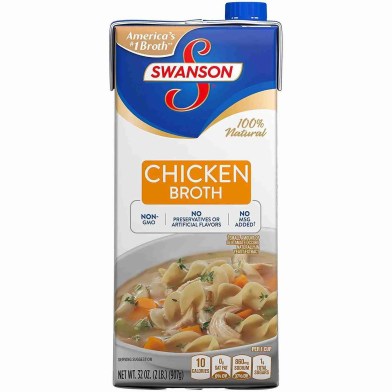
Swanson chicken broth in a shelf-stable carton.
Solutions
We have power as consumers. Companies want to sell us their goods, presumably more than they want to sell us the packaging. So avoid purchasing products in packaging that you don’t like or support.
Instead, purchase items in bulk in your own containers, or buy goods in metal or glass instead of plastic or cartons. Buy a reusable beverage container to avoid buying drinks in plastic and avoid convenience packaging since it is rarely recyclable.
Thanks for reading, and please subscribe! In my next post, I’ll explain how the manufacturers should become part of the solution.
“If you want to eliminate waste in your life – and in the world – the answers will always come down to one simple thing: consume differently.” -Tom Szaky
In my last article, I introduced the topic of packaging and the environmental crisis it has created. I left off with an explanation of greenwashing (read here about how to avoid greenwashed products), and in this article, I’m going to describe two terms that are often misused in advertising.
Remember: the answer to packaging is to reduce our reliance on it; to stop using it.
Photo by Jesse Gardner on Unsplash.
“Biodegradable” and “Compostable”
If only these words were the solutions to our global packaging problem! Unfortunately, they are two of the most abused terms in greenwashed advertising. Biodegradable refers to any material that decomposes in the environment. Compostable means that the material is organic matter that will break down and turn into soil. These words do not always mean what we think when it comes to sustainable packaging. In fact, if biodegradable and compostable items go into the trash and then a landfill, they do not biodegrade. Nothing in a landfill breaks down. Worse, the contents of landfills release methane gas, a major contributor to global warming.
But misleading marketing makes us believe that biodegradable plastics are better. “According to the Federal Trade Commission’s Green Guides, it is deceptive to market a product as biodegradable if the item does not completely decompose within one year after customary disposal, so items that are customarily disposed of in landfills cannot be marketed as ‘biodegradable in landfills.'”1 Regardless, the term is often misused.
Biodegradable plastics will only break down under the right conditions, such as in an industrial composting facility, not in a backyard composting system. But commercial composting facilities don’t all accept even certified compostable plastic products because the chemicals in the plastic hurt the final value of the compost.
Industrial Composting Facilities
There are several types of composting systems. A home compost system is mainly food and yard waste that you can set up yourself. Commercial composting refers to a municipal or city composting facility that accepts food and/or yard waste. An industrial composting facility requires precise processing conditions under a controlled biotechnological process. In order to be effective, these conditions include a certain high temperature, moisture level, aeration, pH, and carbon/nitrogen ratio.
Industrial composting facilities are not available in many places. There are about 200 in the US, serving less than 5% of the population. If there is not an industrial composting facility in your area, the only option is to throw compostable plastics in the trash, since they cannot be recycled.
If there is a facility in your area, it still does not guarantee the items will be composted. The reality is that many facilities cannot tell the difference between compostable plastics from regular plastics other than by carefully reading the label on each item. This is not practical with the number of disposables we currently discard, so many items go to the landfill.
“Industrially compostable (also known as commercially compostable) items are those that will likely not break down in your home compost, but will break down under specifically controlled temperatures and pressures designed to create compost at a large scale…If a plastic-resembling item is labeled ‘compostable,’ it is probably industrially compostable only.” -Eve O. Schaub, author of Year Of No Garbage2
Examples
Let’s look at four examples of greenwashed and problematic products.
Wincup polystyrene disposable cups
I saw this single-use disposable coffee cup that a colleague had purchased, and the images of green leaves and biodegradable claims drew my interest. The company, called WinCup and based out of Stone Mountain, Georgia, claims to be a leading manufacturer of disposable polystyrene products.
WinCup disposable polystyrene cup. Photos by Marie Cullis.
First, these cups will not biodegrade unless they are put into biologically active landfills, which are far and few between. On their website, they claim that their “cups biodegrade 92% over 4 years” and “under conditions that simulate a wetter, biologically active landfill.”52 What is this type of landfill? My understanding is that it is similar to an industrial composting facility, in the facility adds moisture to assist with breakdown.
Most people toss these cups into the regular trash, which then goes to landfills. These cups will not break down in a landfill. Additionally, if these cups end up in the ocean, they will likely not break down and will also leach toxins. When marine life ingests those toxins, they make their way up through the food chain to us.
BASF ecovio line
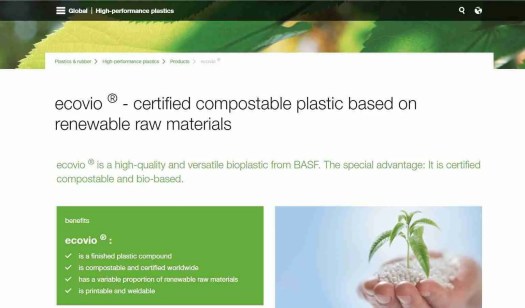
BASF, a major chemical corporation, claims to “combine economic success with environmental protection and social responsibility.”55 I found some greenwashed marketing on their website about compostable plastic:
BASF used Ecovio film applications to make organic waste bags, fruit and vegetable bags, carrier bags, agricultural films, etc. Their claim is that the product is compostable, but the fine print indicates it is compostable “under the conditions of an industrial composting plant.”56
This picture is misleading, as it shows a person putting a bag of compost into a compost bin. This gives the impression that these bags will break down in any compost collection when that is not the case. BASF’s compostable certification is the ASTM D6400, which is specifically for industrial composting facilities.57 Those are not available in most municipalities or states. If these products go into a landfill, it makes no environmental impact whatsoever. They also cause the same pollution problems as regular plastic.
‘Compostable’ plastic cups found at Jones Beach State Park, Long Island, New York. Don’t buy these! Photo by Brian Yurasits on Unsplash.
“So let me make sure I understand this. I’m supposed to get my one-use, takeaway cup, and as the name indicates, I take it away. And then when I’m done I . . . bring it to the nearest industrial composting facility? Oh sure, I think there’s one of those at the mall in between the Hallmark Store and the movie theater.” -Eve O. Schaub, author of Year Of No Garbage58
World Centric products
World Centric brand cups. Photo by Marie Cullis.World Centric brand spoons. Photo by Marie Cullis.
This seems like a great company: they are a Certified B company, they donate 25% of their profits, and they participate in carbon offsets. Their products, “Made from plants, not petroleum,” are made from renewable plants. Specifically, the spoons are made from 70% non-GMO corn and 30% talc. While this is technically better for the environment, these are still single-use disposable items that are only compostable in a “commercial composting facility.” The likelihood that these products will make it into a commercial composting facility after their single use is low. If they go to the landfill, they will likely not break down at all. At least this company isn’t using fossil fuels to make its products.
Molded fiber take-out packaging
These “compostable” and “plastic alternative” molded fiber take-out containers seemed like amagnificent alternative to plastic until they were discovered to contain PFOAs (per- and poly-fluoroalkyl substances). These chemicals, protect the fibers from becoming wet and soggy. The same compounds are in most nonstick cookware. They cause cancer, thyroid disease, reproductive problems, and immunotoxicity in children.
Though marketed as compostable, these chemicals do not disappear. They get into the soil from the compost, and potentially into whatever is grown in that soil. Worse, these chemicals make it into the waterways and eventually into our drinking water.
My family ate out of these types of containers multiple times. Of course, I had no idea at the time that these contained PFOAs. Many major eateries have stopped using these.
Solution
In general, we must consume less. We must end the production and use of single-use disposable items. Most importantly, being aware of these problems is key because we can all make a difference.
In my next article about packaging, I’ll explain bioplastics, which are often advertised as biodegradable or compostable. Thank you for reading, and please subscribe to get the next post in your inbox!
“If you want to eliminate waste in your life – and in the world – the answers will always come down to one simple thing: consume differently.” -Tom Szaky
Additional Resources:
Article, “The bowls at Chipotle and Sweetgreen are supposed to be compostable. They contain cancer-linked ‘forever chemicals,'” by Joe Fassler, TheCounter.org, August 5, 2019. Read this excellent article for more information on molded fiber food containers.
Article, “The breakdown of biodegradable plastic, broken down,” by Sarah DeWeerdt, Anthropocene Magazine, May 7, 2019.
Article, “Will compostable packaging ever be able to solve our waste problem?” by Adele Peters, fastcompany.com, September 3, 2019.